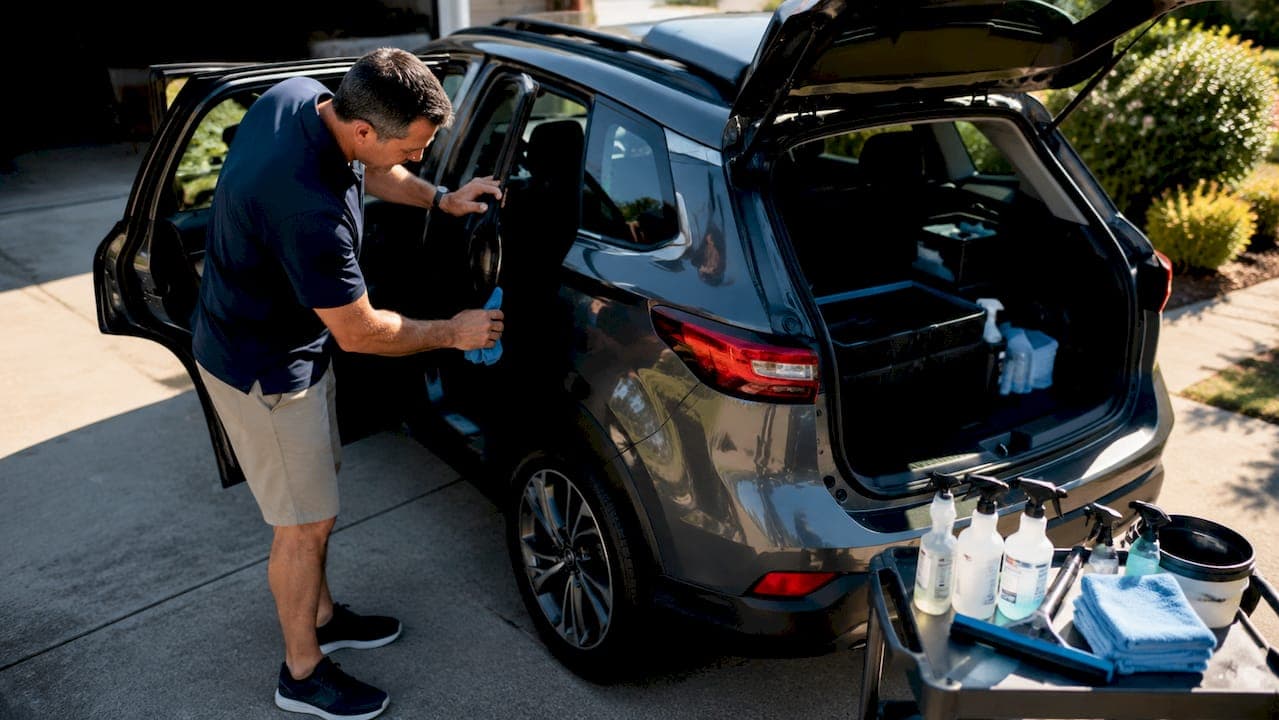
Car detailing is the process of thoroughly cleaning and sanitizing your vehicle's interior to improve air quality by removing dust, allergens, bacteria, and pollutants that build up over time. Most car owners think of detailing as cosmetic maintenance. The reality is that professional detailing directly affects what you breathe every time you get behind the wheel. Cabin air can carry mold spores, pollen, pet dander, and volatile organic compounds (VOCs) at concentrations that affect your respiratory health. Understanding how detailing improves air quality in cars gives you a clear reason to schedule it regularly, not just when your interior looks dirty.
How does detailing remove allergens and pollutants from car interiors?
Professional detailing removes allergens through methods that go far beyond a standard vacuum. The key difference is heat, pressure, and access to areas a regular cleaning never reaches.
The core techniques used by trained detailers include:
- Hot water extraction: Water heated above 200°F is forced into upholstery fibers and extracted along with dissolved allergens, dust mites, and sticky residues. Standard vacuuming lacks the heat and suction power to achieve this result.
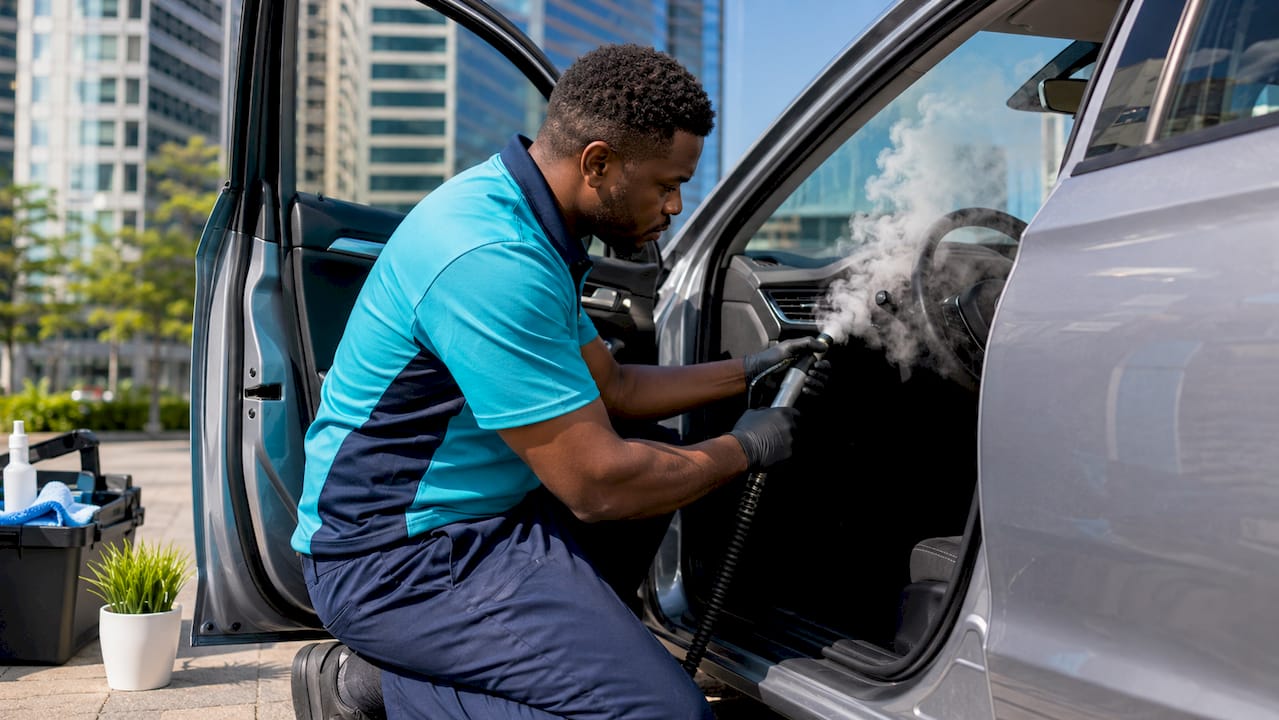
- Steam cleaning: Steam at over 200°F kills mold spores and bacteria on contact without chemical residue. It penetrates seat seams, floor mats, and door panels where microbes thrive.
- HVAC vent and duct sanitization: Detailers clean inside air vents and ducts where trapped mold spores and pollen accumulate. Cleaning ducts improves air quality beyond what filter replacement alone can achieve.
- Targeted fabric and carpet cleaning: Pollen, pet dander, and dust mites embed deep in carpet fibers. Hot water extraction pulls them out at the root level.
Professional detailing acts as a biological reset, targeting seat tracks, dashboard crevices, and air vents where microbes thrive and regular cleaning never reaches. That biological reset is what separates a detailed car from a merely clean one.
Pro Tip: Ask your detailer specifically about HVAC vent cleaning. Many express packages skip this step, but it is where mold and bacteria accumulate most aggressively.
What role do cabin air filters and ventilation play alongside detailing?
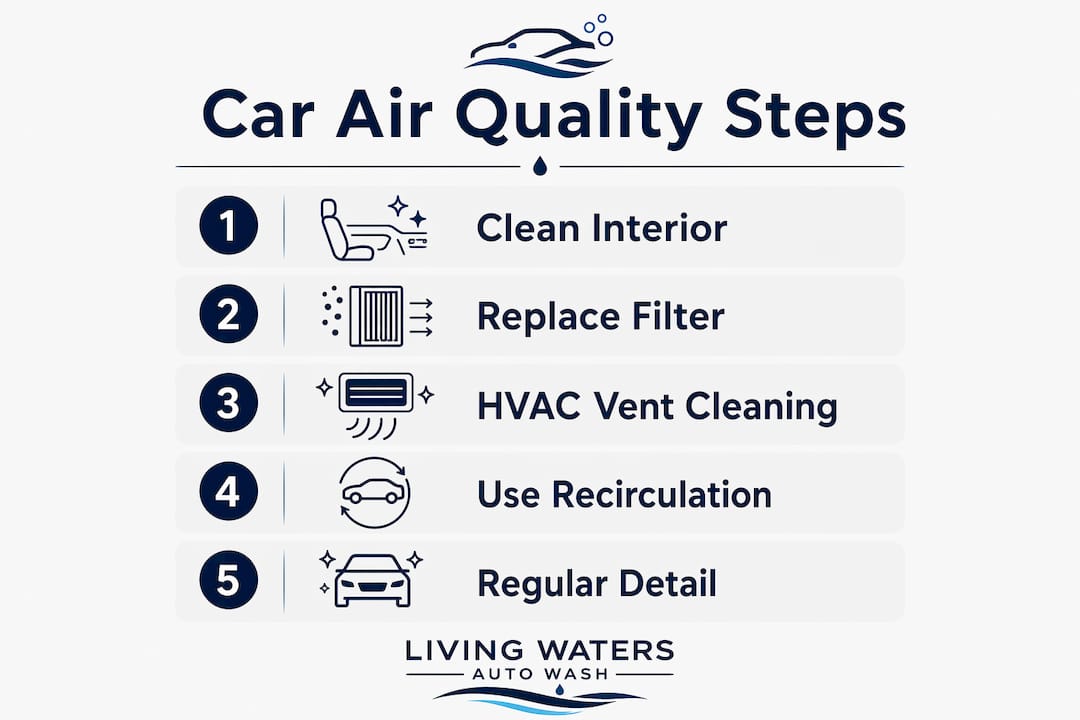
Detailing cleans what is already inside your cabin. Your cabin air filter and ventilation system control what enters it. Both need attention for lasting air quality improvement.
| Factor | What it does | Best practice |
|---|---|---|
| HEPA cabin air filter | Captures 99.97% of particles as small as 0.3 micrometers | Replace every 12 months or 12,000 miles |
| Standard paper filter | Blocks larger particles but misses fine dust and allergens | Replace on the same schedule; upgrade to HEPA when possible |
| Recirculation mode | Reduces outside particulate matter entering the cabin | Use in heavy traffic or near construction zones |
| Fresh air mode | Lowers CO2 buildup but increases VOC and particulate exposure | Use on open roads away from pollution sources |
| Air conditioning with windows closed | Keeps cabin air 20–34% cleaner than fan-only or open windows | Default setting for most urban driving |
Recirculation mode reduces outside PM exposure but raises CO2 levels over time. Fresh air mode lowers CO2 but increases particulate and VOC exposure from outside. The right approach is to switch between modes based on your environment, not to rely on one setting permanently.
Replacing cabin air filters every 12 months or 12,000 miles combined with interior detailing creates a dual defense against airborne pollutants. New filters prevent contaminants from re-entering the ventilation system after detailing has cleaned the cabin surfaces.
Pro Tip: When you book a detailing service, replace your cabin air filter the same day. Detailing without a fresh filter is like mopping a floor with a dirty mop head.
What common pollutants build up in cars and how does detailing address each?
Car cabins concentrate pollutants faster than most people realize. You spend time in a small, enclosed space with limited air exchange, which means contaminants accumulate quickly.
| Pollutant | Primary source | Health effect | Detailing method |
|---|---|---|---|
| Dust and dust mites | Upholstery, carpets, floor mats | Allergic reactions, asthma triggers | Hot water extraction, HEPA vacuuming |
| Mold spores | Moisture in carpets, AC ducts | Respiratory irritation, musty odor | Steam cleaning, duct sanitization |
| Pollen | Open windows, shoes, clothing | Seasonal allergy flare-ups | Deep fabric cleaning, vent cleaning |
| Pet dander | Pet hair embedded in fabric | Allergic reactions, eye irritation | Hot water extraction, enzyme cleaners |
| VOCs | New materials, air fresheners, cleaners | Headaches, nausea, long-term exposure risk | Ozone treatment, ventilation after cleaning |
| Bacteria | Food residue, skin contact, moisture | Odors, potential infection risk | Antimicrobial treatment, steam cleaning |
VOCs deserve special attention. They off-gas from plastics, adhesives, and even some cleaning products used during detailing. Ozone generators and antimicrobial treatments used by professionals neutralize mold spores and eliminate odors at the source rather than masking them. These tools are not available for typical DIY cleaning, which is why professional detailing produces results that home cleaning cannot replicate.
Bacterial buildup in HVAC ducts causes the musty smell many car owners notice when they first turn on the air conditioning. Poor HVAC maintenance leads directly to reduced air quality and that characteristic stale odor. Detailing that includes duct sanitization eliminates the source, not just the symptom.
How often should car owners schedule detailing for clean cabin air?
Frequency depends on how you use your vehicle and who rides in it. A general framework works for most car owners.
- Full interior detailing every 3–6 months. This interval keeps allergen and microbial buildup from reaching levels that affect air quality noticeably. Drivers with pets, children, or allergy sufferers in the vehicle should lean toward every 3 months.
- Cabin air filter replacement every 12 months or 12,000 miles. This is the minimum. If you drive in a dusty or high-pollution area like South Florida, consider replacing it every 6 months.
- HVAC vent cleaning at every full detail. Skipping vent cleaning during a detail leaves the primary source of musty odors untouched.
- Quick interior vacuum weekly. A weekly vacuum of floor mats and seats slows the rate at which allergens embed into fabric between professional sessions.
- Ozone or antimicrobial treatment once a year. This is especially useful after a spill, after transporting a sick passenger, or after extended periods of disuse when mold risk is higher.
The benefits of car detailing compound over time. A vehicle detailed consistently every quarter maintains a lower baseline of allergens and bacteria than one detailed once a year. Think of it the way you think about dental cleanings: regular maintenance prevents the problems that require intensive intervention later.
Key takeaways
Professional car detailing combined with regular cabin air filter replacement is the most effective approach to maintaining clean, healthy air inside your vehicle.
| Point | Details |
|---|---|
| Detailing removes what vacuuming misses | Hot water extraction and steam cleaning eliminate dust mites, mold, and allergens embedded deep in upholstery. |
| HVAC duct cleaning is non-negotiable | Sanitizing air vents removes trapped mold spores and pollen that filter replacement alone cannot address. |
| Filter and detailing work together | Replacing your cabin air filter on the same day as detailing creates a dual barrier against airborne pollutants. |
| Ventilation mode affects exposure | Running AC with windows closed keeps cabin air 20–34% cleaner than fan-only or open-window driving. |
| Frequency determines long-term results | Detailing every 3–6 months keeps allergen and bacterial levels consistently low rather than periodically reset. |
What I've learned from years of watching car owners ignore their cabin air
Most car owners focus entirely on the exterior. They will spend money on paint protection and tire shine while the inside of their vehicle quietly accumulates two years of pollen, pet hair, and mold spores from a slow AC leak. I have seen it repeatedly.
The misconception I hear most often is that a good air freshener solves the problem. It does not. An air freshener masks odor. It does nothing for the bacteria producing that odor or the mold spores circulating through your vents. In fact, many conventional air fresheners add VOCs to the cabin air, making the air quality problem worse while making it smell better.
The other thing most car owners underestimate is how quickly a car interior becomes a health issue. You sit close to the surfaces. The cabin is small. Air recirculates. A car that smells fine can still carry allergen concentrations high enough to trigger symptoms in sensitive passengers. The smell test is not a reliable measure of air quality.
My honest advice: treat your car's interior the way you treat your home's HVAC system. Schedule it, do not wait until something smells wrong. The professional tools available, including industrial steam cleaners and ozone treatments, provide a level of sanitation that no consumer product can match. Choosing a detailer who specifically addresses HVAC vents and uses antimicrobial treatments is the difference between a clean-looking car and a genuinely healthy one.
— Living
Lwautowash brings professional air quality detailing to your door
If you drive in Boca Raton, Pompano Beach, Coral Springs, or Parkland, you do not need to take your car to a shop to get this level of cleaning done.

Lwautowash provides fully mobile detailing services with no electricity or water hookup required at your location. Their trained team handles hot water extraction, steam cleaning, and HVAC vent sanitization using professional-grade equipment. The express interior detailing service covers the key steps that directly affect cabin air quality, and their 5-star reviews across South Florida reflect consistent results. Book through Lwautowash and get a cleaner, healthier cabin without leaving your driveway.
FAQ
Does car detailing actually improve air quality?
Yes. Professional detailing removes allergens, mold spores, bacteria, and VOCs from upholstery, carpets, and HVAC vents using steam cleaning and hot water extraction that standard vacuuming cannot replicate.
How often should I detail my car for better air quality?
Every 3–6 months is the recommended interval for most car owners. Drivers with pets or allergy sufferers in the vehicle should schedule detailing every 3 months.
What is the best cabin air filter for allergen removal?
A HEPA-certified cabin air filter captures 99.97% of particles as small as 0.3 micrometers, making it significantly more effective than standard paper filters for allergen and fine particle removal.
Can I improve car air quality between detailing sessions?
Yes. Weekly vacuuming of floor mats and seats, running the AC with windows closed, and switching ventilation modes based on your driving environment all reduce pollutant buildup between professional sessions.
What is ozone treatment and why does it matter for car air?
Ozone treatment uses a professional-grade ozone generator to neutralize mold spores, bacteria, and odors at the molecular level. It eliminates the source of odors rather than masking them, and it is not available in consumer cleaning products.
Recommended
- 5-Star Mobile Detailing in Boca Raton, Pompano Beach, Coral Springs, Parkland & Palm Beach County | Living Waters Auto Wash
- 5-Star Mobile Detailing in Boca Raton, Pompano Beach, Coral Springs, Parkland & Palm Beach County | Living Waters Auto Wash
- Detailing Gallery — Living Waters Auto Wash
- Engine Bay Detailing & Cleaning | Mobile Service Boca Raton, Pompano Beach, Coral Springs, Parkland & Palm Beach County