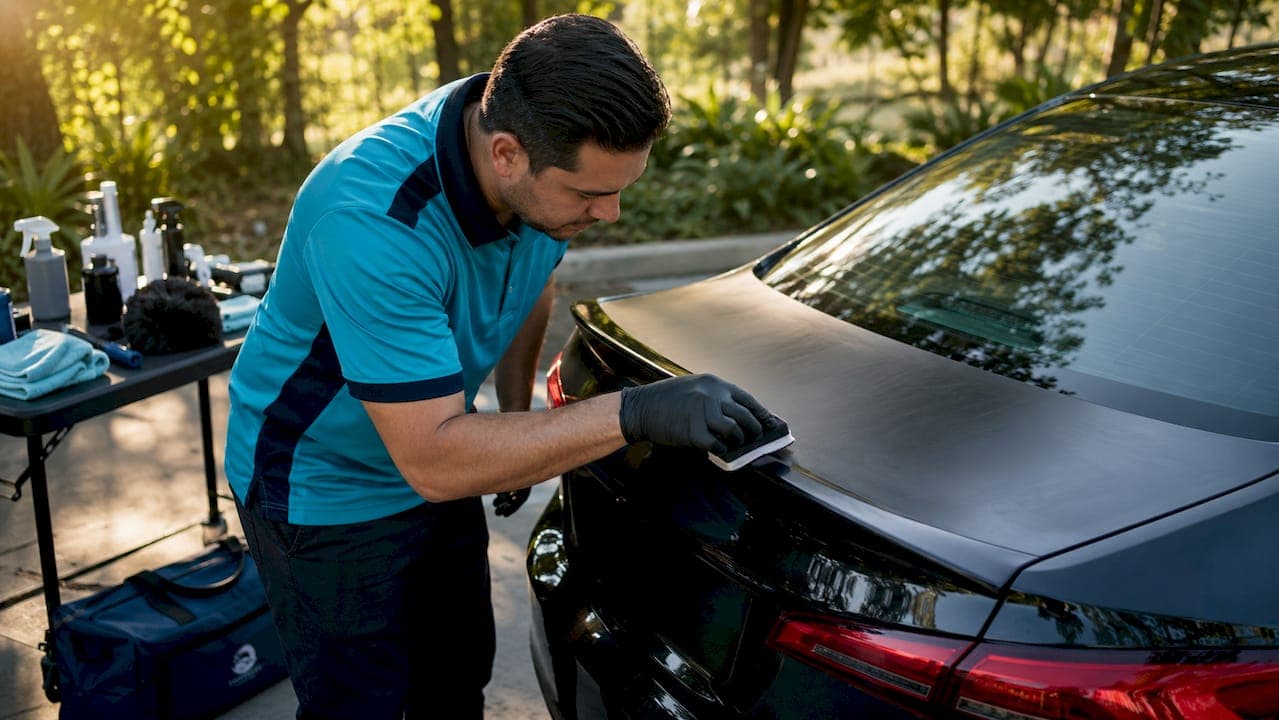
Exterior detailing is defined as a multi-step process of cleaning, decontaminating, and applying protective products to a vehicle's painted surfaces. The core purpose is to shield the clear coat and base coat from UV rays, road contaminants, acid rain, and physical wear. Professional detailers use three main protection types: carnauba wax, paint sealants, and ceramic coatings. Each creates a barrier between your paint and the environment, but they differ significantly in how long they last and how much protection they deliver. Understanding how exterior detailing protects paint helps you make smarter decisions about your vehicle's care and long-term value.
How do protective layers in exterior detailing safeguard vehicle paint?
Exterior detailing adds a barrier layer such as wax, sealants, or ceramic coating that sits between your paint and everything the road throws at it. That barrier is not cosmetic. It absorbs the chemical and physical stress that would otherwise degrade your clear coat.
Wax is the most traditional option. It sits on top of the clear coat and fills minor surface imperfections, giving paint a warm, glossy look. The drawback is durability. Wax breaks down quickly under heat and UV exposure, typically lasting only a few weeks before it needs reapplication.
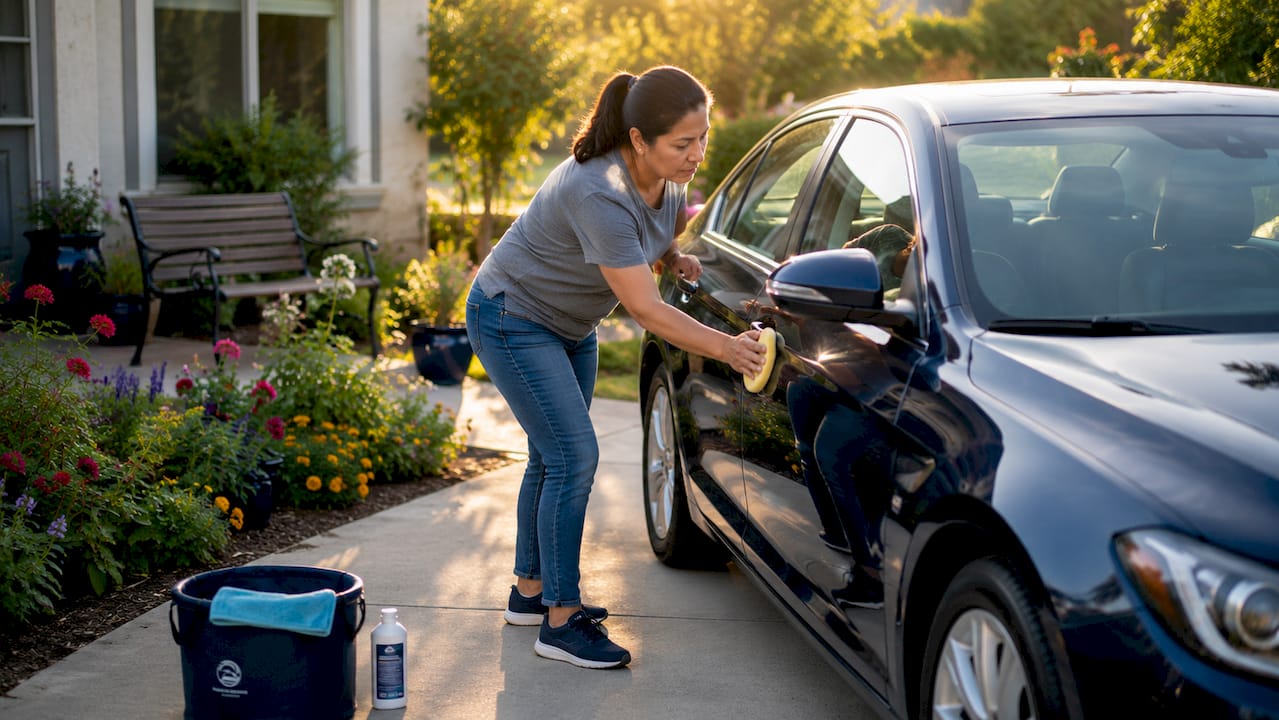
Sealants are a synthetic upgrade. Sealants generally last 3–6 months and resist heat better than carnauba wax. That extended durability makes sealants a practical choice for car owners who want reliable protection without frequent reapplication.
Ceramic coatings operate differently from wax or sealants. Coatings bond chemically to paint, forming a semi-permanent protective layer that does not wash off or break down under normal driving conditions. This chemical bond is what makes ceramic coatings the most durable option available.
The hydrophobic effect is one of the most practical benefits of ceramic coatings. Water beads and rolls off the surface, carrying dirt and contaminants with it. That means less time scrubbing during washes and less risk of water spots forming on the paint.
- UV protection: All three product types slow UV-driven oxidation, which causes paint to fade and look chalky over time.
- Acid rain and bird droppings: These are acidic and etch clear coat fast. A protective layer absorbs the chemical attack before it reaches the paint.
- Road salt and grime: Salt accelerates corrosion. A sealed surface reduces direct contact between salt and the clear coat.
- Swirl marks: Protective layers reduce friction during washing, which is a leading cause of fine surface scratches.
Pro Tip: Apply a ceramic coating in a shaded, temperature-controlled environment. Heat and direct sunlight cause coatings to cure unevenly, reducing their bonding strength and long-term durability.
Why does surface preparation matter before applying paint protection?
Surface preparation is the foundation of effective paint protection. Applying paint protection only works well if contaminants and residues are removed beforehand. Skipping this step traps dirt, iron particles, and chemical residues directly against the clear coat, where they continue to cause damage underneath the protective layer.
A professional prep process follows a clear sequence:
- Wash and rinse. Remove loose dirt, dust, and road grime with a pH-neutral car shampoo. This prevents surface scratching during later steps.
- Clay bar decontamination. A clay bar pulls bonded contaminants, including industrial fallout and tree sap, from the paint surface. These particles cannot be removed by washing alone.
- Iron decontamination spray. Iron particles from brake dust embed in clear coat and cause rust spots. An iron remover dissolves them chemically before they cause permanent damage.
- Paint correction (polishing). A machine polisher removes swirl marks, light scratches, and oxidation. Coatings applied after correction safeguard against scratches, swirl marks, and UV damage far more effectively than coatings applied over imperfect paint.
- Panel wipe down. An isopropyl alcohol solution removes polish residue and oils, leaving a clean surface for the protective product to bond to.
- Curing. Ceramic coatings require a curing period, typically 24–48 hours, where the vehicle stays dry and protected from contaminants. Curing allows the chemical bond to fully form.
The protective layer is most effective when applied last, after paint correction and thorough decontamination. Adhesion improves on a smooth, clean surface, and the coating performs closer to its rated durability.
Pro Tip: Run your fingertips across a freshly washed panel. If it feels rough or gritty, the surface still has bonded contaminants. A clay bar treatment is needed before any protective product goes on.
How do wax, sealants, and ceramic coatings compare?
Choosing the right protection product comes down to three factors: how long you want it to last, how much maintenance you are willing to do, and the conditions your vehicle faces daily.
| Protection type | Durability | UV and heat resistance | Application difficulty | Maintenance level |
|---|---|---|---|---|
| Carnauba wax | Weeks | Low | Easy | High (frequent reapplication) |
| Paint sealant | 3–6 months | Moderate | Easy to moderate | Moderate |
| Ceramic coating | Years | High | Difficult (prep intensive) | Low (regular washing only) |
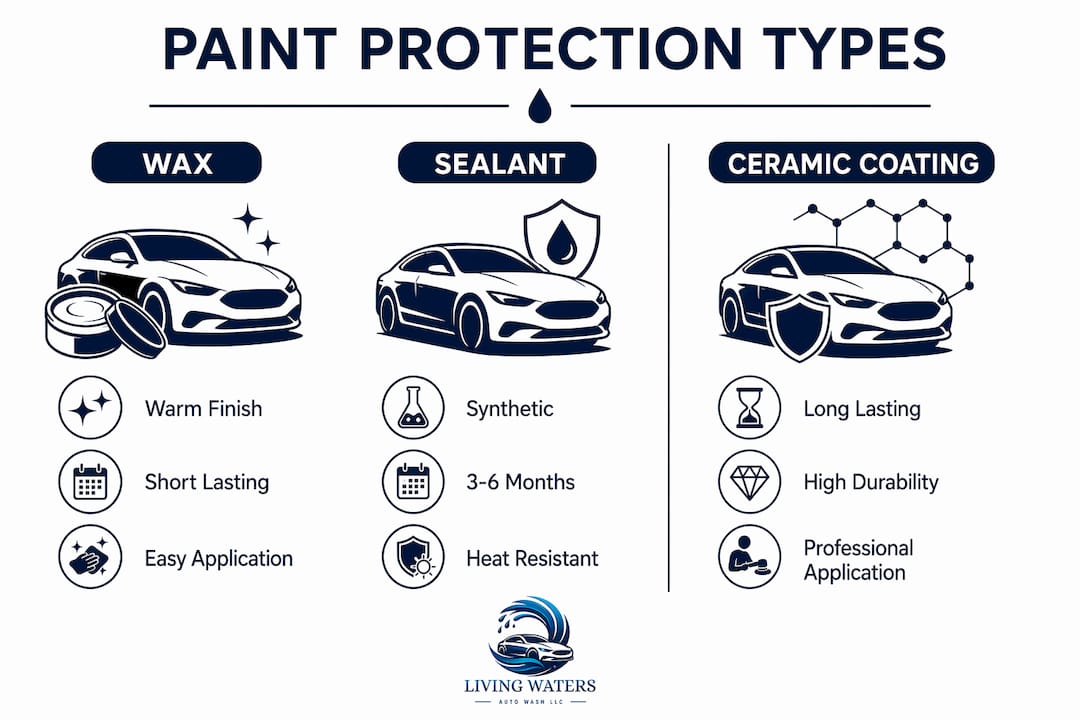
Wax delivers the warmest visual finish, which is why show car owners still use it. The trade-off is that it requires the most frequent reapplication, especially in hot climates where UV exposure is constant.
Sealants hit a practical middle ground. They are easier to apply than ceramic coatings, last through several seasons, and provide solid protection against UV rays and light chemical exposure. For car owners who want reliable protection without committing to a full ceramic coating process, sealants are the most sensible choice.
Ceramic coatings require the most upfront effort and cost, but they deliver the longest protection window. Ceramic coatings resist chemical stains and UV exposure, helping preserve both paint condition and resale value over years of driving. The coating's bond holds under regular driving and environmental conditions without needing reapplication.
- Ceramic coatings do not eliminate the need for washing. They reduce how often you need to wash and how hard you need to scrub.
- Sealants are the best starting point for first-time detailers who want meaningful protection without the complexity of ceramic application.
- Wax is best used as a topper over a sealant or coating for added gloss, not as a standalone protection strategy.
What practical benefits does paint protection deliver for car owners?
Paint protection through exterior detailing delivers measurable, real-world results. The most visible benefit is the reduction in paint fading. UV rays break down the pigments in your base coat over time, causing that dull, washed-out look on older vehicles. A protective layer slows that process significantly.
Contaminants etch clear coat within hours at high temperatures. This is the detail most car owners miss. A bird dropping left on an unprotected hood on a hot day can permanently etch the clear coat before the end of the afternoon. A ceramic coating or sealant extends the safe removal window, giving you time to clean it off without permanent damage.
Hydrophobic surfaces also make regular washing faster and less abrasive. When water and dirt do not bond to the surface, a simple rinse removes most contamination. Less scrubbing means fewer swirl marks introduced during the wash process itself.
The economic case for paint protection is straightforward. Repainting a single panel costs hundreds of dollars. A full respray on a mid-size vehicle costs thousands. Regular exterior detailing with quality protection products defers that expense indefinitely for most car owners. Preserved paint also supports higher resale prices, since buyers pay a premium for vehicles with clean, unfaded exteriors.
Paint protection film adds physical impact resistance for high-risk areas like the front bumper and hood, while ceramic coatings handle chemical and environmental protection across the full vehicle. Combining both gives the most complete coverage available.
Key takeaways
Exterior detailing protects paint by applying a clean, chemically bonded or surface-level barrier that blocks UV rays, contaminants, and physical wear before they reach the clear coat.
| Point | Details |
|---|---|
| Barrier layer is the core mechanism | Wax, sealants, and ceramic coatings each create a protective layer between paint and environmental damage. |
| Surface prep determines coating performance | Decontamination and paint correction before application improve adhesion and extend protection durability. |
| Ceramic coatings offer the longest protection | Coatings bond chemically to paint and resist UV, heat, and chemical stains for years without reapplication. |
| Hydrophobic surfaces reduce cleaning damage | Water and dirt roll off coated paint, meaning less scrubbing and fewer swirl marks during regular washes. |
| Protection preserves resale value | Maintained paint avoids costly repaints and supports higher vehicle resale prices over time. |
What I have learned from years of detailing vehicles in South Florida
South Florida is one of the hardest environments for vehicle paint in the country. The combination of intense UV exposure, humidity, salt air near the coast, and afternoon rain creates conditions that degrade unprotected paint faster than most car owners expect.
The biggest misconception I see is that a ceramic coating means you can stop worrying about your paint. Coatings are protective but not impervious. A coated vehicle still needs regular washing. What changes is how easy that washing becomes and how much longer your paint stays in good condition between services.
The second mistake is skipping prep to save time or money. A coating applied over contaminated or scratched paint locks those problems in place. The coating performs at a fraction of its potential, and you end up with a surface that looks worse than it should after a few months.
My honest recommendation is to match your protection choice to your actual situation. If your vehicle sits outside in direct sun every day in Boca Raton or Pompano Beach, a ceramic coating is worth the investment. If you park in a garage and drive occasionally, a quality sealant applied twice a year gives you solid protection at a fraction of the cost and effort.
Regular detailing is not a luxury. It is the most cost-effective way to protect what is often your second-largest financial asset. The paint on your vehicle is not just cosmetic. It is the first line of defense against corrosion and structural degradation.
— Living
Living Waters Auto Wash brings professional paint protection to your door
Car owners in Boca Raton, Pompano Beach, Coral Springs, and Parkland no longer need to drive to a shop and wait for hours to get quality paint protection. Living Waters Auto Wash brings a fully equipped mobile detailing service directly to your location, with no water or electricity hookups required on your end.
The team at Living Waters Auto Wash follows a multi-step process: thorough washing, clay bar decontamination, paint correction where needed, and application of your chosen protective product, whether that is a sealant or a ceramic coating. Every step is performed by trained detailers who understand how South Florida's climate accelerates paint damage. Book your mobile detail and get your vehicle's paint protected without rearranging your schedule.
FAQ
What does exterior detailing do to protect paint?
Exterior detailing cleans the paint surface and applies a protective layer such as wax, sealant, or ceramic coating. This barrier shields the clear coat from UV rays, acid rain, bird droppings, and road contaminants.
How long does paint protection from detailing last?
Durability depends on the product used. Wax lasts a few weeks, sealants last 3–6 months, and ceramic coatings last for years under normal driving conditions.
Does a ceramic coating mean I can wash my car less often?
A ceramic coating makes washing easier and less damaging, but regular washing is still required. Coatings reduce contaminant bonding but do not eliminate the need for cleaning.
Why does surface preparation matter before applying a coating?
Contaminants and residues trapped under a coating continue to damage the clear coat from below. Decontamination and polishing before application give the coating a clean surface to bond to, improving both adhesion and durability.
Does paint protection help with resale value?
Yes. Preserved, unfaded paint is one of the most visible factors buyers evaluate. Vehicles with well-maintained exteriors command higher resale prices and sell faster than those with oxidized or scratched paint.
Recommended
- How to Know if You're Getting Quality Mobile Detailing | Living Waters Auto Wash
- Express Exterior Hand Wash | Mobile Detailing Boca Raton, Pompano Beach, Coral Springs, Parkland & Palm Beach County
- 5-Star Mobile Detailing in Boca Raton, Pompano Beach, Coral Springs, Parkland & Palm Beach County | Living Waters Auto Wash