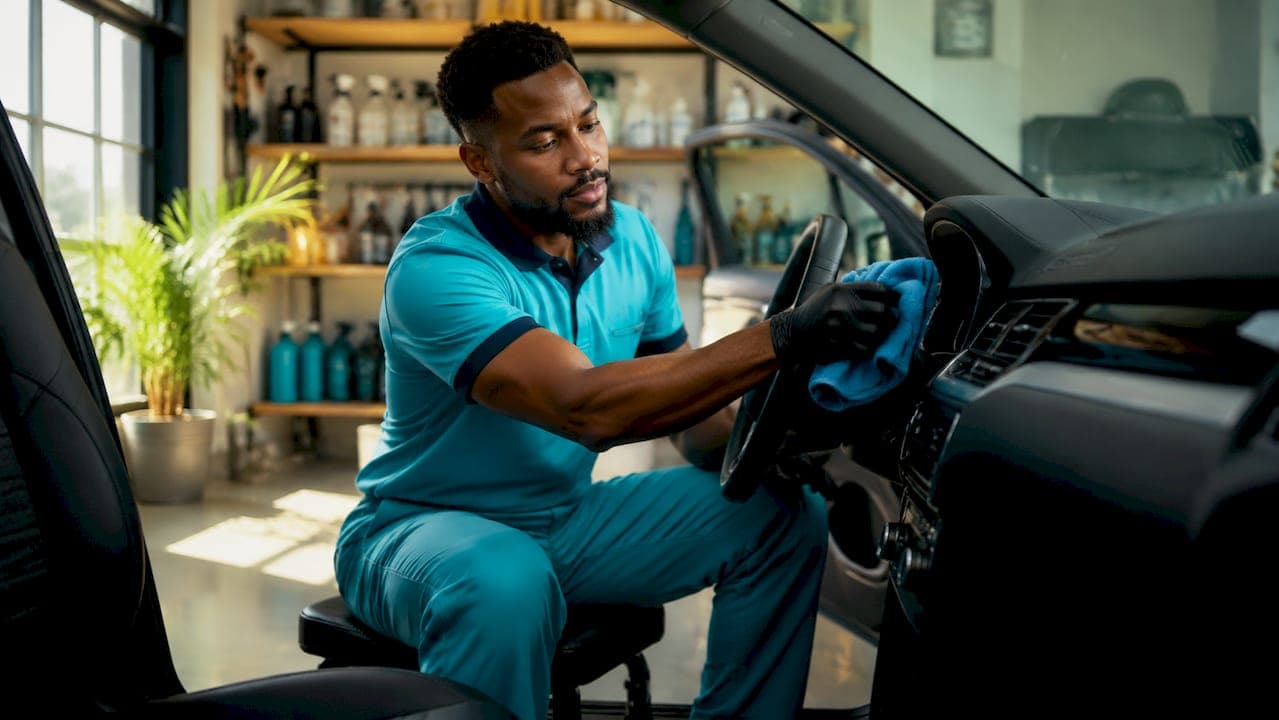
Interior detailing is the process of thoroughly cleaning, restoring, and protecting every surface inside a vehicle using professional-grade equipment and chemistry designed to remove embedded grime, not just surface dust. Unlike a basic wipe-down or vacuum session, a full professional interior detail typically takes 2–4 hours and costs between $120 and $300 depending on vehicle size and condition. That time and cost reflect a multi-step system built around sequencing, surface-specific products, and tools most car owners do not have at home. Understanding how the process works helps you set realistic expectations and get more value from every appointment.
What are the main steps in the interior detailing process?
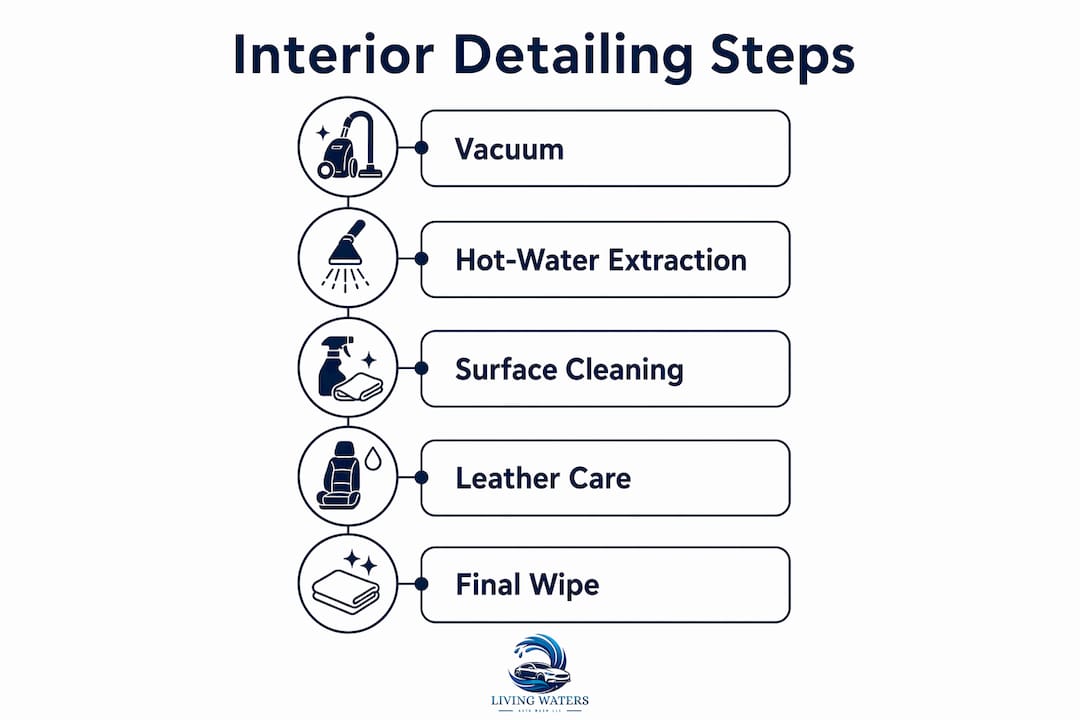
The interior car detailing process follows a strict sequence. Each step builds on the last, and skipping one creates problems that show up later. Professional detailers call this the logic of the detail.
-
Dry debris removal. Every professional detail starts with a dry-first rule: vacuum and remove all loose debris before any liquid touches the interior. High-powered commercial vacuums with 1,200W or more of suction pull dirt from seat crevices, floor mats, and door pockets. Skipping this step and going straight to wet cleaning turns fine dust into abrasive mud that grinds into carpet fibers and accelerates wear.
-
Top-down, rear-to-front cleaning. A top-down cleaning sequence prevents recontamination. Detailers clean headliners and upper trim first, then work down to seats, carpets, and floor mats. Starting at the bottom and working up means dust and product residue fall onto surfaces you already cleaned.
-
Hot-water extraction. This is the core deep-cleaning step for carpets and fabric upholstery. Heated cleaning solution is injected into the fibers and immediately vacuumed back out, pulling embedded dirt, allergens, and odor-causing bacteria with it.
-
Leather cleaning and conditioning. Leather seats and panels require their own dedicated step using pH-balanced cleaners and UV-protective conditioners. This step happens after extraction and before any dressings are applied.
-
Hard surface cleaning. Dashboard panels, door cards, center consoles, and vents are cleaned with surface-appropriate products. Glass is cleaned last to avoid overspray from earlier steps contaminating the windows.
-
Protectant and finishing. Dressings and protectants are applied to plastics, rubber, and leather. Final glass polishing and a walkthrough inspection close out the service.
Pro Tip: Product choice matters as much as technique. Using an all-purpose cleaner on every surface is one of the most common mistakes. Leather needs a leather-specific cleaner. Matte plastics need a matte dressing. Matching the product to the surface is what separates a professional result from a DIY attempt.
How does hot-water extraction work and why is it critical?
Hot-water extraction is the single biggest difference between a full professional detail and a basic interior clean. The process takes 45–60 minutes on its own, which tells you how thorough it is. That time investment is what removes the contaminants that cause persistent odors and staining.
The machine injects a heated cleaning solution directly into carpet or upholstery fibers at controlled pressure. A vacuum head immediately pulls the solution back out, along with loosened dirt, allergens, mold spores, and bacteria. The result is a deep clean that reaches the base of the fiber, not just the surface.
Many car owners confuse hot-water extraction with steam cleaning. They are different processes. Steam cleaning uses dry vapor at very high temperatures and leaves minimal moisture behind. Hot-water extraction uses a water-and-solution mix and removes most of it on the way out. Both work, but hot-water extraction is more effective at removing heavy soiling and embedded stains from fabric interiors.
- Removes allergens and bacteria that vacuuming leaves behind
- Eliminates odors at the source rather than masking them
- Lifts stains that have bonded to carpet fibers over time
- Leaves carpets damp but not soaked when done correctly
Skipping hot-water extraction leads to persistent odors and embedded contaminants that basic vacuuming cannot remove. If a detailing service does not include extraction, it is not a full interior detail.
Pro Tip: Ask any detailing service directly whether they use hot-water extraction on carpets and upholstery. If the answer is no, or if they substitute a spray-and-wipe method, you are paying for a surface clean, not a full detail.
What special techniques apply to different interior surfaces?
Every surface inside a vehicle requires a different approach. Using the wrong product or method on the wrong surface causes damage that is expensive to fix and sometimes irreversible.
Leather seats and panels
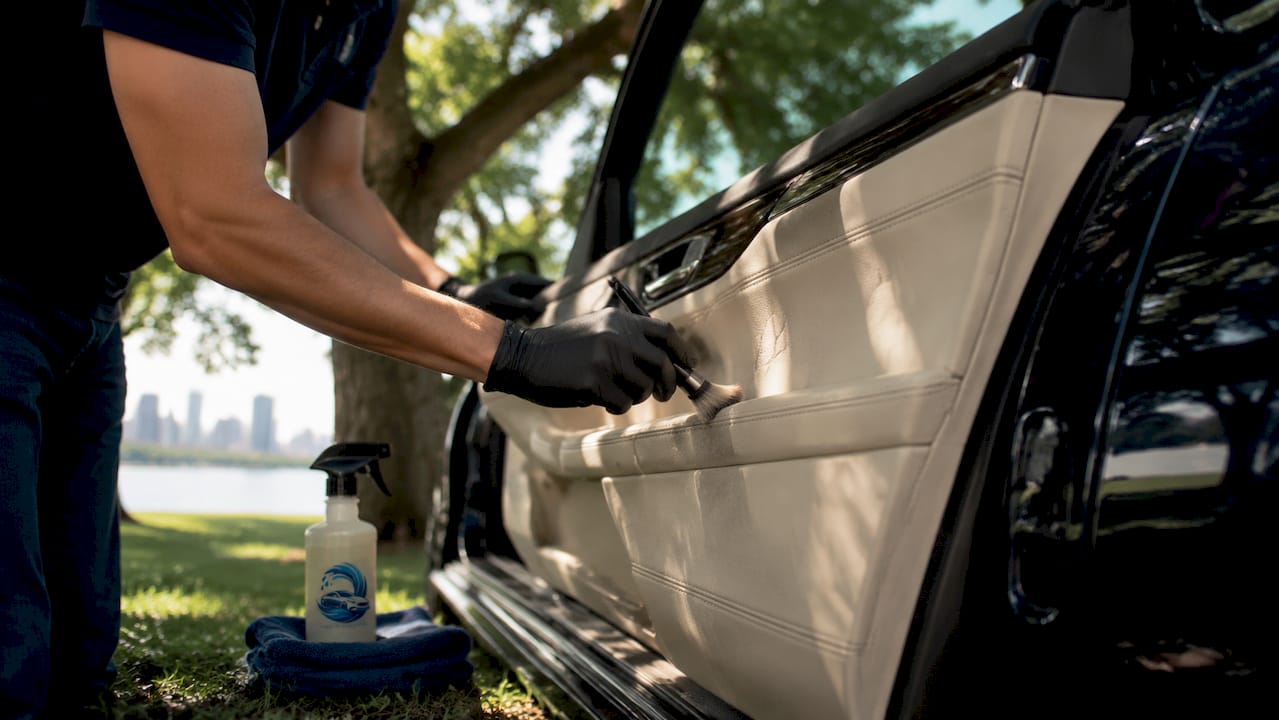
Proper leather cleaning uses pH-balanced cleaners applied with a soft brush to agitate the grain crevices, followed by wiping dry before conditioning. UV-protective conditioners are then worked into the leather to prevent cracking and fading. Skipping the conditioner after cleaning leaves leather dry and brittle, especially in South Florida's intense sun.
Delicate fabrics like Alcantara and suede
Specialty fabrics like Alcantara benefit most from gentle, frequent maintenance rather than heavy chemical treatments. Harsh cleaners or stiff brushes crush the microfiber pile and permanently alter the texture. Light brushing with a soft detailing brush and a gentle fabric cleaner is the correct approach.
Hard plastics and trim
Hard plastics are cleaned with a dedicated interior cleaner and a microfiber cloth. The finishing product matters here. Professional detailers use satin or matte finish dressings on interior plastics instead of wet-look silicone products. Silicone dressings attract dust, create glare on the dashboard that reflects into the windshield, and can make surfaces slippery. Matte and satin dressings look natural and do not cause these problems.
- Never apply a wet-look dressing to a matte-finish dashboard or trim panel
- Always clean debris off a surface before applying any dressing or protectant
- Use separate microfiber cloths for different surfaces to avoid cross-contamination
Pro Tip: Avoid applying any product to a surface before removing all loose debris. Rubbing a dressing into a dusty dashboard grinds particles into the surface and creates micro-scratches in the plastic.
How does detailing work in tight spaces and hidden areas?
Tight spaces are where most basic cleaning fails completely. Seat rail channels, air vents, seam lines between panels, and the gaps around buttons and knobs collect years of debris that a standard vacuum attachment cannot reach.
Vents and crevices require brush agitation and compressed air to dislodge embedded dust before vacuuming. A detailing brush loosens the debris, compressed air blows it out, and the vacuum captures it before it settles elsewhere. Doing these steps out of order defeats the purpose.
Seat rail channels sit low and collect crumbs, hair, and grit that grind against the metal over time. Detailers use narrow crevice attachments and stiff detailing brushes to clear these channels. This step also matters for air quality inside the cabin, since debris in vents recirculates through the ventilation system every time you run the fan.
- Detailing brushes in multiple sizes reach panel seams and button gaps
- Compressed air dislodges debris from vents before vacuuming
- Narrow vacuum attachments clear seat rail channels and door pockets
- Cleaning tight areas before final surface wipe-down prevents recontamination
The sequencing rule applies here too. Tight-space cleaning happens early in the process, before final surface wipes and dressings. Blowing compressed air through vents after you have already dressed the dashboard means dust lands on your finished surfaces and you have to start over.
Key takeaways
Interior detailing works because it follows a strict sequence of dry removal, deep extraction, surface-specific cleaning, and protective finishing that basic cleaning skips entirely.
| Point | Details |
|---|---|
| Dry-first rule | Always vacuum loose debris before any wet cleaning to prevent abrasive mud formation. |
| Hot-water extraction | This 45–60 minute step removes allergens, odors, and embedded stains that vacuuming cannot reach. |
| Surface-specific products | Leather, Alcantara, and hard plastics each require different cleaners and finishes to avoid damage. |
| Top-down sequencing | Cleaning from headliner to floor prevents recontamination of already-cleaned surfaces. |
| Matte over silicone | Satin or matte dressings on interior plastics avoid dust attraction, glare, and slippery surfaces. |
Why sequencing and chemistry are the real difference
Most car owners underestimate how much the order of steps and the quality of products affect the final result. I have seen interiors that looked clean after a consumer-grade DIY attempt but still smelled musty two days later. The odor came from moisture trapped in carpet fibers because the owner skipped extraction and used a spray-and-wipe method instead.
Consumer-grade cleaning products are formulated to be safe on everything, which means they are optimized for nothing in particular. Professional chemistry is matched to specific soil types and surface materials. An enzyme-based odor eliminator breaks down organic matter at a molecular level. A pH-balanced leather cleaner lifts oils without stripping the finish. A general-purpose spray does neither job well.
The sequencing issue is just as significant. Skipping the dry-first step and going straight to wet cleaning is the most common mistake I see. It turns fine dust into a paste that embeds deeper into fibers and is harder to remove than the original dry debris. Professional products and sequencing produce longer-lasting cleanliness and surface protection precisely because each step prepares the surface for the next one.
Between professional details, car owners can maintain results by vacuuming weekly, wiping hard surfaces with a damp microfiber cloth, and keeping a small detailing brush in the glove box for vents and seams. These habits extend the time between full details and keep the cabin in noticeably better condition.
— Living
Professional interior detailing from Living Waters Auto Wash LLC
Living Waters Auto Wash LLC brings the full interior detailing process directly to your driveway across Boca Raton, Pompano Beach, Coral Springs, and Parkland, with no need for electricity or water hookups on your end.
Their trained team applies the same professional sequencing and surface-specific chemistry described throughout this article, from hot-water extraction on carpets to UV-protective conditioning on leather. Whether you need a thorough express interior detail or a full multi-surface treatment, Living Waters Auto Wash LLC handles it at your location on your schedule. Book through lwautowash.com and experience what a properly sequenced, professional-grade interior detail actually looks and feels like.
FAQ
What is interior detailing?
Interior detailing is a multi-step deep-cleaning and protection process for every surface inside a vehicle, including carpets, upholstery, leather, plastics, and glass. It uses professional-grade equipment and surface-specific products to remove embedded dirt, allergens, and odors that basic cleaning cannot reach.
How long does a full interior detail take?
A full professional interior detail typically takes 2–4 hours depending on vehicle size and condition. Hot-water extraction alone accounts for 45–60 minutes of that time.
What is dry interior detailing?
Dry interior detailing refers to cleaning methods that use minimal or no liquid, relying on dry vacuuming, compressed air, and dry microfiber cloths to remove debris. It is faster than a full wet detail but does not remove embedded stains or odors the way hot-water extraction does.
How often should you get a professional interior detail?
Most car owners benefit from a full interior detail every 3–6 months, with light maintenance cleaning in between. Vehicles used frequently or with children and pets may need more frequent service.
Why do professional detailers avoid silicone dressings on interior plastics?
Silicone-based wet-look dressings attract dust, create glare that reflects off the dashboard into the windshield, and can make surfaces slippery. Professional detailers use matte or satin finish dressings instead for a safer and longer-lasting result.
Recommended
- How to Know if You're Getting Quality Mobile Detailing | Living Waters Auto Wash
- 5-Star Mobile Detailing in Boca Raton, Pompano Beach, Coral Springs, Parkland & Palm Beach County | Living Waters Auto Wash
- 5-Star Mobile Detailing in Boca Raton, Pompano Beach, Coral Springs, Parkland & Palm Beach County | Living Waters Auto Wash