
Mobile detailing respects shared spaces by running entirely self-contained: onboard water or waterless products, portable power instead of your electrical outlet, and a firm cleanup guarantee before the technician leaves your lot. You're not hosting a construction crew. You're booking a service designed from the ground up to fit inside one parking stall and disappear when it's done.
Here's what that actually guarantees you:
- No hookups needed: no hose access, no extension cords through your lobby
- Onboard water tanks or rinseless products, so nothing pools on the pavement
- Wastewater and debris contained and hauled off, not left to drain into shared storm drains
- A compact footprint, quiet tools, and a documented sign-off when the job's finished
Key Takeaways
Mobile detailing protects shared spaces by pairing self-contained equipment with strict cleanup and communication protocols on every job.
| Point | Details |
|---|---|
| Self-contained setup | Onboard water tanks, waterless products, and portable power eliminate the need for your hose or outlet. |
| Wastewater stays contained | Drip pans and absorbent pads capture runoff so nothing drains into shared storm systems. |
| One stall is enough | Most jobs fit a roughly 12-foot by 20-foot footprint without blocking walkways or fire lanes. |
| Prep speeds everything up | Clearing your stall and confirming access ahead of time keeps the appointment on schedule. |
| Living Waters Auto Wash LLC | Offers fully mobile, no-hookup detailing with eco-conscious methods and trained technicians across its Florida service area. |
Table of Contents
- How Mobile Detailing Respects Shared Spaces in Practice
- What Happens When You Book: Arrival to Sign-Off
- Prepping Your Space for a Smooth, Unobtrusive Visit
- Fleet Scheduling That Minimizes Cumulative Impact
- What to Ask Before You Book
- Why Living Waters Auto Wash Is Built for Shared Lots
- Frequently Asked Questions
- Sources
How Mobile Detailing Respects Shared Spaces in Practice
The short version: professional mobile detailers treat your parking lot as if they're a guest in someone else's house, because they are. Every piece of their setup reflects that.
Self-contained systems come first. Onboard water tanks, biodegradable or rinseless cleaning products, and portable generators or battery-powered tools mean the technician never asks to plug into your unit or connect to a hose bib that might not even exist in a condo lot. Most operators plan around a flat space roughly 12 feet by 20 feet and only occasionally request a standard 110V outlet for certain polishers.
Wastewater containment is the part most car owners never think to ask about until they've seen a competitor skip it. Drip pans and absorbent pads catch runoff during exterior washes, and dirty water gets carried offsite instead of draining into a common gutter. Waterless methods go a step further: no puddling at all, which matters in basement garages and tight parking structures where drainage is already a concern.
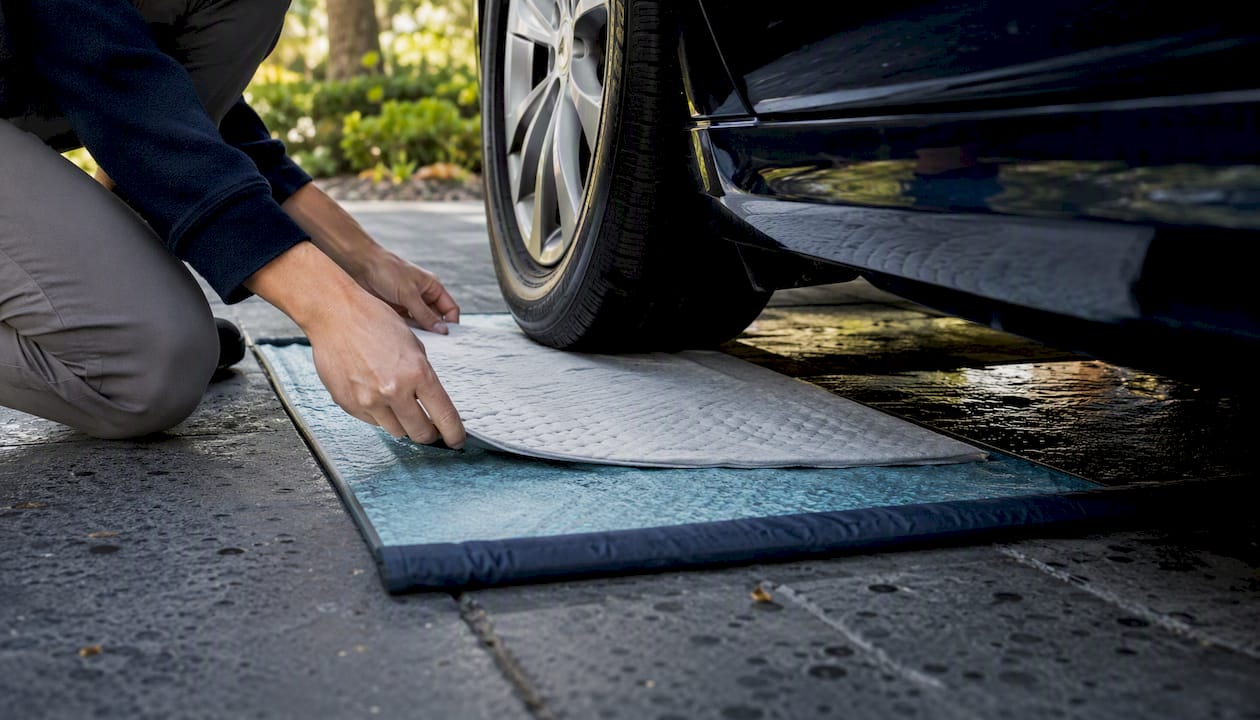
Compact staging keeps the whole job inside your assigned stall. Trained technicians use low-profile rolling carts and cordless tools specifically so cords never cross a walkway or block a fire lane. Working this way is a documented approach; compact-space car care techniques were built for exactly this kind of tight-footprint job.
Low-noise equipment and timing round it out. Cordless polishers, low-RPM buffers, and quiet vacuums replace the loud shop-grade gear you'd hear at a traditional car wash, and good detailers schedule around your building's high-traffic windows rather than during them.
Pro Tip: Ask your detailer whether they broom and wipe down adjacent surfaces before they leave. A cleanup guarantee backed by before-and-after photos is the clearest sign you're dealing with a crew that treats your lot the way they'd treat their own driveway.
What Happens When You Book: Arrival to Sign-Off
A typical appointment follows a predictable rhythm, which is part of why mobile detailing works so well in shared lots.
- Arrival window and contact. Most companies give you a two-hour window and text or call when the technician is five to ten minutes out.
- Setup. The crew parks in your assigned stall, lays down containment if needed, and positions tools so nothing spills into a neighboring space.
- Scope confirmation. A quick walk-around confirms what's included before anyone touches a panel.
- The work itself. Timelines vary: an express exterior wash might run 30 to 45 minutes, a full interior deep clean closer to 90 minutes, and multi-step paint correction can take several hours and needs more room to maneuver.
- Sign-off. Photos and a final walk-through close out the job.
A typical arrival text reads something like: "On our way, arriving in about 10 minutes. Please confirm the stall is clear." The fastest customers just reply "confirmed" or send a photo of the empty space, and that single exchange is usually what keeps the whole appointment on schedule.
Weather matters too. Heavy rain or extreme heat can push a reschedule conversation, though interior work sometimes continues while exterior work waits for better conditions.
Prepping Your Space for a Smooth, Unobtrusive Visit
Your five minutes of prep saves the technician twenty minutes of guesswork, and that's really the whole trade.
Clear your stall completely: bikes, trash cans, folding chairs, anything that doesn't belong on pavement. If a neighboring spot needs to shift temporarily, ask before the appointment, not when the van pulls in.
If you live somewhere with a homeowners association, a quick heads-up to management or the front desk heads off most friction before it starts, since addressing water use, noise, parking, and appearance up front resolves a large share of community complaints before they happen.
A short checklist covers the rest:
- Confirm how the detailer gets in if you won't be present: key drop, code, or contact number
- Remove valuables and loose items from the interior
- Flag any pet hair or odor issues in advance so the crew brings the right products
- Note whether a garage bay or guest stall works better than your assigned spot
Pro Tip: Book mid-morning or early afternoon. Avoiding school drop-off, evening pickup, and trash collection windows means your detailer gets a clear stall on the first try instead of circling the lot.
Fleet Scheduling That Minimizes Cumulative Impact
Running one vehicle through a shared lot is easy. Running fifteen fleet vans through the same lot without becoming a nuisance takes actual planning.
Batch scheduling solves most of it. Instead of a technician showing up every few days, fleet managers set recurring "detailing days" so the crew handles multiple vehicles from one staging area during a single visit. That cuts repeated setup and teardown to a fraction of what ad hoc scheduling requires.
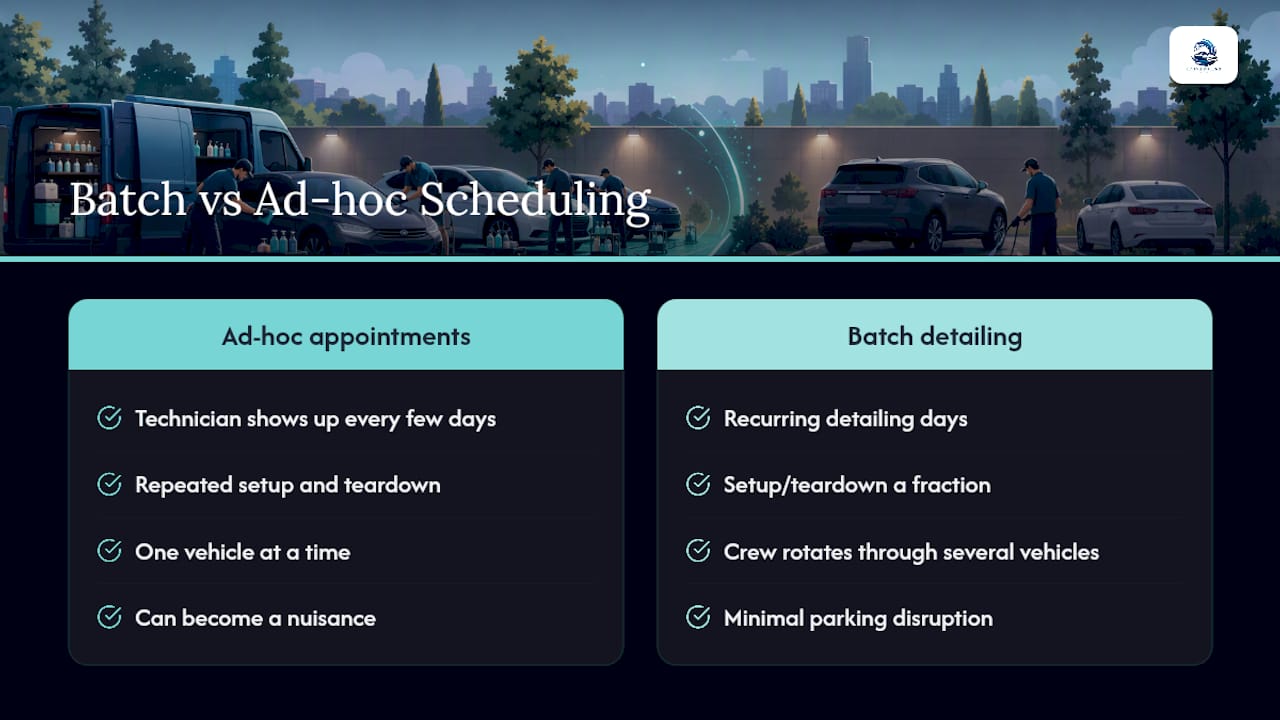
Compact rigs and trained crews make the batch approach work. A well-run team can rotate through several vehicles from one corner of a lot without ever blocking a drive aisle, and property managers increasingly treat this kind of on-site service as a tenant amenity rather than a disruption, since it adds value without any capital outlay on their end.
A common pattern: a delivery fleet books a predefined guest lot for a two-hour early-morning window before routes start, so detailing never overlaps with loading or peak parking demand.
What to Ask Before You Book
A few direct questions separate a genuinely low-impact detailer from one who'll leave your lot worse than they found it.
Ask whether they use onboard water or waterless methods, and how they handle wastewater. Ask what footprint they need and whether they can work from a single stall. Ask for a cleanup guarantee and photo sign-off in writing, not just a verbal promise.
Trust signals worth confirming:
- An eco-conscious, self-contained setup that needs no hookups from you
- Technicians trained specifically for shared-lot work, not just general detailing
- A clear cancellation or reschedule policy for weather
- Documented before-and-after photos as standard practice, not an upsell
Liability matters just as much. Ask about insurance coverage, how accidental contact with a neighboring vehicle is handled, and whether their staging respects ADA parking and striping rules so accessible spaces and walkways stay clear the entire time.
Why Living Waters Auto Wash Is Built for Shared Lots
Living Waters Auto Wash LLC runs fully mobile detailing with zero customer hookups, which is exactly what a condo lot or fleet yard needs. No hose, no outlet, no cords across the sidewalk.

The team brings onboard water and eco-conscious products for waterless exterior washes, self-contained interior deep cleans, and on-board generators for the rare job that needs a little extra power. Every technician is trained to work inside a single stall and leave it cleaner than they found it. For fleet managers, that same discipline scales into recurring maintenance routes that hit multiple vehicles without ever tying up a shared lot for a full day.
Residents can start with the $30 mobile exterior wash or the $199 full interior deep clean to see the process firsthand in one stall, no fuss. Fleet managers running condo, HOA, or business routes can request a custom fleet maintenance plan built around your property's access rules and quiet hours. Book online or send a fleet inquiry, and a scheduler will confirm your window before anyone shows up.
A Note From the Team
We've serviced enough condo lots and gated communities across Boca Raton, Pompano Beach, Coral Springs, and Parkland to know the drill: one stall, no fuss, cleaner than we found it. Small footprint, eco-conscious products, and a crew that treats your building like it's their own.
Frequently Asked Questions
Does mobile detailing need access to my water or electricity? No. Reputable detailers, including Living Waters Auto Wash LLC, bring onboard water tanks or waterless products and portable power, so your unit's hookups stay untouched.
Will detailing leave water or residue in my parking lot? Properly run appointments use containment pads or waterless methods specifically so nothing pools or drains into shared surfaces.
How much space does a mobile detailer actually need? Most jobs fit inside a single standard stall, roughly 12 by 20 feet, with no need to spread into neighboring spaces.
What if my HOA has rules about vendors or noise? Tell the detailer in advance. Addressing water use, noise, parking, and appearance ahead of time resolves most community concerns before they start.
Do I need to be home during the appointment? Not always. Many customers arrange key drop or gate code access and simply confirm by text once the job is complete.