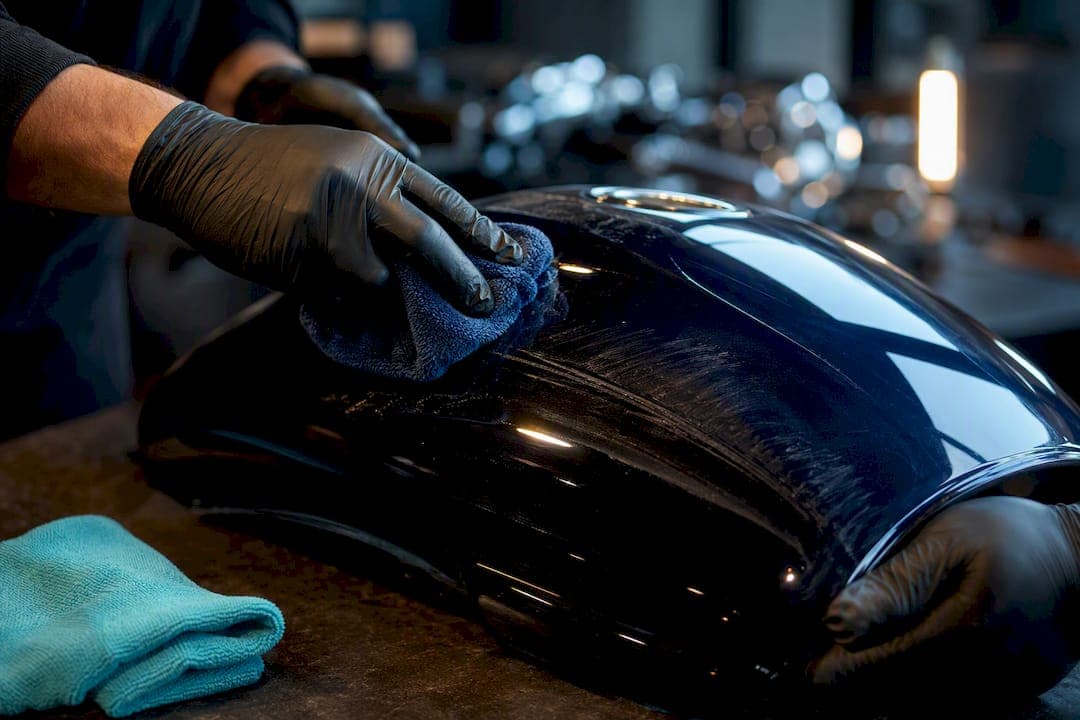
Expect $50 to $100 for a basic wash and wax, $200 to $350 for a full detail with polishing and sealant, and $400 to $800 or more for premium work like paint correction or ceramic coating. Pick DIY for routine cleaning between rides. Hire a pro for anything involving paint correction, chrome restoration, or ceramic coating, since mistakes there cost more to fix than the service itself.
TL;DR:
- Basic wash and wax costs between $50 and $100, suitable for routine cleaning handled by most riders themselves.
- Full detailing with polishing and sealant ranges from $200 to $350, requiring professional skill especially for curved surfaces.
- Premium services like paint correction or ceramic coating start at $400 and can exceed $800, with larger bikes or full dressers often costing more.
- Quality materials and bike condition significantly influence pricing, with repair or correction work adding to the total cost.
- Request detailed, on-site quotes with photos of problem areas to ensure accurate pricing and avoid surprises.
Table of Contents
- How Much Does Motorcycle Detailing Cost by Package?
- What Factors Drive Motorcycle Detailing Prices?
- Is DIY Detailing Cheaper Than Hiring a Pro?
- What Do Common Detailing Add-Ons Cost?
- How Do You Choose a Trustworthy Motorcycle Detailer?
- When Mobile, Eco-Conscious Detailing Is Worth the Price
- Get a Custom Motorcycle Detailing Quote
- Sources
- FAQ
How Much Does Motorcycle Detailing Cost by Package?
Motorcycle detailing prices fall into three rough tiers, and knowing what separates them keeps you from overpaying for a basic wash or underpaying for work that needs real skill.
A basic wash and detail typically runs $50 to $100 and covers a hand wash, wheel and tire cleaning, quick wax, and basic chrome wipe down. It's maintenance, not restoration. Most riders can handle this level themselves with a Saturday afternoon and the right products.
A full detail typically costs between two hundred and three hundred fifty dollars and adds real depth: paint polishing, a proper sealant application, deep chrome polishing, and leather or vinyl seat conditioning. This is where a detailer's actual skill starts to matter, because polishing a curved gas tank without burning through clear coat takes practice most owners don't have.
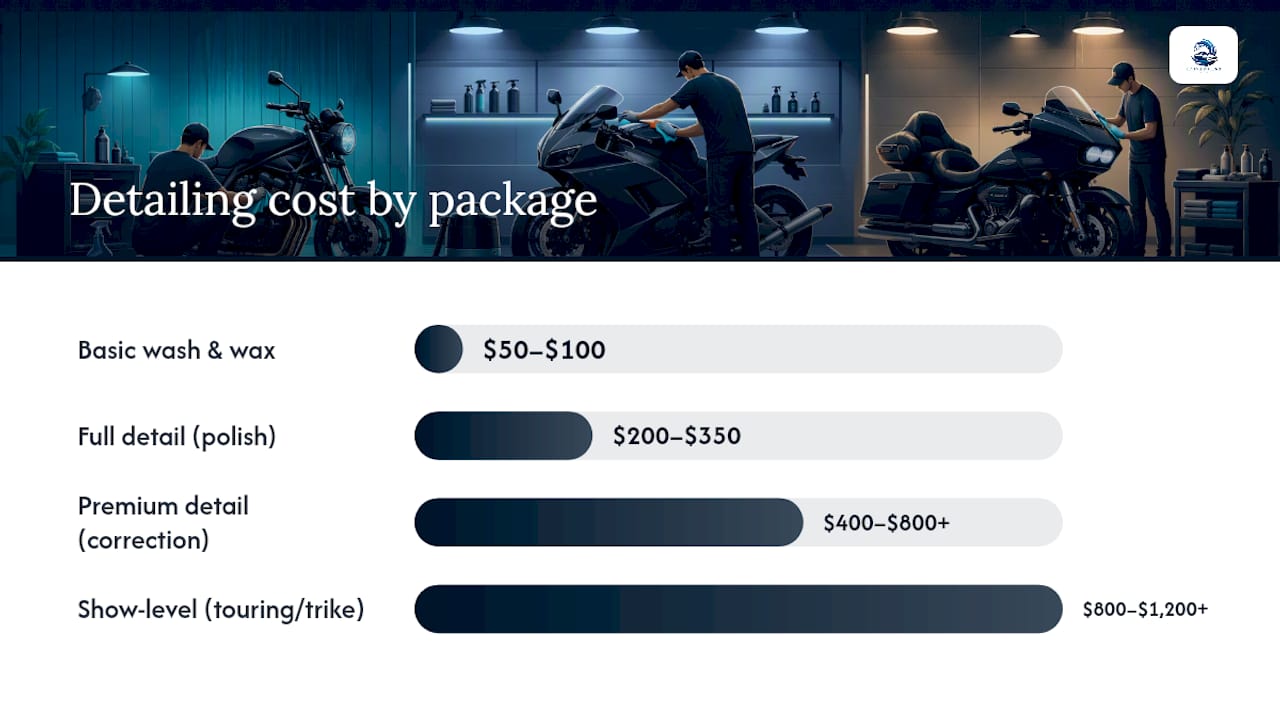
Premium or show-level detailing starts around $400 and can climb past $800 for extensive work. This tier includes multi-stage paint correction, ceramic coating prep and application, and the kind of finish work you'd want before selling a bike or entering a show. On large touring bikes and trikes, shops report premium packages running $800 to $1,200 or more when the correction work is extensive.
Bike class changes the math too. Some mobile detailers price by category, with sport bikes starting around $99, cruisers around $125, and touring bikes around $175 for comparable service levels. Sport bikes have less surface area and fewer chrome accents. Touring bikes and full dressers have saddlebags, extensive chrome, and more real estate to correct, so labor time goes up even when the service tier stays the same.
- Basic wash and wax: $50 to $100
- Full detail with polish and sealant: $200 to $350
- Premium detail with paint correction or ceramic coating: $400 to $800+
- Show-level correction on touring bikes or trikes: $800 to $1,200+
What Factors Drive Motorcycle Detailing Prices?
Detailers don't price off a flat rate card. They price off condition, materials, and time, and understanding that logic helps you spot a fair quote versus a lowball that will balloon once the bike is on the lift.
Motorcycles pack an unusual mix of materials into a small footprint: painted tank and fenders, chrome pipes and controls, raw or polished aluminum, leather seats, and sometimes carbon fiber fairings. Each surface needs a different product and technique, so a bike with five material types costs more to detail properly than a bike with two, even if both are the same size.
Condition matters just as much as materials. A bike stored outdoors with oxidized paint, corroded chrome, or years of road grime needs correction work a garage-kept bike never will. Special problems push quotes higher fast: melted rubber from a kickstand, stubborn decal residue, or heavy pitting on chrome all require extra labor hours that a base price doesn't cover.
Location plays a role too. Mobile detailers often price lower on overhead but add a modest convenience charge for bringing equipment to your driveway, while shop-based detailers may charge more but spread labor across a fixed setup.
- Surface materials (paint, chrome, aluminum, leather, carbon fiber)
- Current condition and prior maintenance history
- Bike size and complexity (naked bike vs. full touring rig)
- Labor hours required at the detailer's skill level
- Mobile convenience fee vs. fixed shop overhead
Pro Tip: Take photos of your bike's worst spots (corroded chrome, oxidized paint, sticky residue) and send them ahead of your quote request. You'll get a far more accurate price than a generic phone estimate, and fewer surprises once the work starts.
Is DIY Detailing Cheaper Than Hiring a Pro?
DIY saves money upfront but costs you time, and for certain jobs it can cost you more if you damage a surface a professional would have handled correctly the first time.
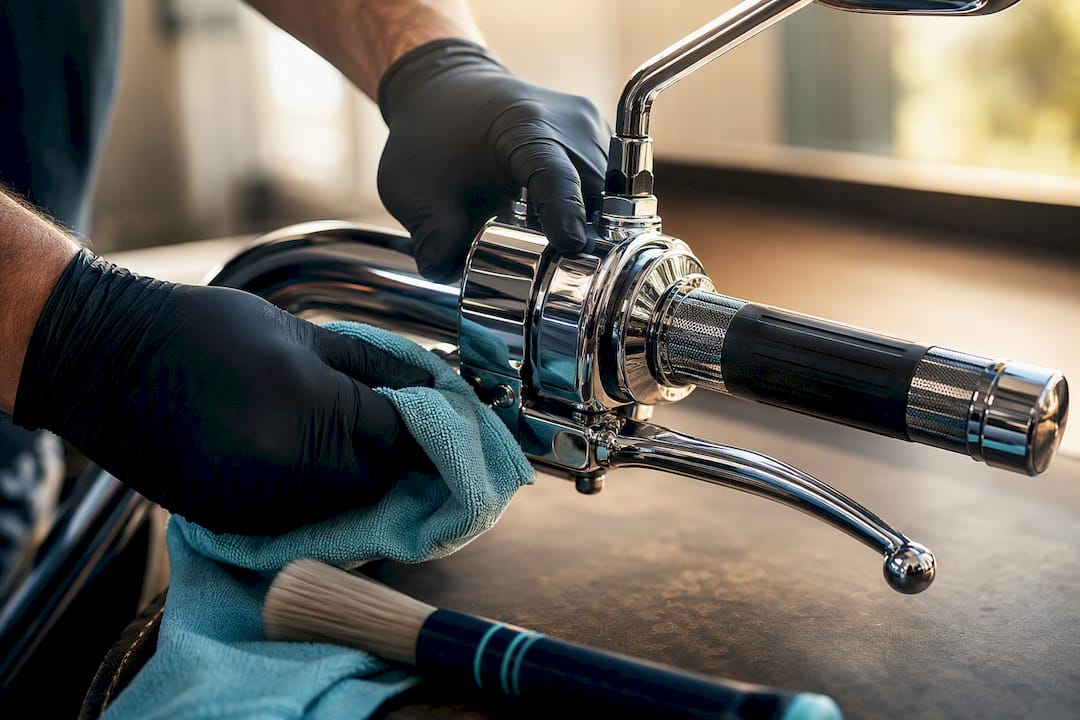
A basic DIY kit (wash soap, microfiber towels, wax, chrome polish, a soft brush set) runs somewhere in the range of a single basic professional wash once you buy quality products. The real cost is time. Beginners should plan on 6 to 8 hours to do a thorough job safely, while someone experienced with the process can finish in 2 to 4 hours. Professionals typically complete a full detail in that same 2 to 4 hour window, but they're moving faster because they've done it hundreds of times.
DIY makes sense for routine maintenance like regular washing, quick waxing, and chrome upkeep. Paint correction and long-lasting ceramic coatings are a different story. Both require equipment, product knowledge, and technique that take years to develop, and a botched correction attempt can leave swirl marks or thin spots in your clear coat that cost more to fix than a pro job would have in the first place.
| Approach | Typical Cost | Time Required |
|---|---|---|
| DIY basic kit (one time purchase) | $50 to $150 | 6 to 8 hours (beginner) |
| DIY experienced routine | Products only, ~$20 per wash | 2 to 4 hours |
| Professional full detail | $200 to $350 per visit | 2 to 4 hours |
| Professional paint correction/coating | $400 to $800+ per visit | 4 to 8+ hours |
What Do Common Detailing Add-Ons Cost?
Add-ons are usually where a simple quote turns into a bigger invoice, and knowing typical ranges helps you tell a fair upcharge from an inflated one.
Paint correction alone, separate from a full package, generally falls in the $100 to $400+ range depending on how many stages the paint needs and how much clear coat is left to work with. Ceramic coatings vary widely because durability claims range from 1 year to multi-year protection, and prep work scales with that promise. Entry-level coatings can start around $100 to $200, while multi-year ceramic packages on larger bikes often start near $499 and climb from there.
Other common add-ons: engine decontamination typically runs $50 to $150, chrome polishing on heavily oxidized pipes can add $75 to $200, and decal removal or tank graphic work varies based on adhesive age and paint sensitivity.
- Paint correction: $100 to $400+
- Ceramic coating: $100 to $200 (entry) up to $499+ (multi-year, larger bikes)
- Engine decontamination: $50 to $150
- Chrome polishing (heavy oxidation): $75 to $200
Wax lasts weeks, sealant lasts months, and ceramic coating can last years. The upfront cost climbs in that order, but so does the time between paid maintenance visits, which is why a coating often pencils out cheaper over two or three years than repeated waxing.
How Do You Choose a Trustworthy Motorcycle Detailer?
A good detailer will answer specific questions without hesitation. A vague answer or a rushed sales pitch is the clearest warning sign you'll get before handing over your bike.
- Ask exactly how many hours the job will take and what steps are included, since a real scope should list wash, decontamination, clay bar, polish, sealant or coating, chrome polish, and leather care by name.
- Ask what products they use for coatings specifically, and request the actual product name, not just "ceramic coating."
- Ask about their experience with motorcycles specifically, since car detailing skills don't automatically transfer to tank curves and chrome.
- Request a written estimate with the scope, timeline, and total price before any work starts.
- Ask for photos of past motorcycle work and expected cure times if a coating is involved.
Red flags worth walking away from: a quote dramatically below every other estimate you got, a detailer who can't describe their process step by step, or heavy pressure to add expensive coatings before they've even seen your bike. A detailer confident in their work will happily share aftercare instructions and warranty terms upfront.
When Mobile, Eco-Conscious Detailing Is Worth the Price
The math on professional detailing shifts once you factor in what your time and your bike's finish are actually worth. A rider who values a weekend more than $150 in savings, or who's nervous about attempting paint correction on a bike they plan to keep for years, gets more value from a pro visit than the sticker price suggests.
Mobile service adds a layer most riders underestimate: no trailer, no dropping the bike off, no waiting around a shop. An eco-conscious process that skips heavy water and harsh runoff chemicals also protects your driveway and your bike's electronics from the kind of pressure washing that shortens a wiring harness's life. For anyone on a recurring maintenance plan, keeping a bike on a set schedule tends to cost less over a year than letting oxidation and grime build up between occasional deep cleans.
— Living
Get a Custom Motorcycle Detailing Quote
Pricing guides only get you so far. The company brings the actual quote to your driveway, evaluating your bike's specific condition, material mix, and finish goals instead of guessing from a phone call. As a mobile, eco-conscious service built around meticulous, on-site work, the detailer skips the trailer trip and the shop wait entirely, bringing trained technicians and full detailing capability straight to you.
Whether you need a basic wash before riding season or a full paint correction and ceramic coating package, request a quote through the fleet and service booking page and get pricing based on your actual bike, not a national average.
Sources
- How to Detail a Motorcycle: Complete guide to detailing motorcycles
- Understanding The Pricing of Motorcycle Detailing - Detailing Nearby
- Motorcycle Detailing | Fresh Layer Mobile
- Motorcycle Detailing | Northeast Detailing
FAQ
What Is the Best Way to Detail a Motorcycle?
Work top to bottom and dirtiest to cleanest: wash first, then decontaminate with a clay bar, then polish, then seal or coat, then finish with chrome and leather care. Skipping the clay bar step is the most common reason wax or sealant fails to bond properly.
How Much Does It Cost to Ceramic Coat a Motorcycle?
Ceramic coating for a motorcycle typically ranges from $100 to $200 for entry-level, shorter-duration coatings up to $499 or more for multi-year coatings on larger bikes, depending on prep work and coating longevity.
How Much Should You Tip on a $200 Motorcycle Detail?
There's no universal standard for detailing tips, but many customers tip 10% to 20% for quality work, similar to other personal service industries, which would put a $200 detail in the $20 to $40 range if you choose to tip.
What Is the 12 Second Rule for Motorcycles?
The 12 second rule is a road safety guideline for scanning traffic ahead while riding. It's a riding technique, not a detailing term, so it does not relate to cleaning products or timing.
Is DIY Motorcycle Detailing Actually Cheaper Than Hiring a Pro?
DIY costs less in dollars for routine washing and waxing, but takes 6 to 8 hours for beginners versus 2 to 4 hours for a professional. For paint correction or ceramic coating, hiring a pro usually costs less overall once you account for the equipment and product costs of a DIY attempt.