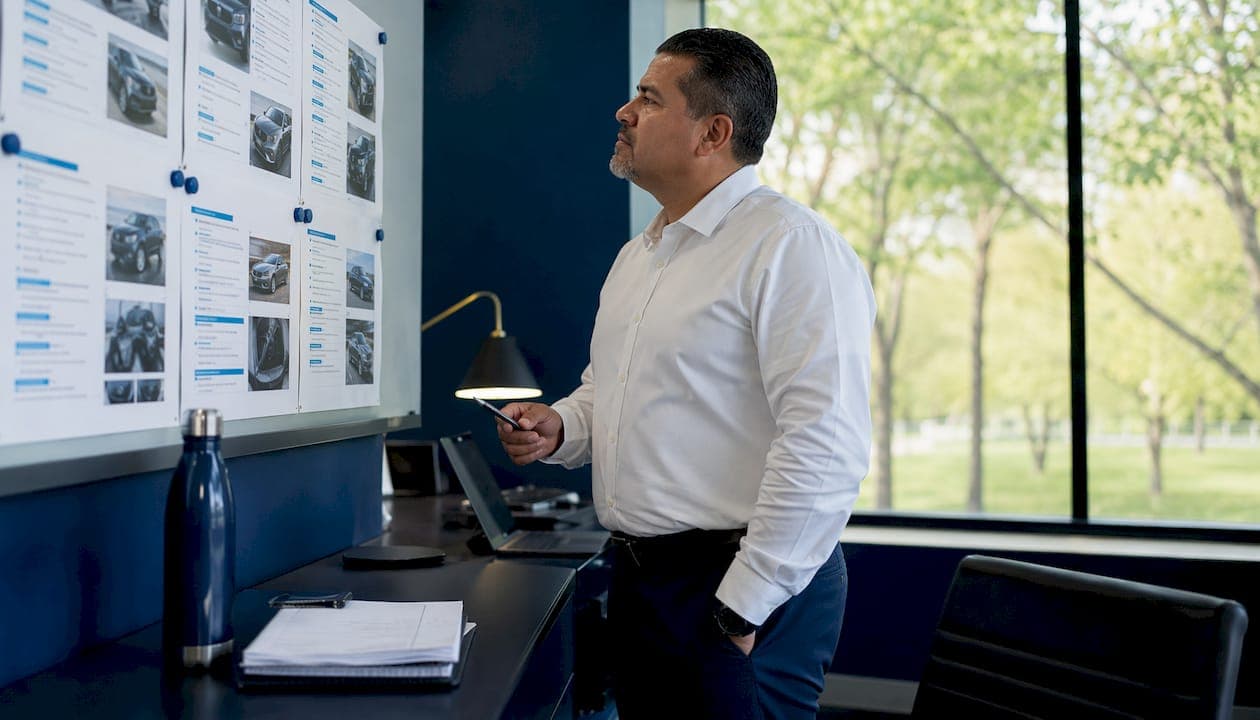
What every fleet manager should know about detailing protocols
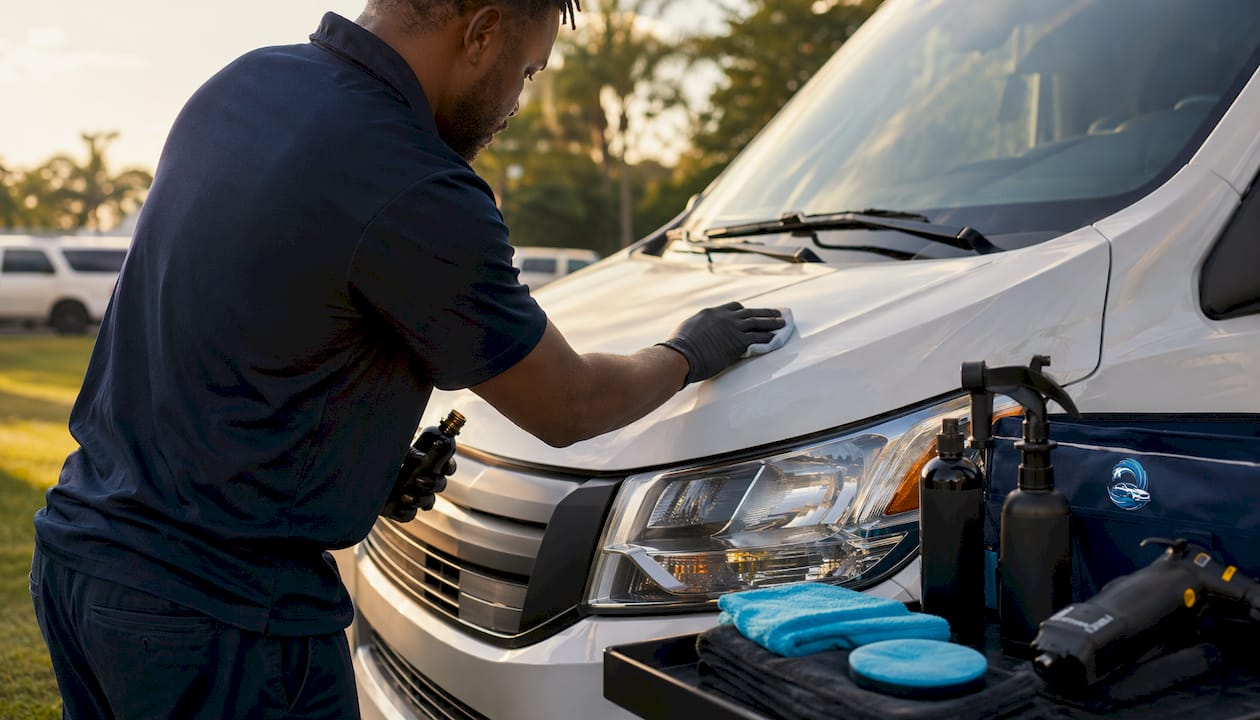
Fleet vehicle detailing best practices come down to three non-negotiables: consistency across every vehicle, the right products for each surface, and scheduling that keeps your operation running. Get those three right, and you protect paint, extend vehicle life, reduce surprise repair costs, and show up to every client interaction looking like you mean business.
Here is the short version of what a solid fleet detailing program looks like in practice:
- Standardize protocols across all locations. Every vehicle, every site, same steps. Consistent detailing processes prevent uneven vehicle condition and eliminate the costly scramble of last-minute fixes.
- Use vehicle-compatible, high-quality products. pH-balanced cleaners, commercial-grade degreasers, and surface-specific treatments protect rather than degrade finishes over time.
- Schedule around operations, not after them. Off-peak hours, early mornings, and mobile on-site service keep vehicles in rotation instead of sitting at a shop.
- Cover both exterior and interior systematically. Wash, dry, wax, vacuum, steam clean, treat surfaces. Each step has a purpose; skipping one compounds the next problem.
- Write and enforce Standard Operating Procedures (SOPs). Trained staff following documented steps produce repeatable results and handle chemicals safely.
- Inspect and document every session. A detailing appointment is also your best opportunity to catch a rust spot, a cracked seal, or a worn trim piece before it becomes a repair bill.
- Match intensity to frequency. A full detail every month with weekly washes is more effective than a quarterly deep clean on a filthy vehicle.
Pro Tip: Apply a paint sealant or ceramic coating to every vehicle in the fleet, not just the newest ones. These coatings dramatically slow UV degradation and make routine washes faster, which compounds into real time and cost savings across a large fleet.
Table of Contents
- Why regular detailing pays off across your entire fleet
- Exterior cleaning: the steps that actually protect your vehicles
- Interior cleaning: comfort, hygiene, and longevity in every cabin
- How protective coatings extend the life of your fleet's paint and wraps
- How often should you detail your fleet vehicles?
- Mobile detailing gives fleet managers a real operational edge
- Budgeting for fleet detailing without overspending
- Training and standardizing your detailing team
- Documentation and quality control that actually work
- Living Waters Auto Wash LLC brings professional fleet detailing to your location
- Key Takeaways
Why regular detailing pays off across your entire fleet
The case for consistent detailing goes well beyond appearances. Regular fleet detailing removes road salts, brake dust, and environmental contaminants that cause corrosion and accelerate surface wear. Left untreated, those elements shorten vehicle lifespan and drive up maintenance costs.
Here is what a structured detailing program actually delivers:
- Preserved resale value. Vehicles with well-maintained paint and clean interiors command higher trade-in prices at turnover, directly improving fleet profitability.
- Lower long-term maintenance costs. Detailing catches early signs of rust, seal damage, and wear before they escalate. That is how detailing reduces fleet depreciation in practical terms.
- Reduced downtime. A vehicle pulled for emergency corrosion repair or a cracked interior panel is a vehicle off the road. Preventive detailing keeps that from happening.
- Better driver morale. Regular interior detailing improves hygiene and comfort, which contributes to driver satisfaction and retention. Drivers who feel their employer maintains their workspace tend to take better care of the vehicle themselves.
- Stronger brand image. A clean, consistent fleet signals professionalism before anyone says a word. Sporadic or reactive cleaning undermines that signal.
- Even aging across the fleet. Without a standard schedule, some vehicles deteriorate faster than others, creating an inconsistent appearance that reflects poorly on the business.
Exterior cleaning: the steps that actually protect your vehicles
Exterior care is where most of the protective work happens, and where most fleets cut corners. A proper exterior detail is not just a wash. It is a systematic process that removes contaminants, restores the surface, and seals it against the next round of exposure.
- Start with a thorough pre-rinse and degreaser application. Commercial vehicles accumulate diesel soot, road film, and grease that a standard soap cannot lift. Use an all-purpose cleaner or degreaser on wheel wells, lower panels, and the undercarriage before the main wash.
- Pay attention to the undercarriage. Road salts and mud pack into the undercarriage and accelerate rust from the bottom up. Pressure washing this area regularly is one of the highest-ROI steps in fleet exterior care.
- Dry properly. Air drying leaves water spots, especially in hard-water markets. Use microfiber drying towels or a forced-air blower to get a streak-free finish on glass and painted surfaces.
- Wax or apply a paint sealant after every full detail. Wax provides a sacrificial layer between the paint and the environment. Sealants last longer and offer better UV resistance, making them the better choice for vehicles with heavy sun exposure.
- Polish only when needed. Machine polishing removes oxidation and light scratches, but it also removes a thin layer of clear coat. Reserve it for vehicles showing visible dullness, not as a routine step.
- Maintain wraps and decals carefully. Avoid high-pressure washing directly on wrap edges, and never use solvent-based cleaners on vinyl. Wraps are a branding investment; treat them accordingly.
Pro Tip: Dual-action polishers and steam cleaners are the two tools that separate professional fleet detailing from a basic wash-and-wax. The polisher handles paint correction efficiently without the risk of burning through clear coat; the steam cleaner sanitizes and degreases without harsh chemicals.
Interior cleaning: comfort, hygiene, and longevity in every cabin
Interior condition affects driver morale directly, and it also determines how well the vehicle holds its value at trade-in. A cabin that smells, has stained upholstery, or has cracked leather tells the next buyer everything they need to know about how the vehicle was managed.
- Vacuum seats, carpets, and floor mats at every service. Debris ground into carpet fibers acts like sandpaper over time. Regular vacuuming is the simplest way to slow interior wear.
- Use steam cleaners for stains and odors. Steam penetrates upholstery fibers without soaking them, which means faster drying and more effective sanitization than wet shampooing alone.
- Condition leather and vinyl surfaces. Untreated leather cracks within a few years of regular use. A quality conditioner applied every one to two months keeps surfaces supple and prevents the kind of deterioration that drops resale value.
- Sanitize high-touch surfaces. Steering wheels, door handles, gear shifts, and touchscreens accumulate bacteria at rates most people underestimate. In a fleet where multiple drivers share vehicles, this is a hygiene issue, not just an aesthetic one.
- Clean interior glass for visibility and safety. Interior glass fogs and films from off-gassing plastics and breath. A streak-free interior glass cleaning is a safety step, not a cosmetic one.
- Align interior service frequency with vehicle usage. A vehicle running eight-hour shifts with multiple drivers needs interior attention every two weeks. A low-mileage executive vehicle might go a month between full interior services.
How protective coatings extend the life of your fleet's paint and wraps
Paint sealants and ceramic coatings are not luxury add-ons for a fleet. They are a cost-reduction strategy. Sealants and ceramic coatings protect paint and vehicle wraps from UV damage, corrosion, and dirt adhesion, particularly in harsh environments with heavy sun or road salt exposure.
Here is how to think about each option:
- Paint sealants are polymer-based products that bond to the clear coat and last three to six months. They are easier to apply than ceramic coatings and work well as a quarterly maintenance layer.
- Ceramic coatings form a semi-permanent bond with the paint surface and can last one to several years depending on the product and maintenance. They offer superior UV resistance and make surfaces hydrophobic, meaning water and grime sheet off rather than bonding to the finish.
- Application frequency matters. A ceramic coating applied once and never maintained will degrade. Top it with a ceramic spray detailer every few months to extend its performance.
- Coatings protect wraps as much as paint. Branded graphics are expensive to replace. A coating over a wrap reduces UV fading and makes the surface easier to clean without aggressive scrubbing that lifts edges.
- Choose products rated for commercial use. Consumer-grade coatings are not formulated for the contamination levels or wash frequencies that fleet vehicles experience.
- Environmental compliance matters. The Florida Department of Environmental Protection's Best Management Practices for mobile vehicle washing outline how to handle runoff and chemical use responsibly. Coating products with low VOC content and biodegradable carriers align with these standards.
Ceramic coatings do not just protect paint. They change the economics of fleet maintenance. A vehicle that repels dirt and cleans in half the time at every wash cycle saves labor hours across every service interval for years. For a fleet, that compounds into a meaningful operational advantage.
How often should you detail your fleet vehicles?
Frequency is where most fleet programs either succeed or fall apart. Too infrequent and contamination builds up faster than routine washing can address. Too aggressive and you are spending budget on services that do not add proportional value.
A practical framework for most U.S. commercial fleets:
- Weekly or bi-weekly exterior washes for vehicles with heavy road exposure, customer-facing routes, or premium branding. This is the baseline that prevents contamination from bonding to the finish.
- Monthly full details covering exterior polish, interior deep clean, and surface treatment. This is the cadence that catches early wear and keeps the fleet looking consistent.
- Quarterly paint protection refreshes to reapply sealant or maintain ceramic coating performance. This is also a good interval for undercarriage inspection and wheel decontamination.
- Use detailing frequency guidelines to set schedules based on vehicle type, mileage, and environment rather than a one-size calendar.
- Mobile detailing on-site removes the scheduling friction that causes programs to slip. When the service comes to the vehicles, the schedule actually holds.
- Standardize across all locations. A fleet operating in multiple cities needs the same schedule everywhere. Without standardization, some vehicles age faster, and the fleet looks inconsistent to clients who see it across markets.
Mobile detailing gives fleet managers a real operational edge
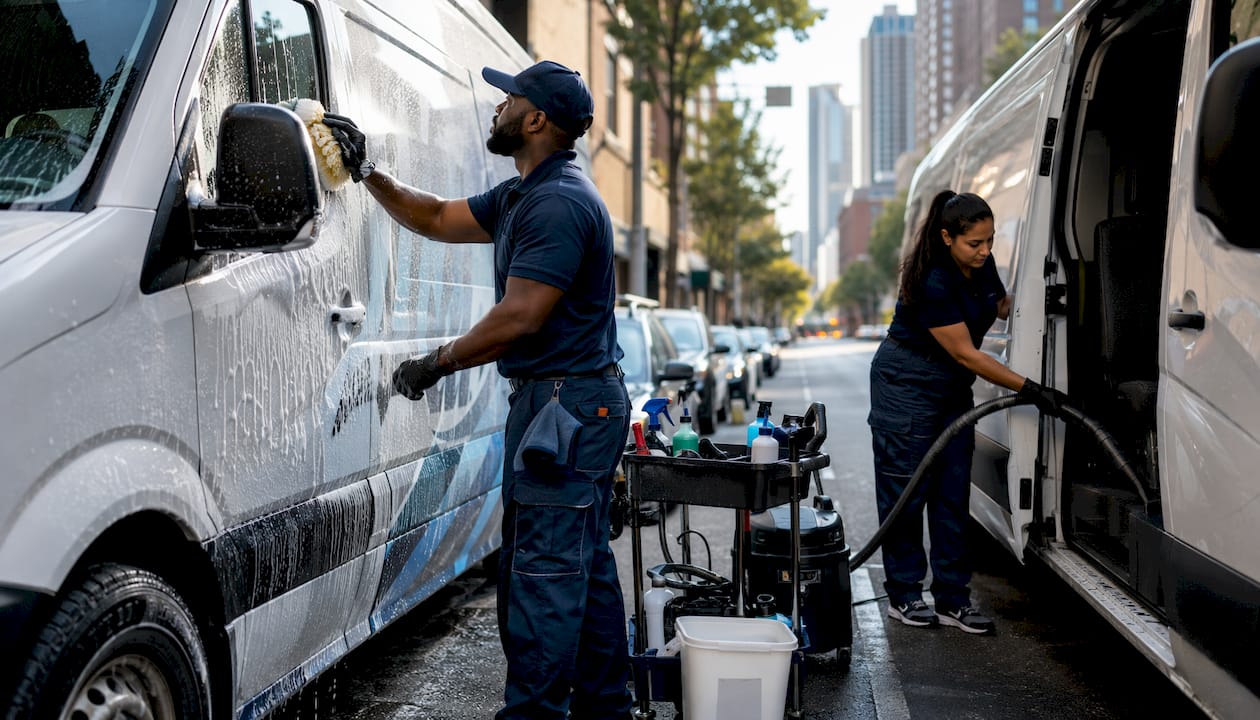
The single biggest reason fleet detailing programs fail is downtime. Sending vehicles to an off-site facility means lost service hours, driver time spent on logistics, and a schedule that competes with actual operations. Mobile detailing solves this by performing maintenance on-site during off-peak times, keeping vehicles operational and the schedule intact.
The operational advantages are concrete:
- No transport time. Vehicles stay at your facility and go back into service immediately after detailing.
- Flexible scheduling. Service before shifts, after routes, or on weekends. The detailer works around your operation, not the other way around.
- Better consistency. When the service comes to you on a set schedule, it actually happens. Off-site programs drift because the friction of getting vehicles there creates excuses to skip.
- On-site inspection opportunity. A mobile detailer working through your fleet is also a second set of eyes on each vehicle. Early detection of rust, seal failure, or interior damage is a direct cost-saving benefit.
- Scalability. A mobile provider can service multiple vehicles in a single visit, rotating through the fleet without disrupting operations.
For fleet managers looking to grow their operational infrastructure, working with a partner like Leapify Media can help align detailing programs with broader fleet management and marketing systems.
Budgeting for fleet detailing without overspending
Fleet detailing budgets fail in one of two ways: either the program is underfunded and vehicles deteriorate, or money gets spent on services that do not match the fleet's actual needs. Neither is a good outcome.
A practical approach to budgeting starts with categorizing your vehicles by usage intensity and client exposure. A branded sales van that meets customers daily justifies a higher per-vehicle spend than a utility truck that stays on job sites. Allocate accordingly rather than applying a flat per-vehicle rate across the entire fleet.
Factor in the cost of not detailing. A repaint on a single commercial vehicle can run several thousand dollars. Monthly detailing in high-UV or high-salt markets can extend the need for a repaint by two to three years. In Las Vegas, data shows a 10-vehicle fleet can avoid repaints and increase resale value, capturing between $25,000 and $46,000 over five years through preventive detailing. The math on preventive detailing is usually favorable.
Negotiate package rates with your detailing provider for multi-vehicle visits. Mobile providers especially tend to offer volume pricing when they can service multiple vehicles in a single stop. Lock in quarterly or annual agreements to stabilize costs and guarantee scheduling priority.
Training and standardizing your detailing team
Whether you use in-house staff or a contracted provider, the quality of your fleet detailing program depends on how well the people doing the work are trained and how clearly the process is documented. Detailed SOPs improve consistency, quality control, and safe chemical handling across every person who touches your vehicles.
A solid training program covers product selection and dilution ratios, surface-specific techniques for paint versus vinyl versus glass, correct equipment operation including pressure washers and polishers, chemical safety and proper PPE use, and the inspection checklist each vehicle should pass before it is returned to service.
Standardization matters as much as training. A detailer who knows the right technique but applies it differently each time produces inconsistent results. Written SOPs with photos or video references eliminate ambiguity. Review them quarterly and update them when products or equipment change.
Documentation and quality control that actually work
Documentation is the part of fleet detailing most managers skip, and it is also the part that pays off most clearly over time. A record of each vehicle's detailing history, condition notes, and any issues flagged during service gives you a baseline to measure against and a paper trail if a damage dispute arises.
At minimum, document the date of service, services performed, products used, and any damage or wear observed. Photographs taken before and after each session are worth the two minutes they take. Over time, this record shows you which vehicles are aging faster, which locations are running behind schedule, and where your detailing spend is producing the most value.
Quality control should include a post-service inspection checklist. Inspect fleet vehicles after detailing for missed spots, water spots on glass, product residue on trim, and any newly visible damage. A simple 10-point checklist completed by a supervisor or fleet manager takes five minutes and catches problems before the vehicle goes back into service.
Living Waters Auto Wash LLC brings professional fleet detailing to your location
Managing a fleet means your vehicles are working assets, not weekend cars. Living Waters Auto Wash LLC is built for exactly that reality: fully mobile, no hookups needed, and operating throughout Boca Raton, Pompano Beach, Coral Springs, and Parkland.

The difference between Living Waters Auto Wash LLC and a traditional detailing shop is simple. Your vehicles stay at your facility. The team comes to you, works around your schedule, and handles everything from express interior cleaning to full exterior protection. No transport time, no disruption to your routes, and no compromising on quality. Their fleet wash services cover South Florida fleets of all sizes, with a 5-star reputation built on consistent results and meticulous attention to every vehicle. For interior work, the $199 full interior deep clean is a practical starting point for fleets that need a cabin reset before establishing a regular maintenance schedule. Get in touch with Living Waters Auto Wash LLC to set up a fleet service plan that fits your operation.
Key Takeaways
Consistent, scheduled fleet detailing is the single most effective way to protect vehicle value, reduce maintenance costs, and maintain a professional brand image across your entire fleet.
| Point | Details |
|---|---|
| Standardize across all locations | Uniform detailing protocols prevent uneven vehicle aging and eliminate costly last-minute fixes. |
| Protective coatings cut long-term costs | Paint sealants and ceramic coatings reduce UV damage and make every wash faster, compounding savings across the fleet. |
| Mobile detailing minimizes downtime | On-site service during off-peak hours keeps vehicles in rotation without disrupting operations. |
| Document every service session | Pre- and post-service records with photos catch early damage and support quality control over time. |
| Living Waters Auto Wash LLC | Fully mobile fleet detailing in Boca Raton, Pompano Beach, Coral Springs, and Parkland, with no hookups required and 5-star results. |