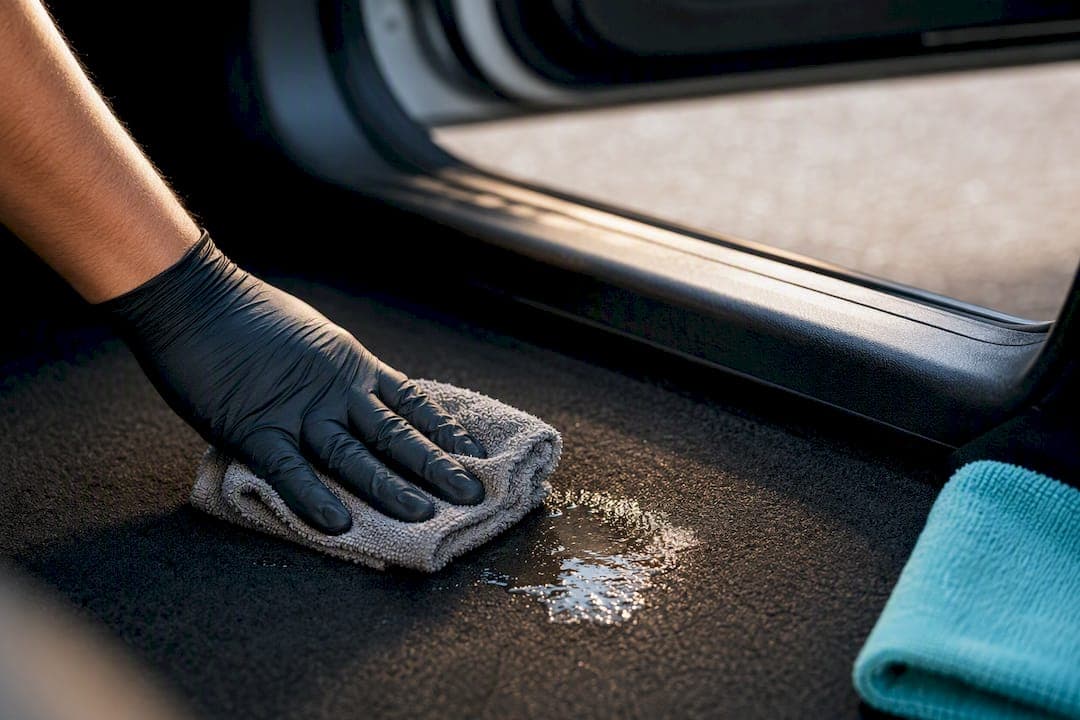
If gasoline just spilled inside your car, open every door and window first, don't start the engine, and blot the liquid before covering it with clay kitty litter or baking soda. If the smell won't quit after a full cleanup, or you spot wet patches under the vehicle, that's your cue to call a mechanic or a mobile detailer like Living Waters Auto Wash LLC rather than keep fighting it yourself.
TL;DR:
- Gasoline vapor is heavier than air and settles into hidden areas like trunk wells and under-seat pockets, where it can still pose a fire risk even after cleaning.
- Do not start the engine or use electrical devices in the vehicle until all gasoline fumes are thoroughly ventilated and absorbed.
- Use blotting, clay litter, baking soda, or cornstarch to absorb gasoline, and avoid rinsing with water that can spread the spill deeper into padding or fabric.
- Residual oily hydrocarbon film can continue releasing odors; cleaning with vinegar, dish soap, or enzymatic cleaners is necessary to break down these odors at the molecular level.
- Professional remediation with extraction and ozone treatment is recommended if gasoline has penetrated padding or if strong odors persist after initial DIY cleanup.
Table of Contents
- How Do You Handle a Gasoline Spill in Your Car Safely?
- Which Absorbents Actually Pull Gasoline Out of Upholstery?
- How Do You Clean Gas Spill Residue Without Just Masking It?
- Why Does Gasoline Smell Linger for Weeks in Some Cars?
- Is That Smell From the Spill or a Fuel-System Leak?
- When Should You Call a Professional Detailer Instead of DIY?
- How Should You Dispose of Gasoline-Soaked Cleanup Materials?
- Our Take on DIY Cleanup vs. Calling a Pro
- Get Your Car's Gasoline Smell Handled at Your Driveway
- Where to Go for More on Gasoline Spills and Car Odor Removal
- Sources
How Do You Handle a Gasoline Spill in Your Car Safely?
Fire risk comes before cleanup. Gasoline vapor ignites at concentrations as low as 1.4% in air, and a closed car cabin traps that vapor far faster than most people expect.
Start by getting airflow moving through the car. Open all four doors and both front windows, and if the vehicle can be safely pushed or rolled outdoors, get it away from the garage, carport, or anything with a pilot light or outlet nearby. Do not turn the key. Starting the engine, running the blower, or even flipping on the dome light can throw a spark into vapor that's pooled somewhere you can't see.
Gasoline vapor is heavier than air, so it settles into trunk wells, under-seat pockets, and floor pans rather than floating off. That means a spill can look "cleaned up" on the surface while a hidden pocket of vapor still sits low in the car, invisible and flammable.
- Kill every possible ignition source: no smoking, no lighters, no keyless start, no phone charging.
- Put on rubber or nitrile gloves and, if the fumes are strong, a respirator rated for organic vapors, not just a dust mask.
- Skip the shop-vac and household vacuum until the liquid is fully absorbed and dry. Both can spark or aerosolize fumes.
- If you feel dizzy, get a headache, or start coughing, step away and call 911. Heavy fume exposure is a real medical event, not something to push through.
Pro Tip: Crack the windows a few inches even overnight after you think you've cleaned everything up. Vapor pockets in the trunk or under the seats can keep releasing fumes for a day or more after the visible spill is gone.
Which Absorbents Actually Pull Gasoline Out of Upholstery?
Water is the wrong first move here. Rinsing a fresh spill spreads gasoline sideways and pushes it deeper into the padding underneath the fabric, which is the opposite of what you want. Absorbents and blotting, not liquid, do the real work.
- Blot, don't rub. Press disposable rags or paper towels straight down onto the puddle and lift straight back up. Rubbing grinds the fuel further into the weave of the fabric and the foam below it.
- Bury it in absorbent. Cover the wet area with 1 to 2 inches of clay-based kitty litter, baking soda, or cornstarch. Any of the three will draw liquid up out of the fibers through capillary action.
- Wait it out. Leave the absorbent sitting for several hours, ideally overnight, before touching it again. Rushing this step is the single most common reason gasoline odor lingers for weeks instead of days.
- Sweep and vacuum, once it's dry. After the litter or powder has fully absorbed the liquid and hardened or clumped, sweep it into a dustpan and finish with a shop vac rated for dust and debris pickup. Never run a vacuum over anything still wet with gasoline.
- Pull anything removable. Floor mats, seat covers, and trunk liners that took a direct hit should come out of the car entirely and get bagged separately.
A few things worth flagging before you move on:
- Cornstarch and baking soda work faster on light residue; clay litter handles bigger puddles better because it holds more volume.
- Carpet padding underneath the visible carpet layer often stays wet long after the surface looks dry. Press a clean white cloth into the carpet and check it before declaring the job done.
- Fabric seats and cloth headliners near the spill site deserve the same blot-and-absorb treatment if any splash reached them.
How Do You Clean Gas Spill Residue Without Just Masking It?
Getting the liquid up is only half the job. What's left behind is an oily hydrocarbon film that keeps releasing odor molecules long after the puddle is gone, and spraying air freshener on top of it just adds a second smell stacked on the first one.
For oily residue on hard surfaces or vinyl, mix warm water with a grease-cutting dish soap like Dawn and work it in with a soft brush or cloth, then blot dry. For odor sitting in fabric that's already dry to the touch, a 1:1 solution of white vinegar and water breaks down the smell at the molecular level rather than covering it, according to the EPA's guidance on gasoline odor removal. Test either solution on a hidden patch of fabric first since some dyes react to vinegar's acidity.
Enzymatic cleaners, the same category sold for pet accidents, can help on deeper residue because the enzymes target organic compounds directly instead of just diluting them. Read the label before buying one, though. Some are formulated specifically for biological stains like urine and protein and do little against petroleum hydrocarbons, so look for one that explicitly lists gasoline, oil, or fuel odor on the packaging.
- Apply cleaning solutions with a spray bottle, not a bucket. Less liquid means less risk of re-saturating the padding you just dried out.
- Work in small sections and blot immediately rather than letting solution pool.
- Let the car air dry with windows cracked between treatments instead of closing it up to "seal in" the clean smell.
Pro Tip: Point a small fan at the treated area with the doors open rather than closing the car up to dry. Trapped moisture on top of leftover hydrocarbons is exactly how mildew smell gets added to gasoline smell.
Why Does Gasoline Smell Linger for Weeks in Some Cars?
How long the odor sticks around depends almost entirely on how far the gasoline traveled before you got to it. A small splash blotted up within minutes often airs out in one to three days, based on the practical cleanup sequence outlined by CarXplorer. A spill that sat for an hour, soaked through the carpet, and hit the foam padding or sound-deadening material underneath can take weeks to fully clear, even with diligent cleaning.
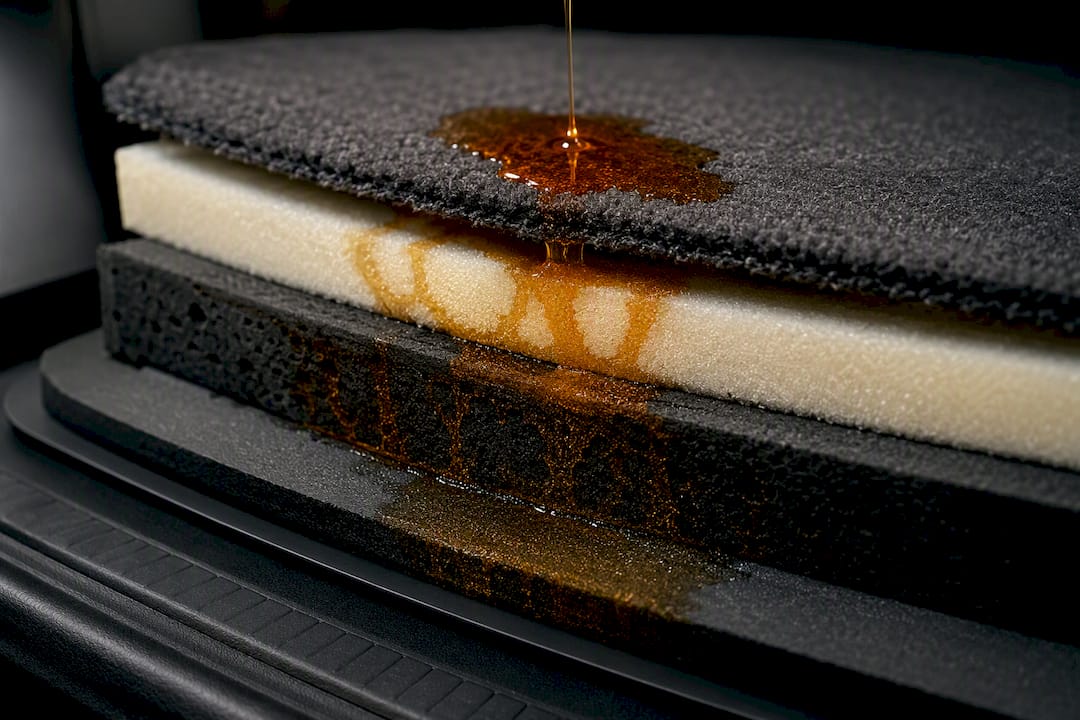
That gap comes down to where the fuel ends up. Surface-level gasoline evaporates. Gasoline that penetrated carpet padding, seat foam, or the cabin air vents keeps off-gassing slowly because those materials trap hydrocarbons and release them gradually every time the car heats up in the sun.
Passive odor absorbers have a real but limited role here. Activated charcoal bags and even bowls of coffee grounds left in the cabin overnight pull airborne odor molecules out of the air, which helps the car smell better day to day. Neither one removes gasoline embedded in fabric or foam, though, so they're a stopgap, not a fix.
- Charcoal and coffee grounds: manage airborne smell, don't touch embedded residue.
- Ozone treatment: breaks down odor molecules at the source, but it has to be run in an empty vehicle by a trained technician since ozone itself is harmful to breathe.
- Hot-water extraction paired with enzymatic treatment: reaches padding and foam that surface cleaning can't touch.
If you've blotted, absorbed, and cleaned residue and the smell is just as strong four or five days later, that's a sign the fuel reached the padding layer, and no amount of extra vinegar solution on the surface is going to fix that. That's the point where professional extraction earns its cost.
Is That Smell From the Spill or a Fuel-System Leak?
A spill you caused, from a gas can or an overfilled tank, is a contamination problem. A leak coming from the fuel system itself is a mechanical problem, and treating one like the other can be dangerous.
Check for these signs before you decide it's "just" residual odor:
- Wet or dark patches on the pavement under the vehicle after it's been parked for a while.
- Smell that gets noticeably stronger once the engine is running, versus staying constant whether the car is on or off.
- Fuel odor coming from under the hood rather than from the cabin floor or seats.
- A fuel gauge reading that's dropping faster than your driving would explain.
Any one of those points to the fuel system, not the interior, and that changes the response. NHTSA's vehicle safety guidance is direct on this: a persistent smell or visible leak signs mean the fuel system needs inspection by a qualified mechanic before the car goes back on the road.
If gasoline reached the engine bay or splashed near electrical connectors during the spill, don't start the car and don't attempt fixes yourself. Fuel vapor near a spark from starter motors or electrical contacts can ignite, according to safety guidance from Drive Smart Tools. When in doubt, arrange a tow rather than turn the key to "just see."
When Should You Call a Professional Detailer Instead of DIY?
Some spills are a Tuesday-afternoon fix with kitty litter and a rag. Others aren't, and knowing the difference saves you weeks of driving around with the windows cracked.
Call a professional when any of these apply:
- The spill soaked a large area of carpet or seat fabric rather than staying contained to a small patch.
- You've blotted, absorbed, and cleaned residue, and the smell is still strong after several days.
- You suspect gasoline reached the padding, foam, or the HVAC intake and vents.
- There's any sign of a fuel-system leak rather than a one-time spill.
Professional remediation goes past what a bottle of vinegar can do. Detailers use hot-water extraction machines to pull liquid and residue out of carpet padding and seat foam, ozone generators to break down odor molecules that have already worked into the material, and sometimes pull seats entirely to reach the sound-deadening foam underneath, where gasoline tends to hide according to AutoDetailPedia. A thorough job also includes checking and cleaning the cabin air filter and HVAC intake, since fumes drawn through the vents can leave residue on the filter itself and keep recirculating a faint gas smell every time the AC kicks on.
Before hiring anyone, ask what method they use, whether ozone treatment happens in an empty vehicle with proper ventilation afterward, how they dispose of contaminated materials, and whether the visit comes with any odor-free guarantee. A fully mobile operation matters for a spill situation specifically: you're not driving a fuel-soaked car anywhere, you're having someone come handle it where it sits.
Pro Tip: Ask any detailer point-blank whether their ozone treatment happens with the car empty and sealed, then aired out afterward before you get back in. If they're vague about that step, keep calling around.
How Should You Dispose of Gasoline-Soaked Cleanup Materials?
Soaked rags, saturated kitty litter, and pulled floor mats are hazardous waste, not regular trash. Seal them in a heavy-duty plastic bag or a sealed metal container immediately after cleanup, since gasoline-soaked rags left loose can spontaneously combust as they dry.
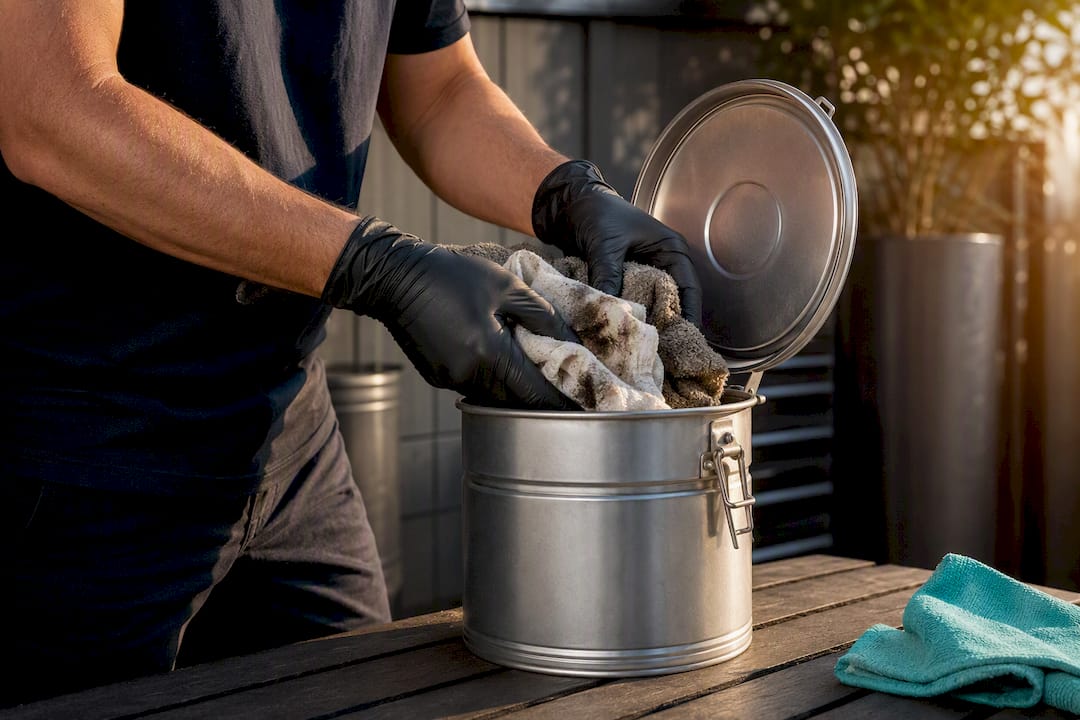
Most municipalities run household hazardous waste drop-off programs specifically for this kind of material. Check your local waste authority's site rather than guessing, since state-level guidance on fluid spill cleanup confirms rules vary by jurisdiction. Never pour leftover gasoline down a drain or toss soaked rags in with your weekly trash pickup.
Our Take on DIY Cleanup vs. Calling a Pro
Masking a gasoline smell with an air freshener tree is the DIY mistake we see backfire most. It doesn't remove anything. The oily residue underneath keeps off-gassing, and now you've got two smells fighting each other instead of one problem getting solved.
We built Living Waters Auto Wash LLC around mobile, waterless service specifically because emergencies like this don't wait for you to have a free Saturday to drive to a shop. A trained team showing up at your driveway with the right extraction and odor-remediation tools beats a rushed DIY job every time saturation goes past the surface. Our honest advice: if blotting and absorbent handle it in a day, you're fine on your own. If the smell is still there after that, stop spraying and start calling.
— Living
Get Your Car's Gasoline Smell Handled at Your Driveway
A DIY kit of kitty litter and vinegar solves plenty of small spills, but there's no substitute for extraction equipment and ozone treatment when fuel has worked into padding and foam. Professional-grade remediation can be brought straight to you, with no need to drive a fuel-contaminated car anywhere or find a shop with an open bay.

A mobile team arriving with everything needed for interior extraction and odor remediation lets you skip the hassle of hookups or a waiting room, and the whole appointment can happen on your own driveway or lot. That matters most in a gasoline situation, since the car in question is exactly the one you shouldn't be driving around town looking for help. Technicians assess the saturation level on arrival, walk you through the treatment plan before starting, and take contaminated materials with them for proper disposal.
If your fleet has a vehicle dealing with a fuel spill or you manage multiple vehicles that need reliable emergency response, our commercial fleet wash services cover recurring maintenance and one-off emergency cleaning across Palm Beach County. Reach out to book a same-week or emergency appointment and get a straight answer on what your specific spill will take to fully clear.
Where to Go for More on Gasoline Spills and Car Odor Removal
The EPA's gasoline odor removal guidance and NHTSA's vehicle safety resources cover the safety fundamentals behind everything above. For related interior odor work, see how detailers approach sanitizing car interiors and removing smoke smell from a car.
Sources
- EPA guidance on gasoline odor removal
- How to Clean Gasoline Spills in Your Car Safely - CarXplorer
- Starting a Car After a Gas Spill: Safety Steps and Best Practices – Drive Smart Tools