Yes, you can get smoke smell out of a car, and most cases respond to staged cleaning rather than a magic spray. Start by ventilating the cabin, pulling out trash and ash, vacuuming thoroughly, and wiping hard surfaces. If the odor lingers after that, the smell has likely worked into the upholstery or HVAC system, and it needs deeper treatment or a professional detailer.
TL;DR:
- Cleaning the HVAC system and replacing the cabin air filter are essential, as smoke odors often reside in the evaporator core and filter housing.
- Deep cleaning with enzyme-based upholstery and steam extraction can fully remove odor from seat foam and fabric fibers, preventing relapse.
- Regularly airing out the vehicle and replacing the air filter can significantly reduce the chances of smoke smell returning over time.
- Professional treatments like ozone or antimicrobial fogging are necessary for deeply ingrained smoke odors that DIY methods cannot eliminate.
- Locally mobile, eco-friendly, professional cleaning services can handle severe cases efficiently, especially when DIY efforts have failed.
Table of Contents
- Where Is the Smoke Smell Coming From?
- Immediate Steps to Remove Smoke Smell From a Car
- Deep Cleaning Fabric and Leather to Get Rid of Smoke Smell
- Treating the HVAC System So Smoke Smell Doesn't Come Back
- Do Odor Absorbers Actually Work on Smoke Smell?
- When You Need Professional-Grade Treatment
- What a Professional Detailer Does That DIY Can't
- Keeping Smoke Smell From Coming Back
- What We See on the Toughest Smoke Jobs
- Book Mobile Smoke Odor Removal With Living Waters Auto Wash LLC
- Sources
Where Is the Smoke Smell Coming From?
Before you buy a single product, figure out where the smell actually lives. Smoke odor sits in three general zones; each one calls for a different fix.
Fabric seats and carpet trap smoke particles in their fibers almost like a filter. Press your nose right up to the upholstery. If it smells stronger there than in the open air of the cabin, the fabric is your primary source.
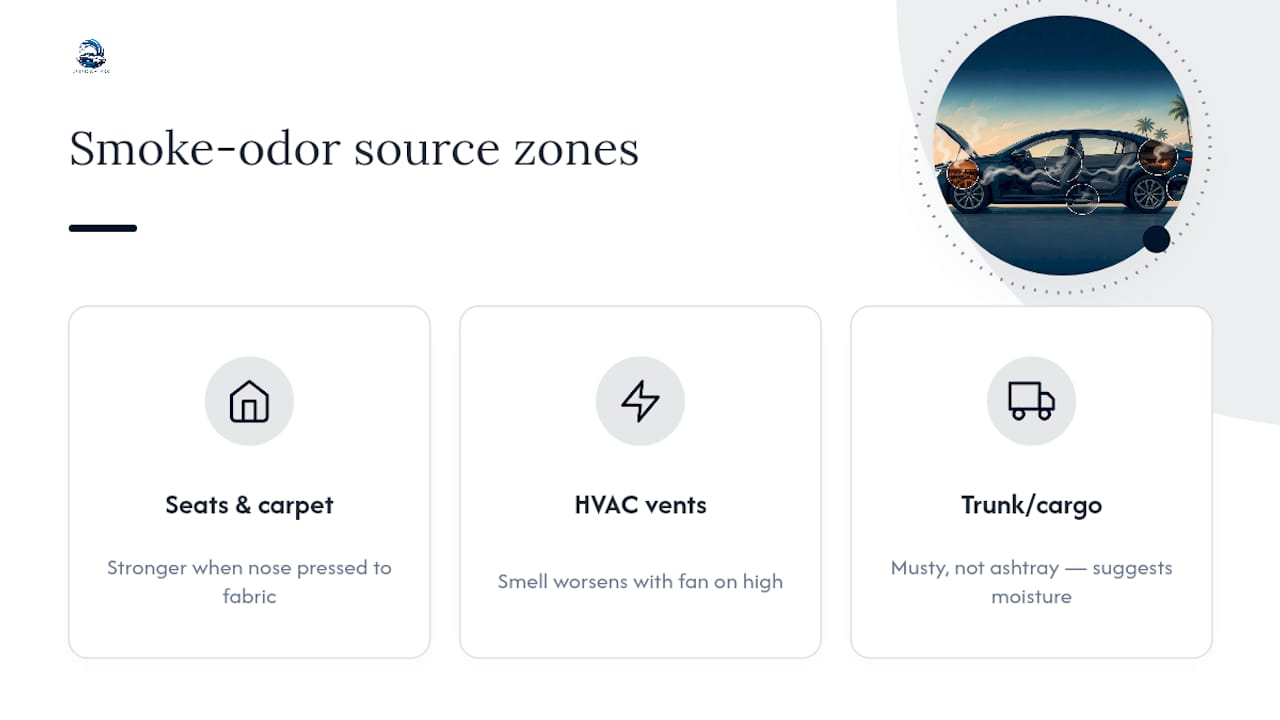
Vents tell a different story. Turn the fan to its highest setting and let it run for thirty seconds. If the smell gets noticeably worse when air is moving, the odor is baked into the cabin air filter or the evaporator core, not just the seats.
The trunk matters too, especially if anyone ever smoked with a window cracked and ash blew backward, or if cigarette packs or ashtrays sat in the cargo area. A musty, stale note that's separate from the "stale ashtray" smell often points to trapped moisture rather than smoke at all. That's worth knowing early, because car smells like mildew issues and smoke issues get treated differently, even though drivers often lump them together as "that gross car smell."
Immediate Steps to Remove Smoke Smell From a Car
Do these five things before you touch a single cleaning product. They cost nothing and take under thirty minutes combined.
- Open every door and both front windows, then let the car sit in the sun with a fan running for at least fifteen minutes to flush airborne smoke molecules.
- Pull out floor mats, empty ashtrays, and check under seats and in door pockets for old butts, ash, or wrappers.
- Vacuum carpets, seat seams, the trunk, and every crevice you can reach, using a brush attachment for seat tracks and vent openings where ash collects.
- Mix a 1:1 solution of water and white vinegar and wipe down the dash, door panels, and center console.
- Roll windows down again for another ten minutes to air out the vinegar smell once you're done wiping.
That last wipe-down step matters more than it looks. Smoke leaves a sticky, yellow film on hard plastic and vinyl that keeps releasing odor long after the visible haze is gone. AutoZone's detailing guide notes that you need to keep wiping until no yellow tint transfers to your towel. If your rag still comes away tinted after three or four passes, that surface is still off-gassing.
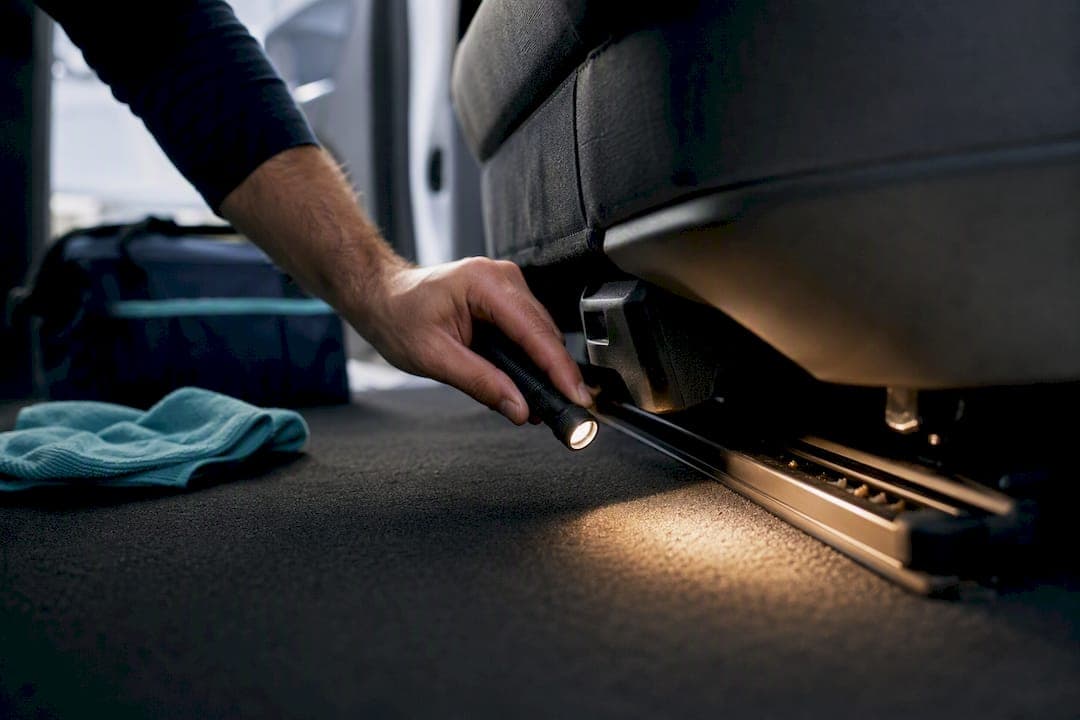
Pro Tip: Check the seat tracks with a flashlight before you vacuum. Ash and dropped cigarette ends collect in that narrow rail under the seat more often than anywhere else in the car, and a standard vacuum nozzle can't reach it without a crevice tool.
Deep Cleaning Fabric and Leather to Get Rid of Smoke Smell
Surface wiping handles what you can see. It does nothing for what's soaked into foam padding and fiber cores, which is why cars that get a quick vacuum-and-spray treatment often smell fine for a week and then slowly relapse. Smoke particles are oily and small enough to work past the fabric weave into the cushion underneath, where they keep releasing odor every time someone sits down and compresses the foam.
For fabric seats and carpet:
- Vacuum thoroughly first, including a second pass after you think you're done.
- Sprinkle baking soda generously across seats and carpet, and let it sit for several hours or overnight.
- Vacuum up the baking soda, then apply an enzyme-based upholstery cleaner and agitate it into the fibers with a soft brush.
- Extract the cleaner with a hot-water extractor or steam cleaner rather than just blotting it dry.
- Dry the cabin completely with fans and open doors before the car sits closed up again.
Enzyme cleaners earn their spot in that list for a specific reason: they break down the organic compounds that create odor rather than covering them up. Standard shampoo lifts dirt but leaves the smell-causing residue mostly intact, which is why enzyme-based cleaners consistently outperform basic shampoos on smoke and mildew jobs alike.
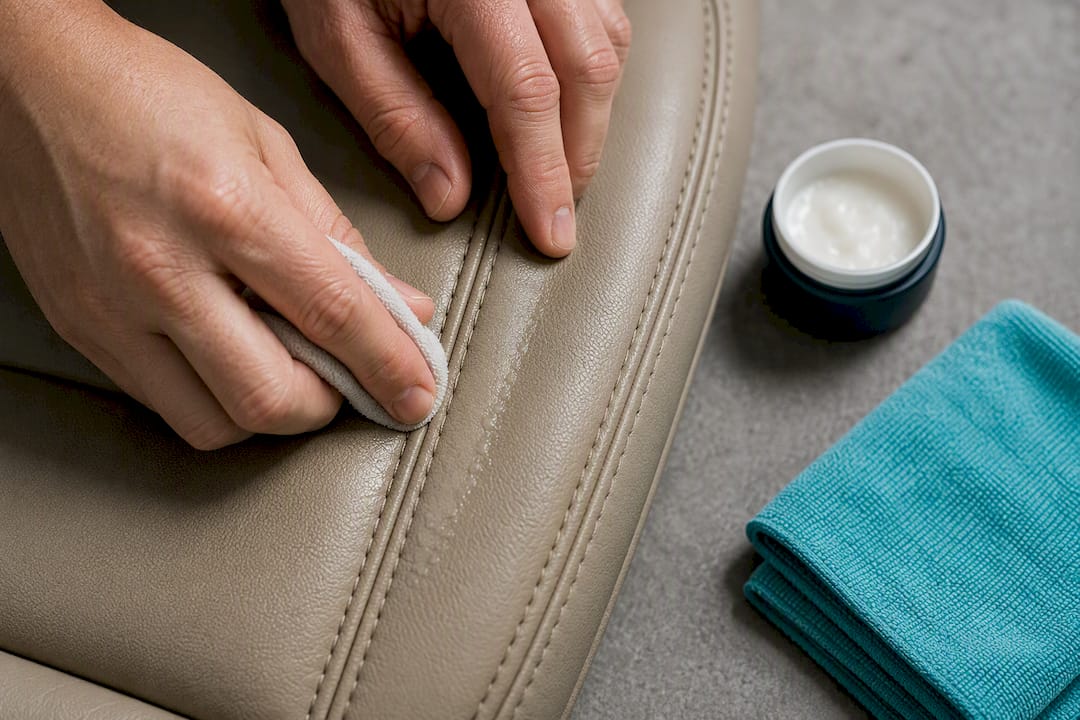
For leather seats, skip the baking soda and enzyme step entirely; for advanced treatment options, consult Master Odor Removal's leather guide for specialized techniques. Use a pH-balanced leather cleaner, test it on a hidden patch first, and work it in with gentle circular motions using a soft cloth. Wipe dry immediately, then apply a leather conditioner. Leather doesn't trap odor the way fabric fibers do, but smoke residue sits on the surface and in stitching, so the seams need extra attention.
One caution on both fabric and leather: don't over-wet the material. Soaking a headliner or seat foam pushes smoke particles deeper into the padding and invites mold growth on top of the odor problem you already have. If a headliner is sagging or seat foam feels waterlogged from a previous cleaning attempt, that's a job for a professional extractor, not a home wet-vac.
Check these often-missed spots before calling the job done: under the seats, inside seat tracks, door map pockets, trunk lining, and any center console storage bins. Odor hides in all of them.
Treating the HVAC System So Smoke Smell Doesn't Come Back
If the smell gets stronger when the fan runs, cleaning the cabin won't finish the job. Every time air passes over a smoke-saturated cabin filter or evaporator core, it picks the odor back up and blows it straight into your face. You can scrub the carpet spotless and still smell smoke a week later if this step gets skipped.
- Locate the cabin air filter, usually behind the glovebox, and pull it out. If it's discolored or smells strongly, replace it. This is a required finishing step, not optional, since a saturated filter keeps reintroducing odor no matter what else you've cleaned.
- Inspect the filter housing itself for residue buildup, and wipe it out before installing the new filter.
- Locate the cowl intake at the base of the windshield, and spray an automotive AC disinfectant into it while the fan runs on high. This pulls the treatment through the evaporator and plenum where mold and smoke residue collect.
- Check the AC condensate drain, usually a small tube under the car near the firewall, to confirm water is draining properly.
Consumer Reports recommends this exact spray-and-filter approach for musty AC odors, and the same evaporator core that grows mold is what holds onto smoke residue. If no condensate appears at the drain after running the AC for several minutes, or if the smell returns within days of treatment, a clogged drain or deeper contamination usually needs a shop's attention rather than another round of spray cleaner.
Pro Tip: Run the fan on low with the windows cracked for a few minutes before you shut the car off each time. It helps dry out the evaporator and cuts down on the mold growth that causes that musty AC smell car owners often confuse with lingering smoke.
Do Odor Absorbers Actually Work on Smoke Smell?
Baking soda, activated charcoal, enzyme cleaners, and vinegar all show up in nearly every home remedy list, but they don't all do the same job. Two work by absorption, and two work by breaking odor down chemically. Knowing the difference keeps you from wasting a week waiting on the wrong product.
- Baking soda absorbs odor molecules from fabric and air; sprinkle a generous layer on seats and carpet, leave it four to eight hours, then vacuum thoroughly.
- Activated charcoal works similarly but continues absorbing over time; a bag or box placed under a seat or in the trunk for several days pulls lingering odor from the air.
- Enzyme cleaners chemically break down the organic residue that smoke and mildew leave behind, rather than just masking or trapping it, which makes them the stronger option for embedded odor in upholstery.
- Vinegar works two ways: a bowl of white vinegar left in a closed car overnight absorbs airborne odor, while a diluted vinegar solution wiped on hard surfaces breaks down sticky residue.
Use these as finishing touches, not the main event. Baking soda and charcoal are genuinely useful for a light smell or as the last step after deep cleaning, but neither one reaches odor trapped in seat foam or the HVAC system. If you skip straight to a box of charcoal under the seat without vacuuming, extracting, and treating the vents first, you'll get a temporary improvement that fades within a week. Layer these absorbers after the deep clean and filter replacement, not instead of them.
When You Need Professional-Grade Treatment
Some smoke contamination outlasts every home remedy on this list, and that's when ozone treatment, antimicrobial fogging, and commercial extraction equipment come into play. These methods work at a level a shop vac and a bottle of enzyme cleaner can't match, but they come with real tradeoffs in cost, safety, and access to equipment most people don't own.
Ozone generators oxidize odor molecules at a molecular level rather than masking or absorbing them, which is why they're effective on smoke that's worked deep into porous material. The catch is safety: ozone at the concentrations needed to kill odor is genuinely dangerous to breathe, so the vehicle must be completely unoccupied during treatment and thoroughly ventilated afterward before anyone gets back in. Ozone treatment works best as a finishing step after surface and HVAC cleaning, not as a substitute for it. Skipping the deep clean and jumping straight to ozone is one of the most common reasons people report the smell coming back within days.
| Method | Best for | Typical timeline |
|---|---|---|
| Ozone treatment | Entrenched smoke odor after surface cleaning | Single treatment, hours; ventilate before reuse |
| Antimicrobial fogging | Mold-adjacent musty odors combined with smoke | One to two sessions |
| Steam/hot-water extraction | Deep-set odor in carpet and seat fabric | Same day, plus full drying time |
| Seat or panel removal | Saturated foam or long-term heavy smoke exposure | Multiple days |
Steam extraction and commercial hot-water extractors pull far more residue out of carpet and seat fabric than a home carpet cleaner can, since they use higher water pressure and stronger suction. For genuinely severe cases, where smoke has saturated seat foam or the headliner backing over years of heavy use, extraction alone may not be enough, and pulling the seats or panels for direct treatment becomes necessary. Expect a realistic timeline of several days to a week for full remediation in these cases, factoring in drying time between treatments.
Pro Tip: If a shop or rental ozone unit only ran for an hour and the smell is back within two days, the problem usually wasn't ozone failure. It usually means the deep clean underneath never happened, and the ozone had nothing solid to finish off.
What a Professional Detailer Does That DIY Can't
Home cleaning gets you most of the way there. What it can't easily replicate is trim and panel removal, which lets a technician reach the padding and wiring channels underneath seats and door panels where smoke residue settles and DIY tools simply can't reach. Professional-grade extraction equipment pulls more moisture and residue out of carpet and foam per pass than a rented home unit, and controlled fogging or ozone deployment requires equipment and safety protocols most car owners don't have on hand.
Living Waters Auto Wash LLC brings that level of equipment directly to the vehicle, which matters because moving a car with an active odor problem across town to a shop isn't always practical. The team works fully mobile across Boca Raton, Pompano Beach, Coral Springs, Parkland, and Palm Beach County, using waterless, eco-conscious processes that don't require a customer's water or power hookup. That includes emergency interior cleanings for situations that can't wait for a scheduled slot, backed by a trained team and a strong record of 5-star local reviews.
Call in a professional when:
- The smell persists after a full DIY cycle of vacuuming, enzyme cleaning, and HVAC treatment.
- Seat foam or the headliner feels saturated or has started sagging.
- The odor is clearly HVAC-sourced and keeps returning within days of a filter change.
Keeping Smoke Smell From Coming Back
Getting the smell out once is only half the job. A clean cabin that goes back to old habits will smell like an ashtray again within a month.
The single biggest factor is simple: stop smoking in the car, or at minimum, empty ash and trash immediately after every trip instead of letting it sit. Replace the cabin air filter on the schedule your owner's manual recommends, and get in the habit of running the fan for a minute or two with a window cracked before you shut the car off, which helps dry out the evaporator and limits the mold growth that causes musty AC smell.
- Enforce a strict no-smoking rule inside the vehicle going forward.
- Swap the cabin air filter on schedule, not just when odor shows up again.
- Book a light interior detail every few months and apply a fabric protectant to keep new residue from settling as deep.
What We See on the Toughest Smoke Jobs
Most smoke jobs we take on have already been through a home vacuum-and-spray attempt that knocked the smell down but didn't finish it. The pattern is almost always the same: surfaces got cleaned, but the HVAC system and seat foam never did. Source removal, deep extraction, HVAC treatment, then a neutralizer, in that order, is what actually holds. Skip a step and the smell resurfaces within a week. If you've done the DIY round and it's still there, that's usually a sign the cabin filter or evaporator needs attention, not another bottle of odor spray.
— Living
Book Mobile Smoke Odor Removal With Living Waters Auto Wash LLC
Renting an ozone machine or hauling your car to a shop for HVAC work eats up a whole weekend most people don't have. Living Waters Auto Wash LLC skips both problems by bringing professional-grade equipment straight to your driveway or office parking lot, no water or power hookup required.

Our smoke-odor removal service covers deep interior cleaning of seats and carpet, cabin air filter replacement, HVAC plenum treatment, and optional ozone or fogging for cases that need that extra push. Every step uses waterless, eco-conscious methods across Boca Raton, Pompano Beach, Coral Springs, Parkland, and Palm Beach County, with a trained team that handles everything from routine odor jobs to emergency interior cleanings when you can't wait. For fleet vehicles carrying the same problem across multiple cars, our fleet wash services apply the same treatment at scale. If you've tried the DIY steps above and the smell is still there, book an assessment with Living Waters Auto Wash LLC and get a straight answer on what it will take to finish the job.
Sources
For more detail on specific techniques mentioned above, our guide to interior deep cleaning walks through full extraction procedures, while leather seat cleaning covers conditioning steps in more depth. For leather-specific odor cases, Master Odor Removal's leather guide offers additional techniques worth reviewing.
- How to Remove the Smoke Smell Out of Your Car — AutoZone
- How to get rid of musty smell from a car's air conditioner — Consumer Reports
- How to remove mildew smell and why enzyme cleaners matter — CarCareTotal
- Car smells musty when AC is on — AmpAuto