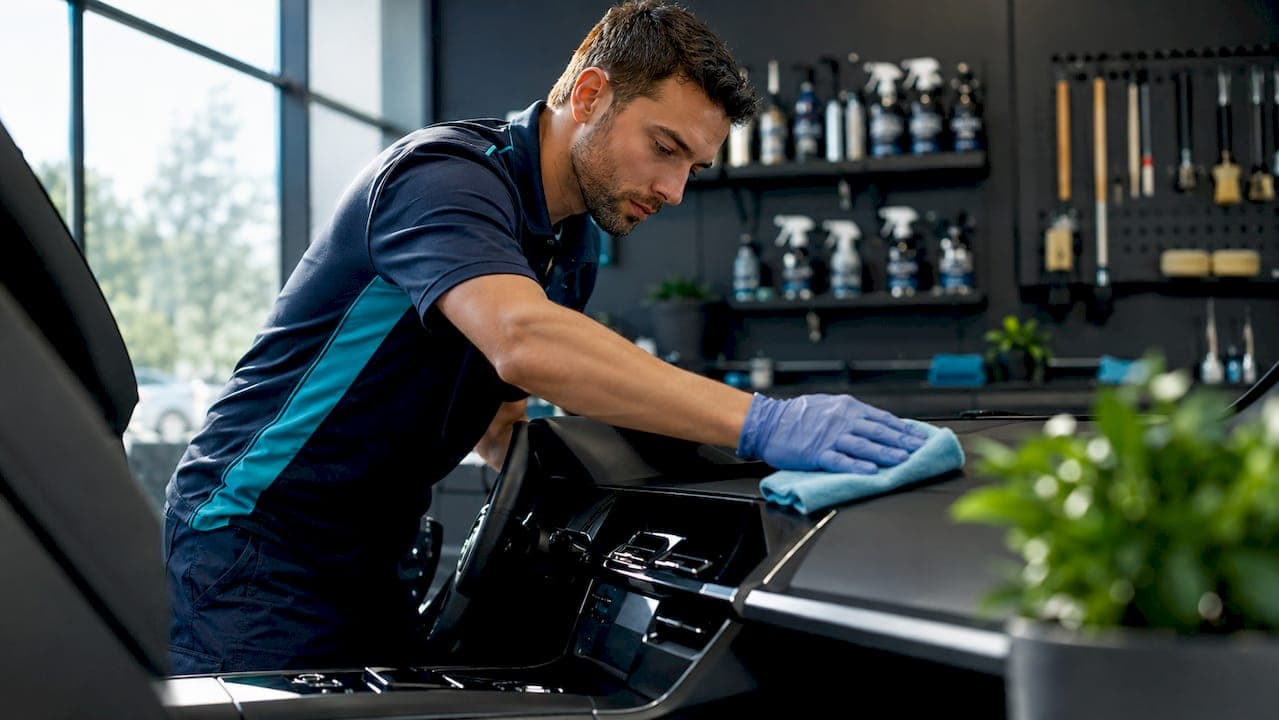
Professional detailers sanitize car interiors through a precise, multi-step process that goes far beyond wiping down surfaces. The sequence matters: clean first, then disinfect, then protect. Skipping steps or using the wrong product on the wrong material is where most DIY attempts fall short. Here is what the process actually looks like when done right:
- Declutter and vacuum all surfaces before any liquid touches the interior
- Steam clean at 212°F or above to kill bacteria, mold spores, and allergens without chemical residue
- Apply EPA-registered disinfectants with a 3–5 minute dwell time for a 99.9% kill rate
- Use pH-neutral, automotive-specific cleaners on leather, vinyl, and plastic to avoid surface degradation
- Apply products to microfiber towels first, never directly to surfaces, to protect electronics and sensors
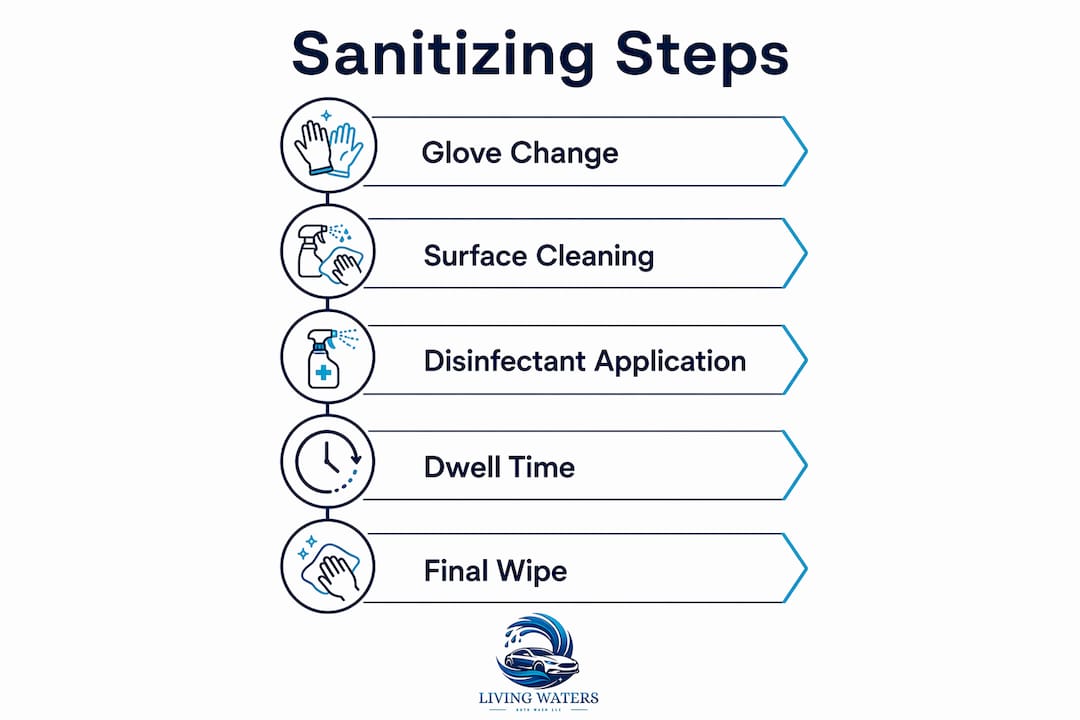
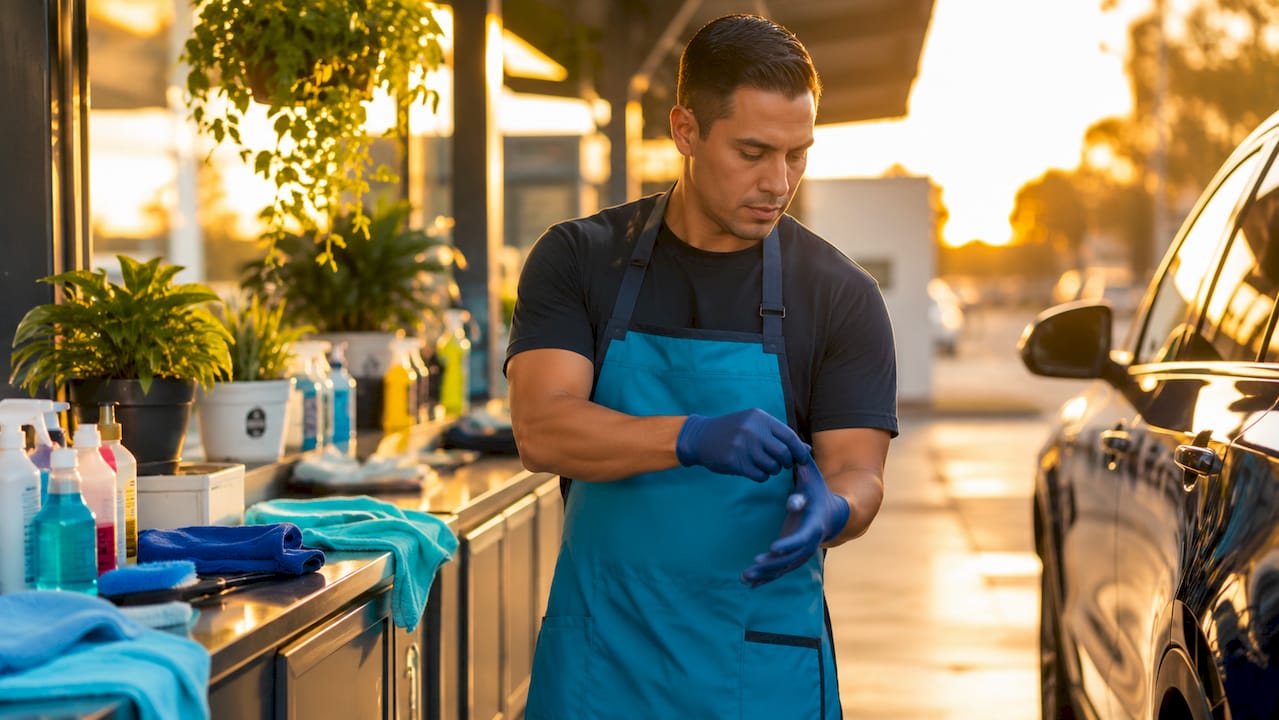
- Change towels and gloves between every cleaning and disinfecting phase to prevent cross-contamination
- Condition leather and apply UV protectants to plastics after disinfection
- Target high-touch zones including touchscreens, door handles, knobs, and the steering wheel
How detailers clean and disinfect car interiors step by step
The workflow professional detailers follow is sequential and non-negotiable. Each phase builds on the last.
-
Remove clutter and pull floor mats. Nothing gets cleaned around. Mats come out first so they can be treated separately while the rest of the interior is worked.
-
Vacuum from top to bottom. Headliner, seats, door panels, console, then carpet. Gravity is the logic: debris dislodged up high falls onto surfaces you have not cleaned yet. A crevice tool reaches seat seams and tracks where grit hides.
-
Agitate and clean hard surfaces. A water-based, pH-neutral cleaner goes on the microfiber towel, not the dash. This keeps overspray off the windshield and away from sensors at the base of the windshield.
-
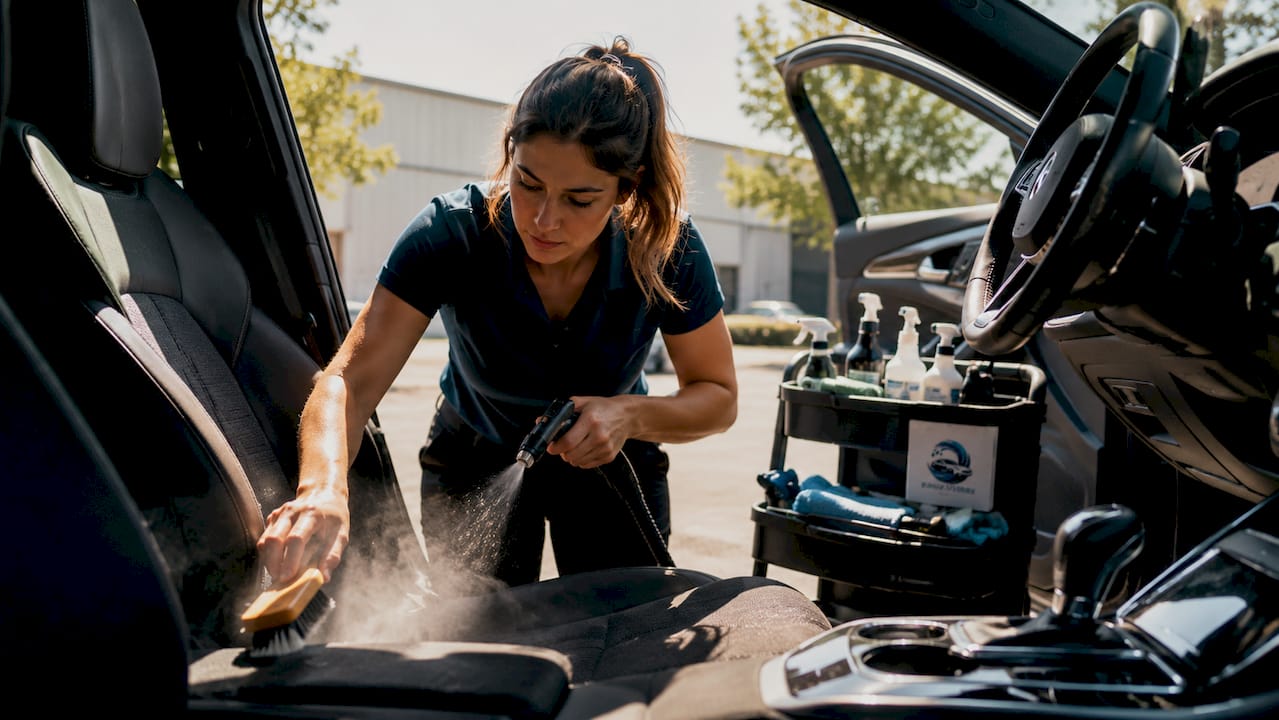
Steam clean upholstery and hard surfaces. Steam at 212°F penetrates fibers and crevices, killing pathogens without leaving chemical residue. A brush attachment works for carpets; a fine nozzle clears vents.
-
Apply enzymatic cleaners where biological contamination exists. Pet urine, vomit, and similar messes require enzyme-based cleaners that digest uric acid crystals and proteins at the molecular level. Saturate the area thoroughly so the enzymes reach the foam beneath the fabric.
-
Apply EPA-registered disinfectants with correct dwell time. The surface must stay wet for 3–5 minutes to achieve the required kill rate. Wiping too soon renders the disinfectant largely ineffective.
-
Condition leather and protect plastics. Disinfecting agents strip natural oils from leather. Post-cleaning conditioning replaces those oils and prevents cracking. UV-inhibiting protectants go on plastics and vinyl.
-
Dry thoroughly with air movers. Moisture left in foam or carpet backing seeds mold. Industrial air movers force warm, dry air into fibers, completing the job in hours rather than days.
Pro Tip: Change your gloves and grab a fresh microfiber towel after every phase. Using the same towel from the cleaning step into the disinfecting step transfers pathogens from dirty to clean surfaces, which defeats the purpose entirely.
What products do professional detailers actually use?
The product selection is where professional sanitization diverges sharply from a quick wipe-down at home.
- pH-neutral automotive cleaners are the baseline for all surfaces. They lift grime without stripping protective coatings or drying out leather and vinyl.
- Isopropyl alcohol at 70% concentration is endorsed by the CDC as an effective disinfectant for vehicle surfaces. It kills viruses without excessive damage when applied correctly and not left to sit too long.
- EPA-registered disinfectants provide documented efficacy against specific pathogens. Detailers choose products from the EPA's List N for verified virus and bacteria kill rates.
- High-temperature steam functions as a chemical-free disinfection method, particularly useful on fabric upholstery and in tight crevices where sprays cannot reach evenly.
- Enzyme-based cleaners handle biological contamination. They do not mask odors; they break down the organic compounds causing them.
- Microfiber towels are the delivery system for every liquid product. Controlled application prevents overspray on screens and sensors.
- UV-inhibiting protectant sprays and leather conditioners close out the process, locking in the clean and shielding surfaces from Florida's intense sun exposure.
What detailers avoid is equally telling. Bleach and ammonia are off the table entirely. Bleach degrades leather and plastics; ammonia hazes window tint and destroys the anti-glare coatings on touchscreens. Home remedies like vinegar and baking soda only mask odors rather than breaking down the biological compounds causing them. For anyone wanting to understand how interior detailing works at a deeper level, the chemistry of product selection is the foundation.
Expert advice on sanitizing without damaging your interior
The single most common mistake detailers see is spraying product directly onto surfaces. Applying cleaners to the towel first gives you precise control and keeps liquid away from electronics, sensors, and the seams where moisture can cause long-term damage.
Material sensitivity shapes every decision. Leather is essentially skin. It responds to pH imbalances the same way skin does: strip the oils and it dries, cracks, and ages fast. A pH-neutral leather cleaner followed by a conditioner is not optional; it is the only way to disinfect leather without accelerating its deterioration. Vinyl and plastic are more forgiving, but ammonia-based products will still cause hazing and brittleness over repeated use.
Disinfecting is about health; protection is about preservation. A surface that looks clean and a surface that is clinically disinfected are two different things. The process requires both: physical removal of organic matter first, then chemical eradication of pathogens, then a protective layer that guards the material against the next exposure.
Cross-contamination is the hidden failure point in most cleaning routines. Strict towel and glove changes between phases are what separate a professional protocol from a process that simply moves contamination around. One towel per phase, per surface zone. This is also why regular detailing prevents damage that accumulates when contamination is left to sit.
Pro Tip: Never use the same microfiber cloth on the steering wheel and then on a touchscreen. High-touch zones each get their own fresh cloth to avoid transferring bacteria from one surface to another.
How detailers make sure no surface gets missed
Thorough sanitization requires a system, not just effort. Detailers identify "hot zones" first: door handles, the steering wheel, gear shifter, knobs, and touchscreens. These surfaces accumulate the highest bacterial load and get priority treatment.
- Map the hot zones before starting. Touchscreens and knobs trap fingerprints and pathogens in every groove. Door handles are the first and last thing touched every trip.
- Work systematically with microfiber cloths to reach seams, crevices, and the edges of trim panels where contamination hides.
- Use steam for fabric and hard surfaces together. Steam penetrates upholstery foam and crevice areas that a spray bottle cannot reach evenly.
- Respect dwell time on every surface, including the less obvious ones like seat adjustment controls and grab handles.
- Use dual hydro-extraction for heavily soiled upholstery. High-pressure steam combined with vacuum suction pulls dissolved contaminants out of the foam entirely, preventing old stains from wicking back to the surface.
- Change cleaning materials between surface zones to avoid dragging contamination from the carpet onto the seats.
- Apply UV shielding to plastics and conditioner to leather as the final protective layer.
- Treat contaminated fabrics with enzymatic cleaners for odor removal, then follow with an odor neutralizer that chemically bonds with remaining odor molecules rather than covering them. For deep decontamination situations involving biohazard-level contamination, professional decontamination services go beyond standard detailing protocols.
Detailing also carries measurable health benefits beyond a clean smell. Removing biological contaminants, allergens, and mold spores from the cabin directly affects air quality. That connection between thorough sanitization and improved air quality in cars is one reason professional-grade methods matter more than a surface wipe.
Key Takeaways
Professional car interior sanitization requires a strict sequence of cleaning, disinfecting with proper dwell time, and material-specific protection to eliminate pathogens without damaging surfaces.
| Point | Details |
|---|---|
| Dwell time is non-negotiable | EPA-registered disinfectants need 3–5 minutes of wet contact to achieve a 99.9% kill rate. |
| Steam replaces chemicals on fabric | Steam at 212°F kills bacteria and allergens in upholstery fibers without leaving chemical residue. |
| Apply product to the towel, not the surface | Spraying directly risks damage to electronics, sensors, and tint films. |
| Change towels and gloves every phase | Cross-contamination is the most common failure point in DIY sanitization routines. |
| Condition leather after every disinfection | Disinfectants strip natural oils; conditioning prevents cracking and extends the material's life. |
Living Waters Auto Wash LLC brings this full professional protocol directly to your vehicle in Boca Raton, Pompano Beach, Coral Springs, and Parkland, with no electricity or water hookup required on your end. Every service uses the same material-safe, EPA-compliant methods described here, performed by a trained team with a 5-star track record. Fleet owners and individual vehicle owners can book mobile detailing services that cover everything from express interior sanitization to full deep-cleaning treatments.