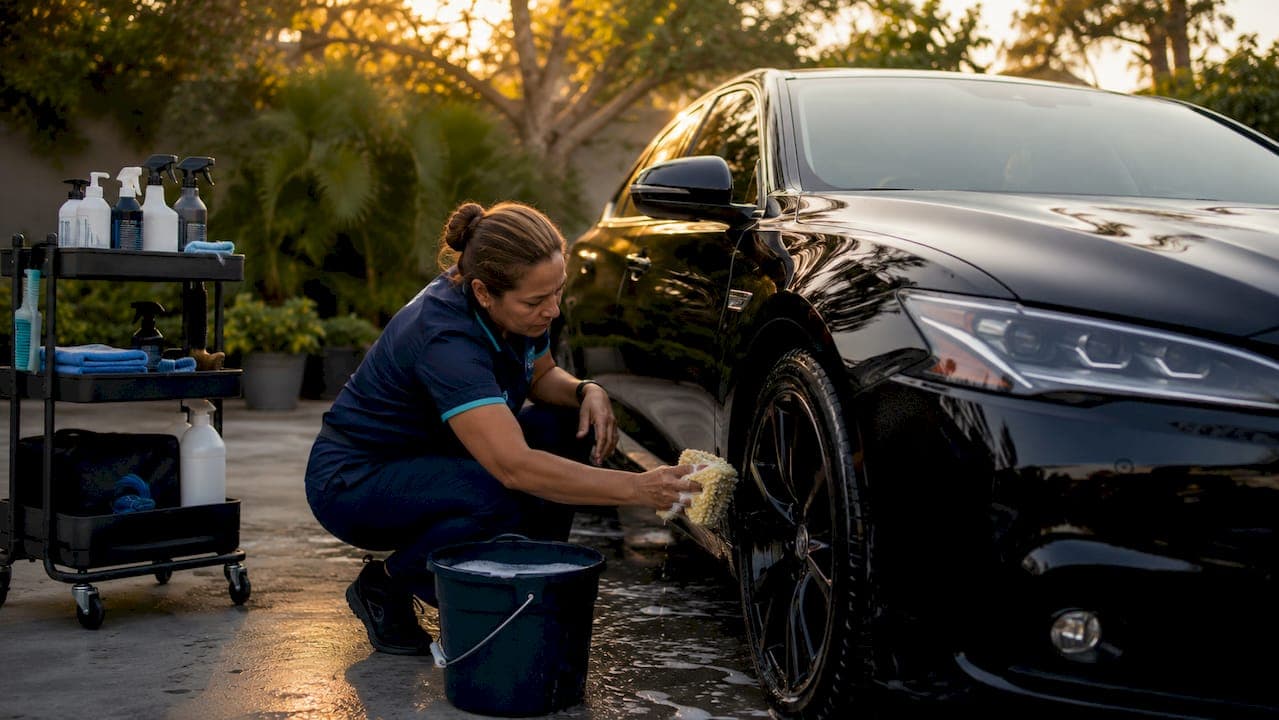
Regular vehicle detailing is a critical maintenance practice that prevents long-term damage by protecting paint and surfaces from chemical and physical degradation. The industry term for this process is "preventive detailing," and it covers everything from chemical decontamination to the application of 9H ceramic coatings. Car owners who skip routine detailing do not just end up with a dirty car. They face oxidation, clear coat delamination, and corrosion that cost far more to fix than any detailing appointment. Understanding why regular detailing prevents damage is the first step toward protecting your investment.
What specific types of damage does regular detailing prevent?
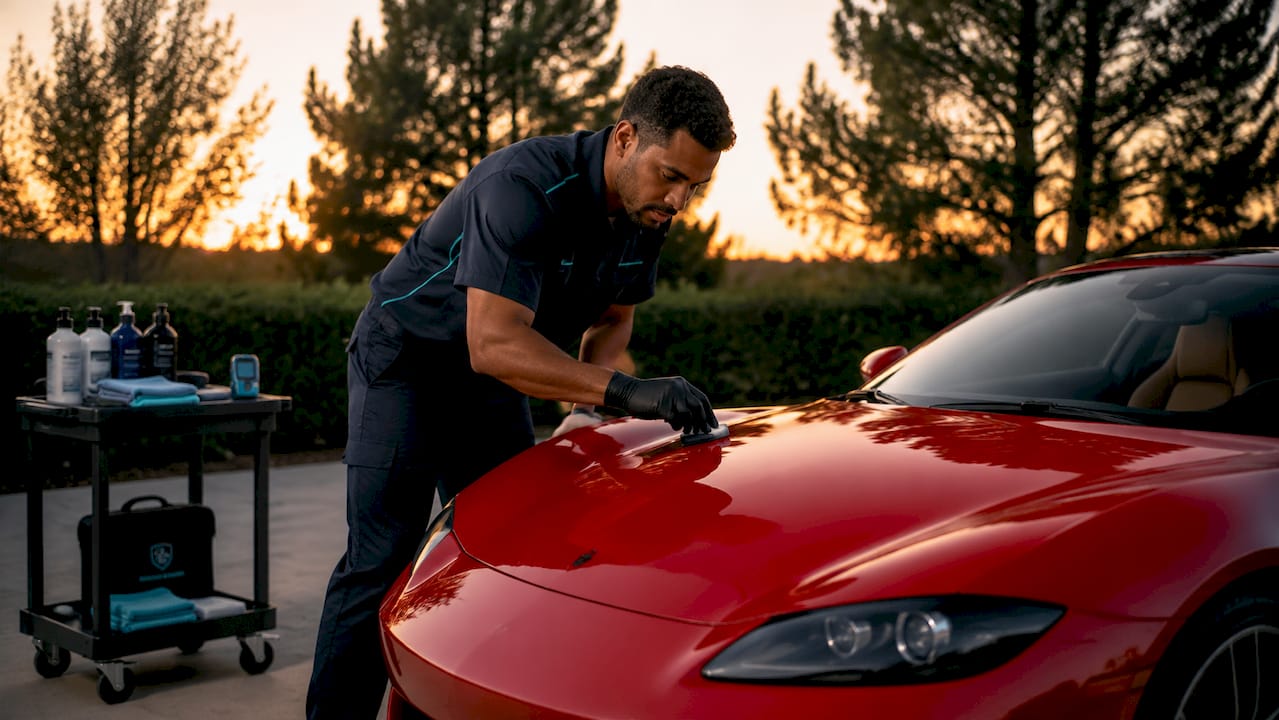
Automotive clear coats are only 35–50 microns thick. That is thinner than a human hair. Pollutants can cause permanent etching in that layer if not removed every 4–6 months. Once the clear coat is gone, the color coat underneath is exposed to everything.
Regular detailing prevents four major categories of damage:
- Oxidation and UV degradation. Ultraviolet radiation breaks down the polymer chains in your clear coat, causing it to fade, chalk, and eventually peel. Microscopic embedded contaminants accelerate oxidation by absorbing heat and transferring it directly into the paint surface. Standard washing cannot remove these bonded particles.
- Chemical etching. Bird droppings, acid rain, and industrial fallout are acidic. They begin etching the clear coat within hours of contact. Detailing removes these agents before they eat through to the color coat.
- Corrosion from brake dust. Iron particles from brake dust embed in wheel surfaces and paint. Left untreated, they oxidize and cause rust pitting. Chemical iron removers used during detailing dissolve these particles before they bond permanently.
- Swirl marks and micro scratches. Automated car washes with abrasive brushes cause micro-marring that scatters light and dulls the finish. Professional detailing corrects this damage and prevents its recurrence through proper washing technique and protective coatings.
Each of these threats compounds over time. A car that looks fine after one missed detailing appointment can show serious surface damage within a year.
How does the detailing process protect and preserve paint?
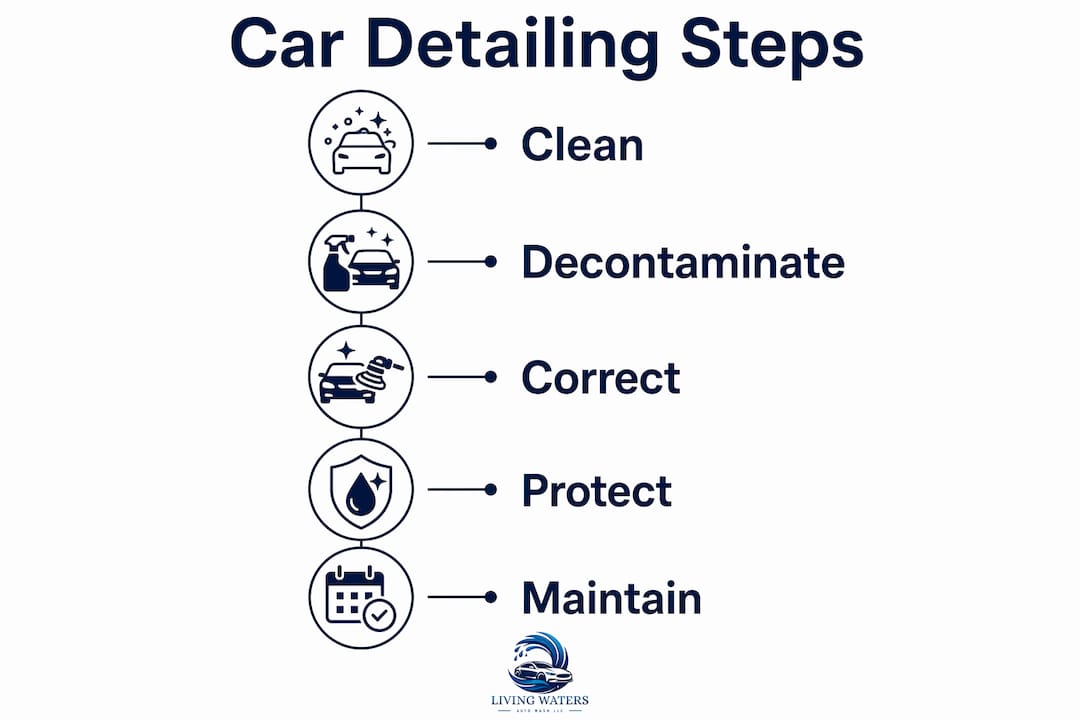
Professional detailing follows a specific sequence. Each step builds on the last, and skipping any one of them reduces the effectiveness of everything that follows.
- Chemical decontamination. A dedicated iron remover is sprayed across the paint and wheels. It reacts with embedded iron particles, turning them purple as it dissolves them. A clay bar treatment follows, physically pulling out bonded industrial fallout, tree sap, and road tar that chemicals alone cannot reach. Detailing removes bonded contaminants that standard washes leave behind entirely.
- Paint correction. A machine polisher removes a microscopic layer of damaged clear coat to restore a flat, reflection-ready surface. This is a labor-intensive process that eliminates swirl marks and oxidation before any coating is applied. Skipping this step locks defects under the coating, making future correction significantly harder and more expensive.
- Surface preparation. After polishing, a panel wipe or isopropyl alcohol solution removes all polish oils. This step is non-negotiable. Skipping surface preparation leads to uneven finish, reduced gloss, and early coating failure.
- Protective coating application. High-grade waxes, paint sealants, or ceramic coatings are applied to the prepared surface. The choice of product determines how long the protection lasts and how well it performs.
The difference between product categories is significant. Traditional spray waxes offer roughly 30 days of protection. 9H hardness ceramic coatings last 2–5 years because they chemically bond at the molecular level with the clear coat surface. That bond creates a hard, hydrophobic shell that repels water, resists UV radiation, and makes contaminants far easier to remove during maintenance washes.
Pro Tip: Always confirm that a detailer performs paint correction before applying a ceramic coating. A coating applied over swirl marks locks those defects in permanently, and removing them later requires cutting through the coating itself.
How often should you detail your car to prevent damage?
Frequency is where most car owners get it wrong. They either detail once a year and wonder why their paint still looks dull, or they wash obsessively but never address bonded contamination. Both approaches leave the paint vulnerable.
Experts recommend professional detailing every 3–6 months, supplemented by maintenance washing every 2–4 weeks. That schedule reflects the rate at which environmental contaminants accumulate and begin causing damage.
| Detailing task | Recommended frequency | Primary purpose |
|---|---|---|
| Professional full detail | Every 3–6 months | Decontamination, correction, coating |
| Maintenance wash | Every 2–4 weeks | Remove surface dirt before bonding |
| Ceramic coating reapplication | Every 2–5 years | Restore molecular-level protection |
| Interior deep clean | Every 6 months | Prevent fabric and trim degradation |
The consequences of neglecting this schedule are not cosmetic. Clear coat delamination is irreversible. Once the clear coat peels, the only fix is a full panel repaint. Rust remediation on a neglected vehicle can exceed $1,500 per panel. A professional detail every few months costs a fraction of that.
Maintenance washing between professional appointments matters just as much as the detail itself. A 2026 detailing frequency guide notes that maintenance washing every 2–4 weeks preserves the protective coating and prevents surface contamination from bonding. Think of it as keeping the shield clean so it can keep doing its job.
Pro Tip: If your vehicle is parked outdoors or driven in coastal areas near Boca Raton or Pompano Beach, move toward the 3-month end of the professional detailing range. Salt air accelerates corrosion on both paint and brightwork.
What are the long-term benefits of consistent detailing on vehicle value?
Consistent detailing preserves what detailers call Distinctness of Image, or DOI. DOI measures how sharply a surface reflects light. A high DOI means the paint looks deep, clear, and mirror-like. A low DOI means the surface scatters light and looks dull even when clean. Regular detailing maintains DOI by removing the micro-level surface damage that degrades reflection quality over time.
The financial case for regular detailing is straightforward:
- Avoided repair costs. Panel repainting runs $500–$1,000 per panel at a body shop. Wheel refinishing costs $75–$150 per wheel. Interior restoration for cracked or stained surfaces can reach several thousand dollars. Consistent detailing prevents all of these.
- Prevented structural damage. Regular polishing and sealants prevent white rust on aluminum trim and corrosion in the engine bay, extending the vehicle's structural integrity beyond just the paint.
- Higher resale value. A vehicle with documented detailing history and well-maintained paint commands a higher price at resale. Buyers can see the difference in the finish, and it signals that the owner maintained the entire vehicle carefully.
- Protection of UV-sensitive surfaces. Dashboards, door panels, and rubber seals degrade rapidly under UV exposure. Interior detailing with UV protectants prevents cracking and fading that is expensive to reverse.
"Waiting for visible damage means you are managing deterioration, not preventing it. Regular detailing stabilizes the materials in your vehicle to maintain higher resale value and avoid the compounding costs of neglect."
Exterior detailing that is performed consistently keeps the clear coat intact, which is the single most important factor in long-term paint health. Once the clear coat fails, every subsequent problem accelerates.
Key Takeaways
Regular detailing prevents damage by removing bonded contaminants, correcting surface defects, and applying protective coatings that shield paint from UV radiation, chemical etching, and corrosion before any of these threats become irreversible.
| Point | Details |
|---|---|
| Clear coat is extremely thin | At 35–50 microns, the clear coat needs decontamination every 4–6 months to prevent permanent etching. |
| Ceramic coatings outlast waxes | 9H ceramic coatings last 2–5 years versus 30 days for spray waxes, providing far stronger protection. |
| Frequency determines effectiveness | Professional detailing every 3–6 months, plus maintenance washing every 2–4 weeks, prevents bonded contamination. |
| Paint correction must come first | Applying a coating over uncorrected swirl marks locks in defects and increases future repair costs significantly. |
| Neglect has a real price tag | Clear coat delamination and rust remediation can exceed $1,500 per panel, far more than routine detailing costs. |
Why I treat detailing as maintenance, not a luxury
Most car owners I talk to think of detailing the same way they think of a spa day for their car. It is nice, but optional. That view is wrong, and it costs people real money.
The vehicles I see with the worst paint damage are not old cars. They are 3 and 4-year-old cars that were washed regularly but never properly decontaminated or protected. The owner did everything they thought was right, and the paint still failed. The reason is almost always the same: bonded iron, unaddressed micro scratches, and no protective coating to slow the process down.
Detailing is not about making a car look good for a weekend. It is about interrupting the chemical and physical processes that degrade your vehicle every single day. The car sitting in your driveway right now is being attacked by UV radiation, airborne pollutants, and brake dust. A detail every few months is what stops that attack from winning.
The owners who get this right treat their detailing schedule the same way they treat oil changes. It is not optional. It is not something they do when the car looks bad. It is a scheduled appointment that happens whether the car looks dirty or not. That mindset is the difference between a vehicle that holds its value and one that does not.
— Living
Professional detailing that comes to you
Living Waters Auto Wash LLC brings the full preventive detailing process directly to your driveway across Boca Raton, Pompano Beach, Coral Springs, and Parkland. No electricity or water hookups required. The team handles everything from chemical decontamination and paint correction to protective coating application, with the same attention to detail that keeps clear coats intact and resale values high.

Whether you need a full protective detail or regular maintenance to keep your coating performing, Living Waters Auto Wash LLC has the training and products to do it right. Fleet operators in Palm Beach County can also schedule recurring service through the fleet wash program to keep every vehicle in the lineup protected. Book your appointment and stop letting environmental damage compound.
FAQ
Why does regular detailing prevent damage better than washing?
Regular detailing removes bonded contaminants like iron particles and industrial fallout that standard washing cannot reach. It also applies protective coatings that create a barrier between the paint and environmental threats.
How often should I get my car professionally detailed?
Experts recommend professional detailing every 3–6 months, with maintenance washing every 2–4 weeks between appointments to preserve the protective coating.
What happens if I skip detailing for a year?
Skipping detailing allows contaminants to etch the clear coat, oxidation to dull the finish, and corrosion to develop on metal surfaces. Clear coat delamination from prolonged neglect is irreversible and requires a full panel repaint.
Are ceramic coatings worth the cost over regular wax?
9H ceramic coatings last 2–5 years and chemically bond to the clear coat at the molecular level. Traditional spray waxes last roughly 30 days. For long-term paint protection, ceramic coatings deliver significantly better value.
Can I detail my car at home instead of using a professional?
Home detailing can handle surface cleaning and basic wax application, but paint correction and ceramic coating application require professional equipment and training. Skipping proper surface preparation before polishing causes additional scratches and early coating failure.