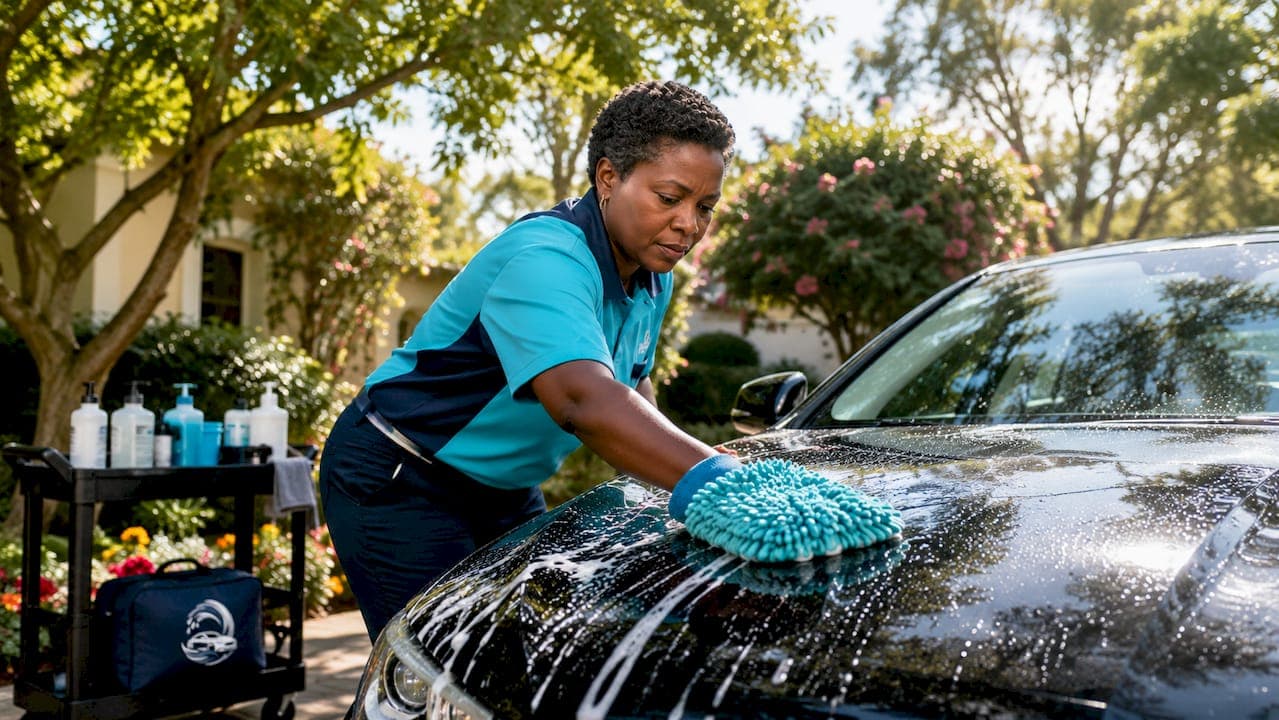
Professional luxury vehicle detailing is defined as a multi-layered preservation process that goes far beyond washing and waxing. How detailers protect luxury vehicles involves cautious surface-specific cleaning, expert paint correction, and advanced protective coatings like hydrophobic ceramic coatings and paint protection film. The International Detailing Association recognizes these layered methods as the standard for preserving factory finishes on high-value cars. Living Waters Auto Wash LLC applies exactly this approach for owners across Boca Raton, Pompano Beach, Coral Springs, and Parkland. Your vehicle is an investment, and the right detailing process protects that investment for years.
How detailers protect luxury vehicles with specialized cleaning techniques
Luxury car detailing starts with one non-negotiable rule: never use products or tools that risk the factory finish. Automatic car washes cause swirl marks and micro-marring that dull paint over time. That damage is cumulative and often invisible until you see the car under direct sunlight or high-intensity LED lighting.
Professional detailers use pH-neutral shampoos that lift contaminants without stripping wax or coating layers. They pair these with dedicated microfiber wash mitts and separate rinse buckets to prevent grit from cycling back onto the paint. The two-bucket wash method is the industry standard for this reason. One bucket holds clean soapy water, the other holds rinse water for the mitt. Grit stays in the rinse bucket, not on your hood.
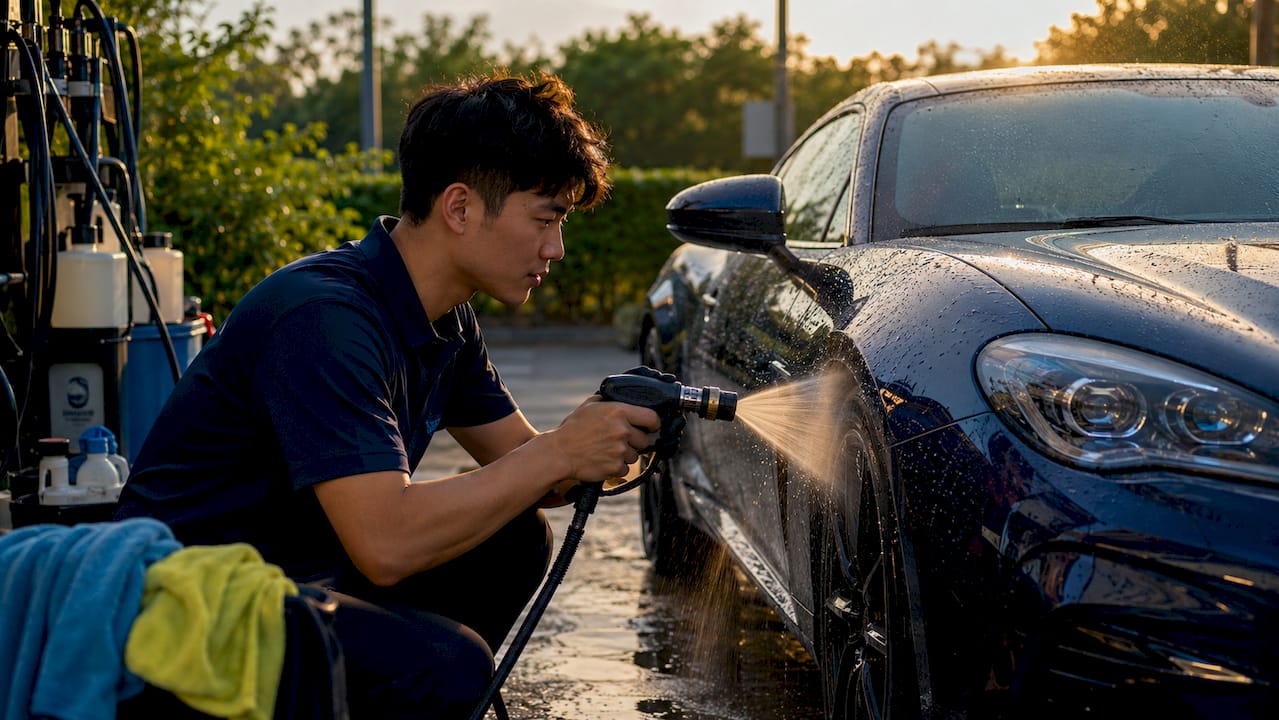
Drying is just as critical as washing. Detailers use touchless drying techniques, including forced-air blowers, to avoid dragging any residual particles across the clear coat. A single pass with the wrong towel can leave scratches that require paint correction to fix.
Interior detailing on luxury vehicles demands the same surface-specific thinking. Leather seats, suede headliners, carbon fiber trim, and Alcantara panels each require different cleaners and applicators. A detailer who uses an all-purpose cleaner on a Nappa leather seat risks drying out the hide and cracking the surface. The right approach uses dedicated interior cleaning methods matched to each material.
Pro Tip: Ask your detailer which specific shampoo and interior cleaners they use before booking. A professional will name the products without hesitation. Vague answers are a red flag.
- Use pH-neutral shampoos only on exterior paint
- Wash with microfiber mitts, never sponges or brushes
- Rinse mitts in a separate bucket between passes
- Dry with forced-air blowers or clean microfiber drying towels
- Match interior cleaners to each specific material type
How does paint correction restore a luxury car's finish?
Paint correction is the process of removing surface defects from clear coat using abrasive compounds and polishing pads. It addresses swirl marks, light scratches, water spots, and holograms left by improper washing or previous detailing work. The goal is to restore optical clarity without thinning the paint to a dangerous level.
Professional detailers follow a structured sequence to do this safely:
- Inspect under high-intensity LED lighting. Defects invisible in normal light become obvious under a focused beam. This step determines the correction level needed.
- Measure paint thickness with a paint thickness gauge. This tool tells the detailer how much clear coat remains and how aggressively they can work. Removing too much clear coat is irreversible.
- Test on a hidden panel first. Testing polishing techniques on inconspicuous panels confirms that the chosen compound and pad combination is safe for that specific paint system before full application.
- Choose the right abrasive level. Compounding uses a heavier cut to remove deeper defects. Polishing uses a finer abrasive to refine the surface and restore gloss. Most luxury vehicles need polishing, not compounding.
- Monitor panel temperature throughout. Infrared thermometers keep panel temperature below 95°F during correction. Excessive heat causes polish to dry prematurely and can create micro-scratches in the clear coat.
- Use a dual-action polisher. This tool oscillates and rotates simultaneously, reducing heat buildup and the risk of burning through the clear coat compared to a rotary polisher.
Pro Tip: If a detailer skips the paint thickness gauge step, walk away. Correcting paint without knowing its thickness is the fastest way to ruin a factory finish.
Paint correction is not a cosmetic shortcut. It is a prerequisite for any protective coating. Applying ceramic coating over uncorrected paint seals defects in permanently. The correction step must come first, every time.
What protective coatings and films do detailers apply to luxury cars?
Ceramic coatings bond molecularly with the clear coat to create a durable, hydrophobic layer that repels water, dirt, UV radiation, and chemical contaminants. That molecular bond means the coating does not sit on top of the paint. It becomes part of the surface. Water beads and sheets off, taking road grime with it.
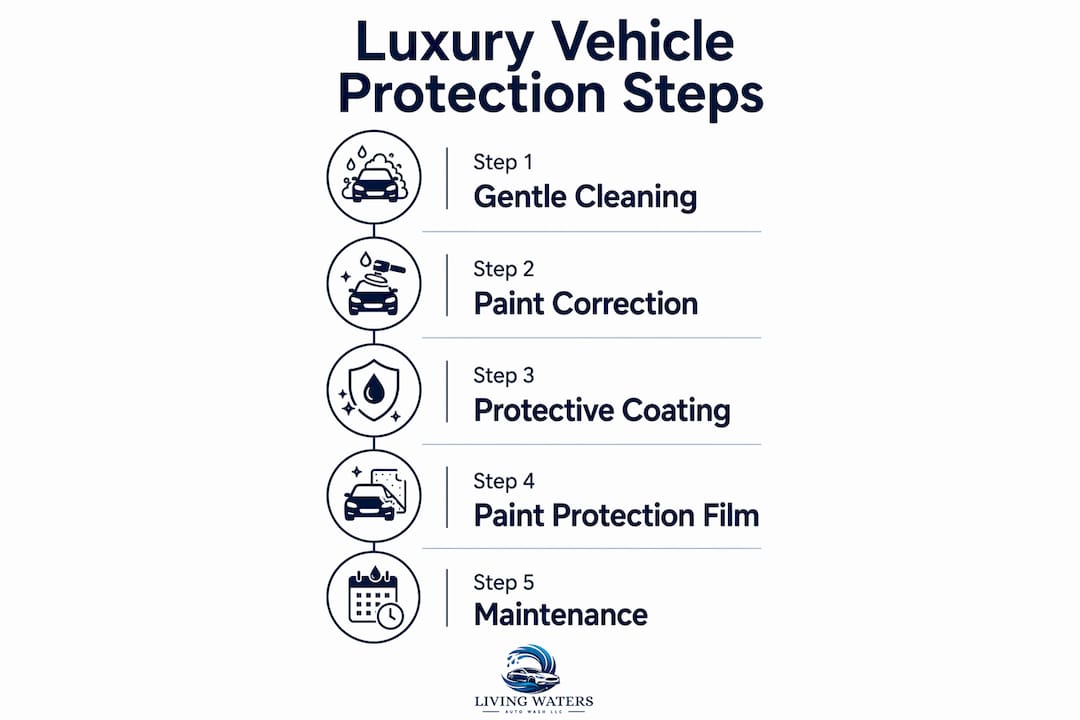
Paint protection film, commonly called PPF, works differently. It is a thick, flexible thermoplastic urethane film applied to high-impact areas like the front bumper, hood leading edge, side mirrors, and door edges. PPF absorbs stone chips and road debris that would otherwise pit or scratch the paint. Many premium PPF products are self-healing, meaning light scratches in the film disappear with heat from sunlight or warm water.
The strongest protection combines both technologies. Ceramic coating applied over PPF gives you physical armor against impacts plus a hydrophobic surface that is easy to clean. Combining PPF with ceramic coatings represents the most complete defense available for high-value vehicles in 2026.
One detail many owners miss: many high-end vehicles arrive with factory-applied coatings or films that can be damaged by harsh polishing or solvents. A qualified detailer identifies these layers before starting any work. Stripping a factory coating with the wrong product is an expensive mistake that voids the protection the manufacturer built in.
Ceramic coating application requires a controlled environment. Curing takes 24–48 hours after application, during which the vehicle must stay dry and away from contaminants. Rushing this step compromises the bond and reduces the coating's lifespan.
- Ceramic coating: Hydrophobic, UV-resistant, bonds to clear coat, lasts years with maintenance
- Paint protection film: Physical barrier against chips and scratches, self-healing on premium grades
- Combined PPF and ceramic: Maximum protection for front-end and high-impact zones
- Factory coatings: Must be identified and preserved before any detailing work begins
How do detailers adapt their methods for diverse vehicle types?
Detailing a Porsche 911 is not the same as detailing a Range Rover. Size, paint formulation, interior materials, and owner usage patterns all change the approach. A full professional detail for a luxury sedan typically takes 4–5 hours, while SUVs and trucks require 5–7 hours due to greater surface area. Paint correction and ceramic coating add several additional hours on top of that.
Exotic vehicles with matte or satin finishes require completely different products. Polishing compounds and glossy ceramic coatings are off-limits on matte paint. Detailers use matte-specific sealants and avoid any product that adds shine. Using the wrong product on a matte finish permanently alters its appearance.
Environmental conditions shape every service. Mobile detailing requires a flat parking space of approximately 12 by 20 feet and temperatures between 40°F and 95°F. Extreme heat, cold, or rain triggers rescheduling because coatings will not cure properly outside that range. This is not a preference. It is a technical requirement for quality results.
Structured maintenance schedules preserve exotic finishes and resale value far better than infrequent full details. A practical schedule looks like this:
- Basic wash every 1–2 weeks
- Interior detail every 1–2 months
- Full professional detail every 3–6 months
- Coating inspection and touch-up annually
Owners who follow this schedule protect their paint between full details and reduce the correction work needed at each visit. Skipping maintenance forces detailers to spend more time correcting damage that regular care would have prevented.
Pro Tip: Review your mobile detailing appointment prep checklist before every service. Small steps like clearing the parking area and removing personal items from the interior save time and improve results.
Key Takeaways
Protecting a luxury vehicle requires layered, surface-specific care that combines gentle cleaning, expert paint correction, and durable coatings applied in the correct sequence.
| Point | Details |
|---|---|
| Avoid automatic car washes | They cause swirl marks and micro-marring that dull factory paint over time. |
| Paint correction comes before coatings | Applying ceramic coating over uncorrected paint seals defects in permanently. |
| Combine PPF and ceramic coating | This pairing delivers the strongest physical and chemical protection available. |
| Match methods to vehicle type | Matte finishes, exotic interiors, and larger vehicles each require different products and more time. |
| Follow a structured maintenance schedule | Regular washes and coating touch-ups preserve resale value better than infrequent full details. |
What I've learned about protecting luxury vehicles the right way
The biggest mistake I see luxury vehicle owners make is treating detailing as a one-time event. They invest in a full correction and ceramic coating, then skip maintenance for a year and wonder why the finish looks dull. Coatings need care. They are not permanent shields that work without attention.
The second mistake is choosing a detailer based on price alone. Exotic paint systems, rare interior materials, and factory-applied films require a technician who knows what they are looking at before they touch the car. A detailer who skips the paint thickness gauge or the panel test is guessing. On a vehicle worth six figures, guessing is not acceptable.
The technology side of this field is moving fast. Graphene-enhanced coatings are showing stronger heat resistance and hydrophobic performance compared to traditional ceramic formulations. They are not yet universal, but they represent where protection is heading. Owners who stay informed about these developments make better decisions when it is time to recoat.
My honest advice: treat your detailing schedule the same way you treat your service intervals. Put it on the calendar. Find a detailer who can explain every product they use and why. And never let a generic service touch a vehicle that deserves better.
— Living
Living Waters Auto Wash LLC: professional protection at your door
Living Waters Auto Wash LLC brings professional-grade luxury vehicle protection directly to you, with no need for electricity or water hookups at your location.
Their trained technicians carry onboard water tanks, pressure washers, and specialized polishers to deliver full-service results at your home or office. Every service follows exterior detailing best practices designed to preserve factory finishes on high-value vehicles. From express interior cleaning to full paint protection packages, Living Waters Auto Wash LLC tailors every appointment to your vehicle's specific materials and condition. Owners across Boca Raton, Pompano Beach, Coral Springs, and Parkland trust their 5-star reputation for a reason. Book your mobile detail and keep your investment protected.
FAQ
What cleaning method is safest for luxury car paint?
The two-bucket wash method using pH-neutral shampoo and microfiber mitts is the safest approach. It prevents grit from cycling back onto the paint and eliminates the swirl marks caused by automatic car washes.
How long does a full luxury vehicle detail take?
A full detail for a luxury sedan takes 4–5 hours. SUVs and trucks require 5–7 hours, with paint correction and ceramic coating adding several more hours plus a 24–48 hour curing period.
Do I need paint correction before a ceramic coating?
Paint correction is required before any ceramic coating application. Coating over uncorrected paint seals swirl marks and scratches in permanently, making them impossible to remove without stripping the coating.
How often should a luxury vehicle be professionally detailed?
A full professional detail every 3–6 months is the recommended standard. Basic washes every 1–2 weeks and interior details every 1–2 months maintain the finish between full service appointments.
Can paint protection film and ceramic coating be used together?
Combining PPF and ceramic coating provides the strongest available protection. PPF handles physical impacts like stone chips, while ceramic coating adds a hydrophobic, UV-resistant layer over the film's surface.