
Touchless exterior detailing is an automated cleaning process that uses high-pressure water jets and chemical detergents to clean a vehicle's exterior without any physical contact from brushes, mitts, or cloths. The method eliminates mechanical friction entirely, which is the primary cause of swirl marks and micro-abrasions on factory clear coats. Industry-standard chemical dwell times run 30 to 90 seconds to balance cleaning strength with paint safety. Living Waters Auto Wash LLC uses this approach as part of its mobile detailing services across Boca Raton, Pompano Beach, Coral Springs, and Parkland. For car owners who want regular, low-risk maintenance without the time commitment of a full hand wash, touchless detailing is the most practical starting point.
What is touchless exterior detailing and how does it work step by step?
The touchless detailing process follows a fixed sequence designed to loosen, dissolve, and rinse away contaminants without touching the paint surface. Each stage serves a specific chemical or mechanical purpose.
-
High-pressure pre-rinse. The wash begins with a forceful water rinse to knock loose surface dirt, dust, and debris. This prevents loose grit from being pushed across the paint during the chemical phase.
-
Alkaline detergent application. An alkaline solution is sprayed across the entire exterior. Alkaline agents break down organic matter like bird droppings, pollen, and road film by raising the pH of the surface layer.
-
Specialized detergent for oils and road residue. A second chemical agent targets petroleum-based contaminants such as road tar film and exhaust residue. This two-step chemical approach is the defining feature of professional touchless systems.
-
Chemical dwell time. The detergents sit on the surface for 30 to 90 seconds before rinsing. Shorter dwell times reduce cleaning power; longer times risk degrading wax or sealant layers.
-
High-pressure spot-free rinse. Deionized or reverse-osmosis water flushes all chemical residue from the surface. Spot-free water prevents mineral deposits from forming as the vehicle dries.
-
Cycle completion. Most automated touchless systems complete the full process in under three minutes. That speed makes it realistic for car owners to wash weekly without disrupting their schedule.
Pro Tip: Ask your provider whether they use deionized water for the final rinse. Tap water leaves calcium and magnesium deposits that dull paint over time, especially in South Florida's hard-water areas.
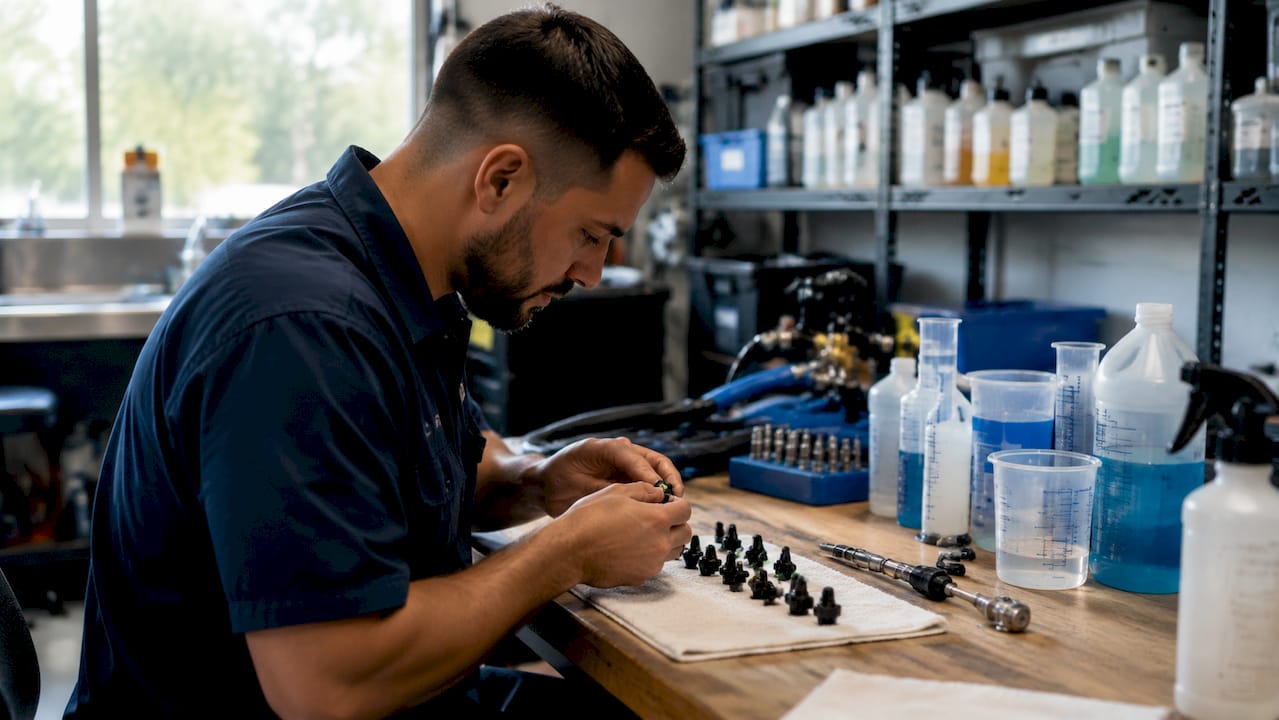
Equipment maintenance is the hidden variable in this process. Poorly maintained nozzles and incorrect chemical dilution cause uneven cleaning and can leave chemical residue on the paint. A well-run facility calibrates dilution ratios and inspects nozzles on a scheduled basis.
What are the benefits and limitations of touchless exterior detailing?
Touchless car cleaning methods offer real advantages, but they also have clear limits. Understanding both sides helps you use the method correctly.
Key benefits
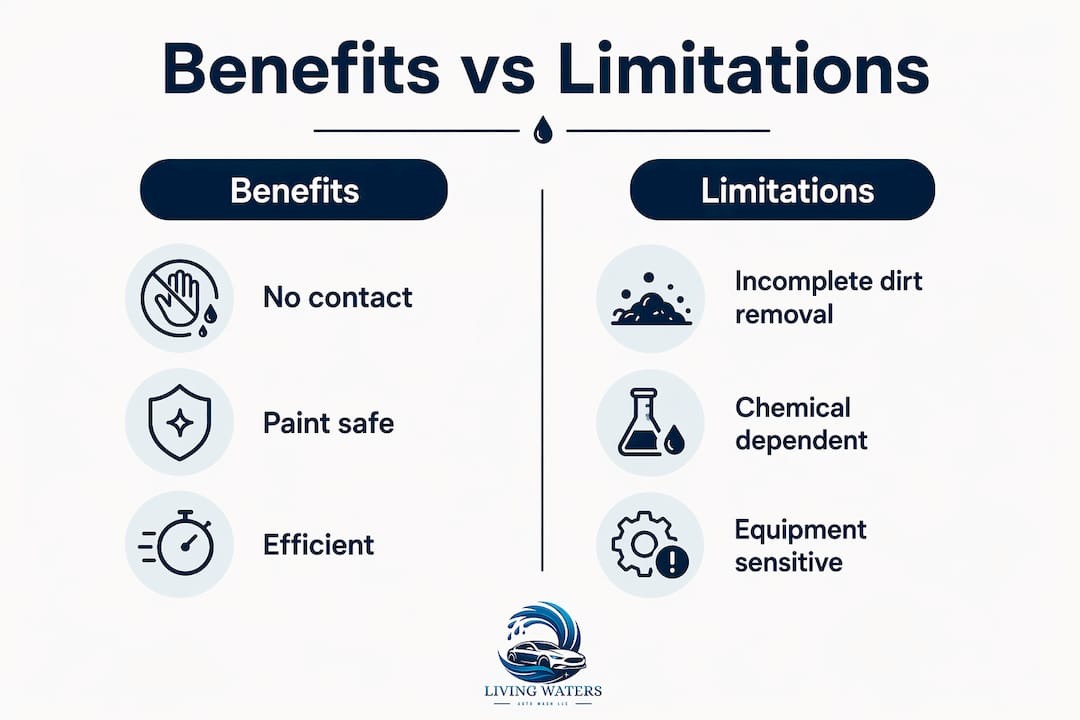
- No swirl marks or micro-abrasions. Eliminating mechanical contact substantially reduces the scratching that brushes and even microfiber mitts can cause when used incorrectly. This is the single biggest reason paint-conscious car owners prefer touchless methods.
- Speed. A full exterior clean in under three minutes beats hand washing by a wide margin. For daily drivers or fleet vehicles, that time savings adds up quickly.
- Cost efficiency. Monthly membership programs reduce the per-wash price significantly, making frequent use affordable for most car owners.
- Salt and light grime removal. Touchless washing excels at removing road salt, light dust, and daily road film. For car owners in coastal areas or regions with winter road treatment, regular touchless washes protect against corrosion.
- Safe for factory clear coats. Factory-applied clear coats handle brief exposure to high-pH detergents without damage, provided dwell times stay within the standard range.
Limitations to know
- Struggles with bonded contaminants. Touchless washing cannot remove tree sap, tar, iron fallout, or road paint transfer. These require physical agitation or chemical decontamination products applied by hand.
- Degrades aftermarket protection faster. Touchless chemicals accelerate the breakdown of consumer-grade waxes, spray sealants, and entry-level coatings. Car owners using these products need to reapply them more frequently.
- Residue risk from poor equipment. Improperly maintained wash systems leave chemical film on the paint surface, which dulls the finish over time.
Touchless detailing is the right tool for frequent, low-risk maintenance. It is not a substitute for periodic professional decontamination. Treating it as a complete solution leads to buildup of contaminants that no amount of high-pressure water will remove.
The exterior detailing and paint protection relationship is more nuanced than most car owners realize. Touchless methods preserve the finish you already have. They do not restore or deepen protection on their own.
How to choose and maintain a quality touchless exterior detailing service?
Choosing the right provider determines whether touchless detailing protects or gradually harms your vehicle. Equipment quality and chemical discipline vary widely between facilities.
What to look for in a provider
- Chemical dilution controls. Ask whether the facility uses automated dosing systems or manual mixing. Automated systems produce consistent results; manual mixing introduces human error that leads to over-concentrated chemicals on the paint.
- pH of cleaning agents. High-pH alkaline detergents clean effectively but require precise dwell time management. Ask whether the provider uses pH-neutral rinse aids to restore surface balance after the wash cycle.
- Nozzle and equipment maintenance schedule. Facility maintenance rigor directly affects cleaning quality and vehicle safety. A reputable provider documents their maintenance intervals and can tell you when equipment was last serviced.
- Water quality for the final rinse. Spot-free water systems using reverse osmosis or deionization are the standard for quality touchless facilities. Providers using unfiltered tap water for the final rinse leave mineral deposits on every vehicle they wash.
Pro Tip: If you use a ceramic coating or professional-grade paint sealant, tell your detailer before the wash. Some facilities offer coating-safe chemical options that clean effectively without stripping your protective layer.
Protecting your vehicle between washes
Touchless washing works best as part of a broader maintenance plan. Reapply a quality wax or sealant every 6 to 8 weeks if you use touchless washes regularly. Car owners with professional ceramic coatings should use ceramic-safe spray boosters after each wash to maintain hydrophobic performance. For stubborn contamination, schedule a professional hand wash or clay bar treatment rather than increasing touchless wash frequency. Membership plans at quality facilities reduce the per-wash cost enough that weekly washing becomes financially practical for most car owners.
Touchless versus traditional washing: what you need to know
Each cleaning method has a specific role in a well-managed vehicle care plan. No single method covers every situation.
| Method | Best for | Paint risk | Limitation |
|---|---|---|---|
| Touchless exterior detailing | Frequent light cleaning, salt removal, daily grime | Very low, no physical contact | Cannot remove bonded contaminants |
| Professional hand washing | Targeted cleaning, detailed attention to panels | Low when done correctly | Time-intensive, higher cost per wash |
| Brush-based automatic wash | High-volume, low-cost cleaning | Moderate to high, brush contact | Scratches and swirl marks over time |
| DIY hand washing | Full control over technique and products | Low to moderate depending on technique | Risk of swirl marks from improper method |
Touchless detailing avoids the micro-abrasions that brush-based systems cause, but it cannot replicate the targeted cleaning that a trained hand washer provides. A professional hand washer can address a specific panel, work around trim pieces, and apply targeted products to problem areas. Touchless systems treat the entire vehicle uniformly.
The most effective strategy combines touchless washing for regular maintenance with professional hand detailing for periodic deep cleaning. For most car owners, touchless washing two to three times per month paired with a full professional detail every three to four months covers both convenience and thoroughness. Car owners in high-contamination environments, such as those near construction sites or with heavy tree coverage, should schedule professional decontamination more frequently.
Brush-based automatic washes carry the highest paint risk of any automated method. Brushes and foam mitts trap grit from previous vehicles and drag it across your paint. The time savings from mobile detailing make it easy to skip brush-based facilities entirely without adding inconvenience to your routine.
Key Takeaways
Touchless exterior detailing protects factory paint finishes by eliminating mechanical contact, but it requires quality equipment, correct chemical management, and periodic professional detailing to deliver lasting results.
| Point | Details |
|---|---|
| No physical contact, no scratches | Touchless methods eliminate swirl marks and micro-abrasions caused by brushes or mitts. |
| Chemical dwell time matters | Standard dwell times run 30 to 90 seconds; longer exposure degrades wax and sealant layers. |
| Bonded contaminants need manual work | Sap, tar, and iron fallout require hand treatment or professional decontamination, not more pressure. |
| Equipment quality drives results | Poorly maintained nozzles and dilution errors leave residue and reduce cleaning effectiveness. |
| Hybrid approach is best | Combine regular touchless washes with periodic professional hand detailing for complete paint care. |
What I've learned from watching touchless detailing up close
After working with car owners across South Florida, one pattern stands out clearly. Car owners who rely entirely on touchless washing and never schedule a professional detail end up with paint that looks clean but feels rough to the touch. That texture is bonded contamination, and no amount of high-pressure water removes it.
The chemical side of touchless detailing is genuinely impressive when the equipment is maintained correctly. A well-calibrated two-step chemical system removes road film and organic matter faster than most hand washes. The problem is that "well-calibrated" is doing a lot of work in that sentence. Facilities that cut corners on chemical dilution or skip nozzle maintenance deliver inconsistent results that car owners often blame on the method itself, when the real issue is the provider.
My honest recommendation: use touchless washing as your weekly maintenance tool and treat it like brushing your teeth. It keeps the surface clean and prevents buildup. Then schedule a professional detail every few months the way you would a dental cleaning. The combination works. Neither method alone is enough. Car owners with ceramic coatings should be especially attentive to reapplying a ceramic-safe booster after each wash cycle to maintain the coating's water-beading performance.
Choose a provider who can tell you exactly what chemicals they use, what their pH range is, and when their equipment was last serviced. If they cannot answer those questions, find someone who can.
— Living
Mobile touchless detailing, brought to your driveway
Living Waters Auto Wash LLC delivers professional exterior detailing directly to your home or office across Boca Raton, Pompano Beach, Coral Springs, and Parkland. No water hookup or electricity required on your end. The team arrives fully equipped, handles the entire process, and leaves your vehicle clean without you rearranging your day.
For car owners who want paint-safe, time-efficient exterior care, book mobile detailing and see why Living Waters Auto Wash LLC holds a 5-star rating across its South Florida service area. Fleet operators can also request dedicated fleet wash services for multi-vehicle accounts.
FAQ
What is touchless exterior detailing in simple terms?
Touchless exterior detailing is a vehicle cleaning method that uses high-pressure water and chemical detergents with no brushes or physical contact. It cleans the exterior while minimizing the risk of scratches or swirl marks on the paint.
Is touchless detailing effective on all types of dirt?
Touchless detailing removes light road film, dust, pollen, and road salt effectively. It cannot remove bonded contaminants like tree sap, tar, or iron fallout, which require manual treatment.
How often should you use a touchless car wash?
Most car owners benefit from touchless washing two to three times per month for regular maintenance. Pair that with a professional hand detail every three to four months for thorough paint care.
Does touchless washing damage wax or ceramic coatings?
Touchless chemicals are safe for factory clear coats but degrade aftermarket waxes and sealants faster than gentle hand washing. Reapply wax every 6 to 8 weeks and use a ceramic-safe booster after each wash if you have a professional coating.
What should I ask a touchless car wash provider before using their service?
Ask about their chemical pH range, dilution controls, and equipment maintenance schedule. Facility maintenance quality directly determines whether your vehicle comes out clean and residue-free or with uneven chemical film on the paint.