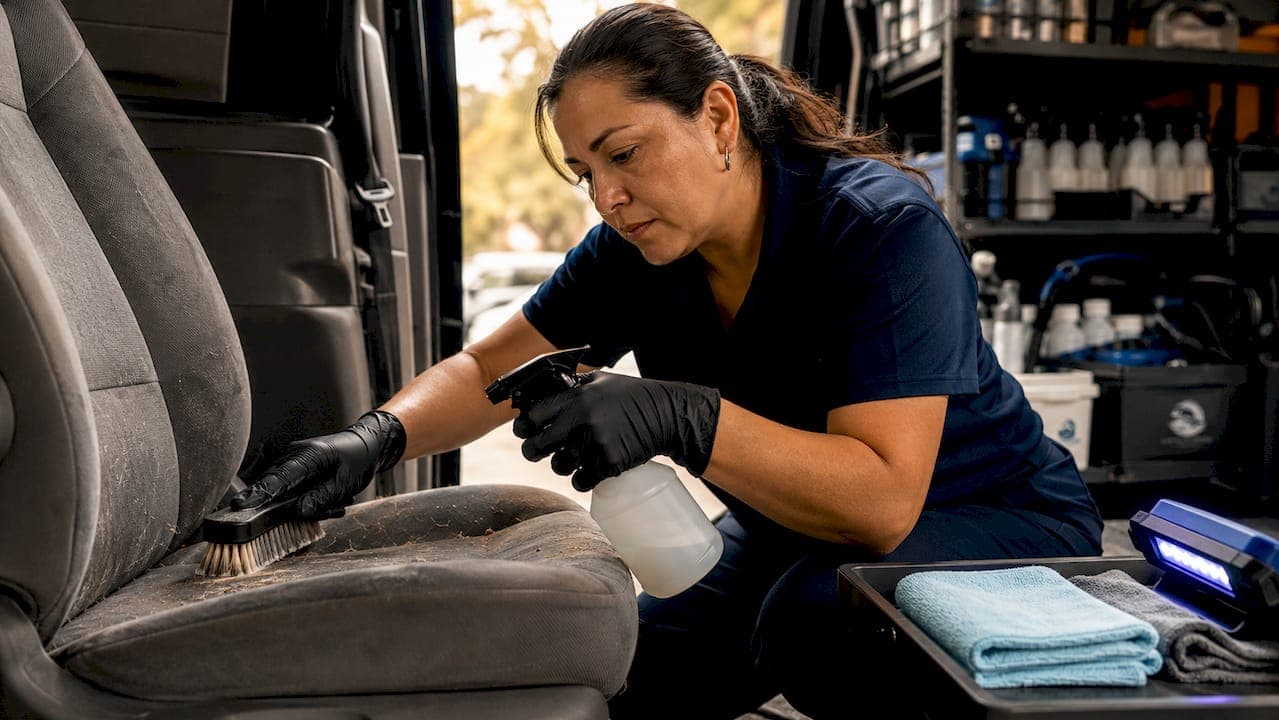
Professional upholstery restoration for pet damage is defined as a multi-stage process combining UV inspection, enzymatic chemical treatment, cold water extraction, and systematic hair removal to fully eliminate stains, odors, and embedded debris without damaging fabric fibers. Pet owners who rely on DIY sprays and hot water cleaning often make the damage worse. Understanding how detailers restore pet-damaged upholstery reveals why professional protocols produce lasting results that home methods simply cannot match. Living Waters Auto Wash LLC applies these exact techniques across Boca Raton, Pompano Beach, Coral Springs, and Parkland, bringing the full process directly to your vehicle.
How do detailers restore pet-damaged upholstery step by step?
Pet urine treatment is a chemistry problem before it is a cleaning problem. Hot water or steam causes urine proteins to bond permanently to fabric fibers, locking in odor that no amount of scrubbing will remove. This is why professional detailers never reach for a steam cleaner when treating pet accident stains. Cold enzymatic treatment is the only method that dissolves uric acid crystals without setting them deeper into the material.
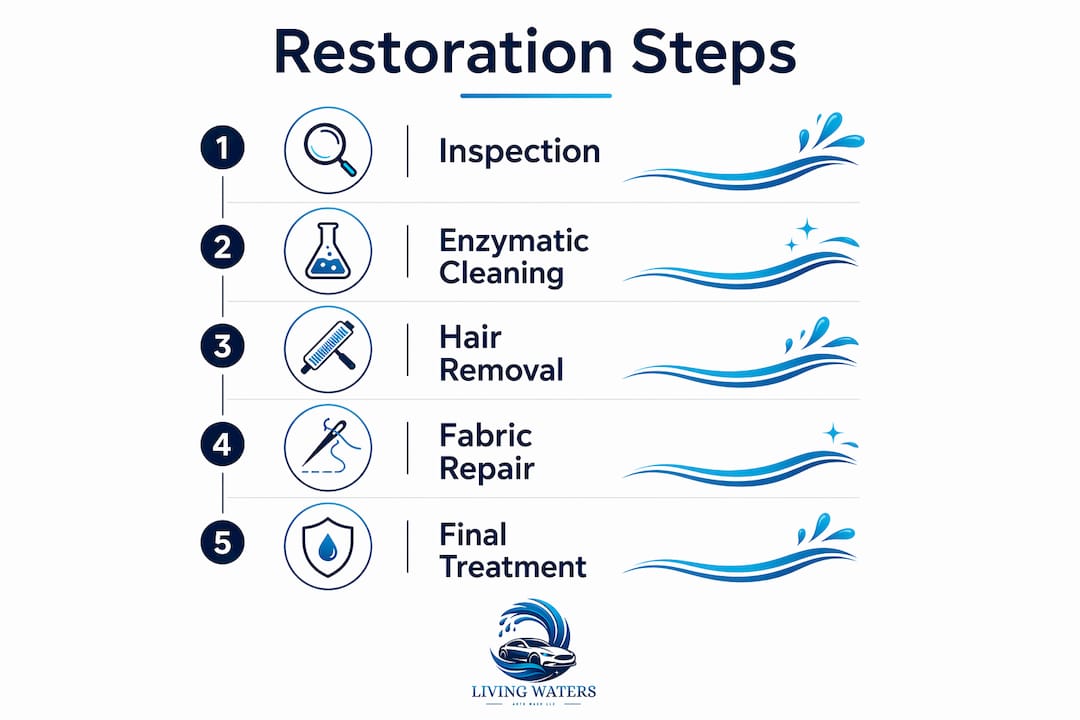
The restoration process follows a clear sequence:
-
UV light inspection. Detailers scan every seat, seam, and floor panel with an ultraviolet light. Urine fluoresces under UV, revealing deposits invisible to the naked eye. Skipping this step means treating only a fraction of the actual contamination.
-
Enzymatic pre-treatment. A specialized enzymatic cleaner is applied at room temperature and left to dwell for 20–45 minutes. The enzymes break down uric acid crystals and protein chains at the molecular level. Rushing this stage leaves residual odor that returns as humidity rises.
-
Cold water extraction. A wet-dry extractor pulls the dissolved proteins, crystals, and cleaner residue out of the fabric. Cold water preserves enzyme activity through the rinse phase and prevents re-bonding of any remaining proteins.
-
Drying with air movers. Detailers use air movers at room temperature to dry treated surfaces within 12–24 hours. Slow or incomplete drying creates the warm, moist conditions mold needs to grow.
-
Foam assessment. When urine soaks through fabric into cushion foam, surface cleaning cannot reach the odor source. Detailers then flush foam cores with cold enzyme solution or recommend foam replacement for lasting odor removal. This step separates a thorough restoration from a temporary fix.
Pro Tip: Apply enzymatic cleaner generously enough to match the depth of the original urine penetration. A light surface spray on a deeply soaked seat will not reach the odor source.
How do detailers remove embedded pet hair from upholstery thoroughly?
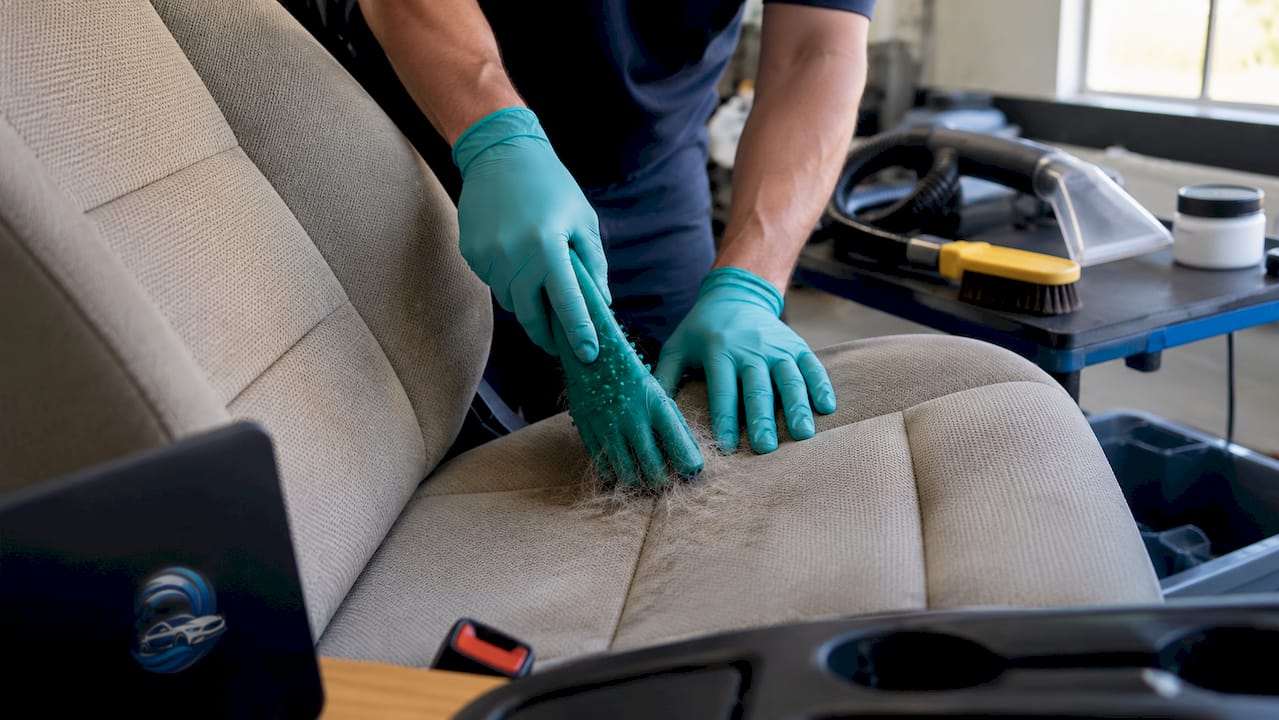
Pet hair removal is harder than it looks. Static electricity causes embedded hair to cling tightly to fabric fibers, which is why running a vacuum over the seat first rarely works. Professionals neutralize static before extraction, not after.
The four-pass method is the industry standard for thorough hair removal:
- Loosen. A rubber glove or rubber squeegee is dragged across the fabric in short strokes. The friction neutralizes static and pulls hair to the surface. This is the step most pet owners skip entirely.
- Collect. Loosened hair is gathered into rows or piles using the same rubber tool. Working in one direction prevents hair from scattering back into the fabric.
- Extract. A high-suction vacuum removes the collected hair. At this stage, rubber tools remove up to 90% of surface pet hair before the vacuum even runs. That figure shows how much static-based adhesion defeats suction alone.
- Inspect. Detailers check seams, crevices, and under-cushion zones by hand and with a flashlight. Hidden upholstery pockets act as reservoirs that reload the surface with hair and odor after superficial cleaning.
Common mistakes to avoid when cleaning pet hair upholstery:
- Using a dry cloth first, which spreads hair rather than collecting it
- Vacuuming before loosening static, which leaves 30–50% of hair behind
- Ignoring seam lines, where hair compacts into dense mats
- Using compressed air without a collection method, which redistributes hair to other surfaces
Pro Tip: Wear a damp rubber glove and run your palm firmly across the seat in one direction. You will pull more hair in three passes than a standard vacuum removes in ten.
What fabrics and repair methods hold up best against pet damage?
Not all vehicle upholstery responds the same way to pet claws, shedding, and accidents. Fabric choice is the single biggest factor in how often you will need professional restoration.
Detailers who work regularly with pet owners recognize a clear hierarchy of material durability:
| Fabric type | Pet damage resistance | Ease of cleaning |
|---|---|---|
| Tight-weave performance fabric | High | High |
| Crypton or Sunbrella-type material | High | High |
| Standard woven cloth | Low | Moderate |
| Loose-weave or textured fabric | Very low | Low |
| Genuine leather | Moderate | Moderate |
Performance fabrics like Crypton and Sunbrella-type materials resist pet claws, repel stains, and release hair more easily than loosely woven alternatives. Standard woven cloth traps hair deep in the weave and absorbs urine quickly, making restoration more labor-intensive.
For scratches and surface tears, detailers use fabric repair compounds and heat-bonded patches matched to the original material. Minor claw marks on leather respond well to leather filler and color-matched dye. Extensive chewing damage or large tears typically make professional reupholstering more cost-effective than repeated surface repairs.
Removable seat covers and washable throws provide a practical layer of protection between professional visits. They do not replace restoration, but they reduce the frequency and cost of deep cleaning sessions. Detailers generally recommend scheduling a full interior detail every three to four months for households with active pets.
How can pet owners maintain upholstery between professional visits?
Consistent daily habits reduce the workload at every professional detail appointment. The goal is to slow the accumulation of hair, odor, and stain damage rather than wait for a crisis.
Practical maintenance steps for pet owners:
- Groom your pet regularly. Routine grooming reduces shedding at the source. A dog brushed three times per week deposits significantly less hair in your vehicle than one brushed monthly.
- Use washable throws in pet travel areas. A machine-washable cover over the back seat catches most hair and absorbs minor accidents before they reach the upholstery.
- Vacuum weekly, focusing on seams. Run the vacuum crevice tool along every seam and under the seat edges. These zones accumulate the most hair and are the first to develop odor.
- Spot-treat accidents immediately with an enzyme cleaner. Blot the area dry, apply a pet-specific enzymatic product at room temperature, and let it dwell for at least 20 minutes before blotting again. Never rub. Never use hot water.
- Avoid harsh chemical sprays. Bleach-based products and high-pH cleaners degrade fabric fibers and can set protein stains rather than dissolve them.
- Schedule professional detailing every three to four months. Home care manages surface buildup, but interior detailing reaches the deep contamination that routine cleaning misses.
The most common mistake pet owners make is treating upholstery only after odor becomes noticeable. By that point, uric acid crystals have had time to dry, harden, and bond to fibers. Treating the seat within the first hour of an accident produces dramatically better results than waiting until the smell appears.
Key takeaways
Professional pet damage restoration works because it addresses the chemistry of urine, the physics of static-bound hair, and the limits of each fabric type in a single coordinated process.
| Point | Details |
|---|---|
| Enzymatic dwell time matters | Allow 20–45 minutes of contact time for enzymes to fully break down uric acid crystals. |
| Cold water only | Hot water sets urine proteins permanently into fibers; cold extraction removes them cleanly. |
| Four-pass hair removal | Loosen static with rubber tools before vacuuming to remove up to 90% of embedded hair. |
| Hidden zones cause re-soiling | Treat seams, crevices, and foam cores to prevent odor from returning after cleaning. |
| Fabric choice reduces damage | Performance fabrics like Crypton resist claws and stains far better than standard woven cloth. |
What I've learned from years of pet upholstery work
DIY pet odor products almost always mask the smell rather than eliminate it. The fragrance fades within a week, and the uric acid crystals remain in the foam, reactivating every time humidity rises. Pet owners often call us after spending months on store-bought sprays, and the underlying contamination is exactly where it started.
The other pattern I see constantly is heat damage from well-meaning cleaning attempts. A pet owner uses a steam cleaner because it feels thorough. The steam drives proteins deeper into the fabric and bonds them to the fibers. What was a treatable stain becomes a permanent one. Cold enzymatic treatment is slower and less satisfying to watch, but it is the only approach that actually works.
Fabric matters more than most pet owners realize. A vehicle with Crypton-style performance upholstery and a washable seat cover is a fundamentally different maintenance situation than one with standard woven cloth. The investment in better materials pays back in lower restoration costs over time.
The realistic expectation for severe pet damage is this: professional restoration can remove the vast majority of odor and staining, but foam that has been saturated repeatedly may need replacement to achieve a fully neutral result. That is not a failure of the process. It is the chemistry being honest about its limits.
— Living
Living Waters Auto Wash LLC: mobile pet upholstery restoration
Pet damage does not wait for a convenient time, and neither should your vehicle's restoration.
Living Waters Auto Wash LLC brings professional enzymatic treatment, cold water extraction, and four-pass hair removal directly to your location in Boca Raton, Pompano Beach, Coral Springs, and Parkland. No water hookups or electricity connections are needed. The team handles everything from fresh accident stains to long-standing odor embedded in foam, using the same protocols described in this guide. If your vehicle needs a full interior reset after pet damage, the fleet wash services page is the place to start. Five-star results, delivered to your driveway.
FAQ
What is the best way to remove pet urine odor from car upholstery?
Enzymatic cleaner applied at room temperature with a 20–45 minute dwell time, followed by cold water extraction, is the most effective method. Hot water or steam must be avoided because it permanently bonds urine proteins to fabric fibers.
Why does pet odor return after cleaning?
Odor returns when uric acid crystals remain in the foam core beneath the fabric surface. Foam saturation requires either a deep enzyme flush or foam replacement to fully eliminate the smell.
How do professionals remove pet hair that a vacuum cannot reach?
Professionals use rubber tools to neutralize static before vacuuming, which releases hair from fabric fibers. The four-pass method of loosen, collect, extract, and inspect removes hair from seams and crevices that suction alone cannot reach.
Which vehicle upholstery fabrics resist pet damage best?
Performance fabrics such as Crypton and Sunbrella-type materials offer the strongest resistance to claws, stains, and shedding. Standard woven cloth absorbs accidents quickly and traps hair deeply, making it the most difficult material to restore after pet damage.
How often should pet owners schedule professional interior detailing?
Pet owners benefit from a professional interior detail every three to four months. Regular home maintenance with enzyme spot treatment and weekly vacuuming extends the time between visits but does not replace the deep extraction that professional equipment provides.