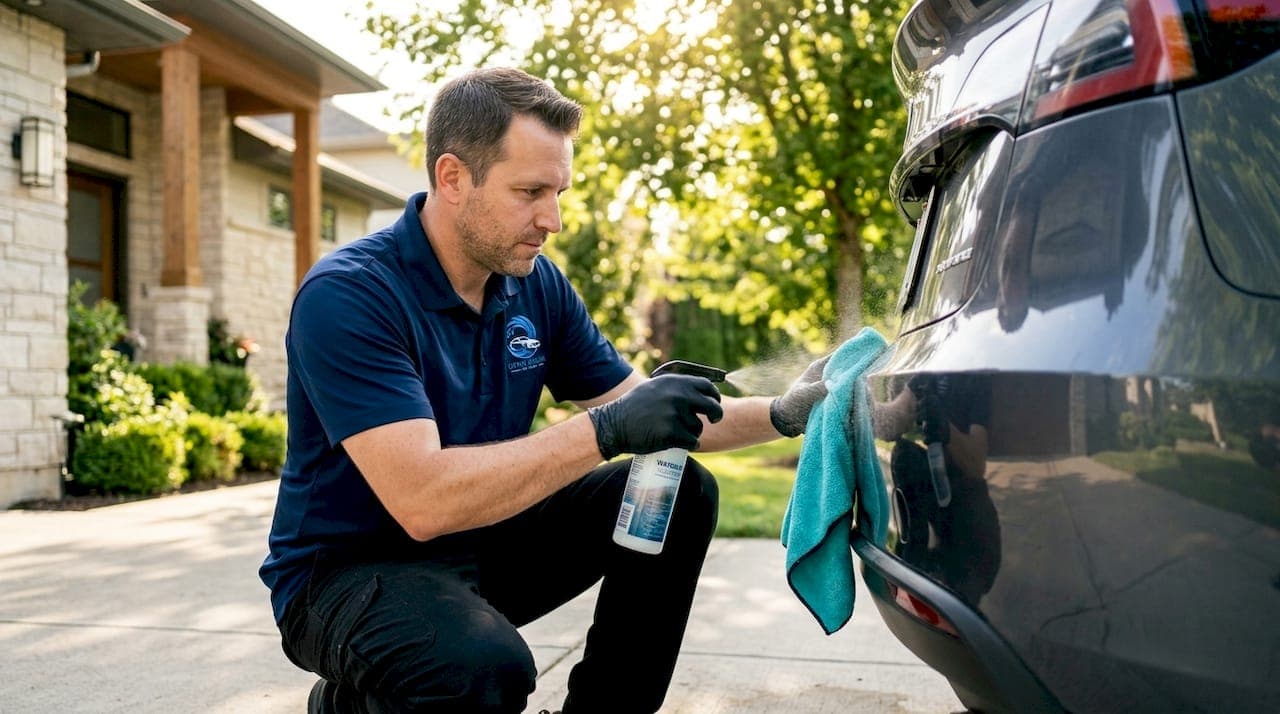
Waterless detailing is defined as a spray-and-wipe cleaning method that uses polymer-based lubricants and surfactants to lift light surface contaminants from a vehicle's paint without any water. For pet owners, it delivers real convenience for routine exterior upkeep, but it has firm limits. It cannot safely remove heavy pet mud, dried paw prints, or biological messes inside the cabin. Those jobs require enzymatic cleaners and, in serious cases, professional help from a team like Living Waters Auto Wash LLC. Understanding where waterless detailing fits, and where it stops, is the key to keeping your car clean without damaging the paint.
How does waterless detailing work on pet messes?
Waterless detailing works by encapsulating light surface dirt inside a polymer film. The spray product coats dust, pet hair, and minor grime, then a microfiber towel lifts the encapsulated particles away from the paint surface. The result is a clean, protected finish with no water required.
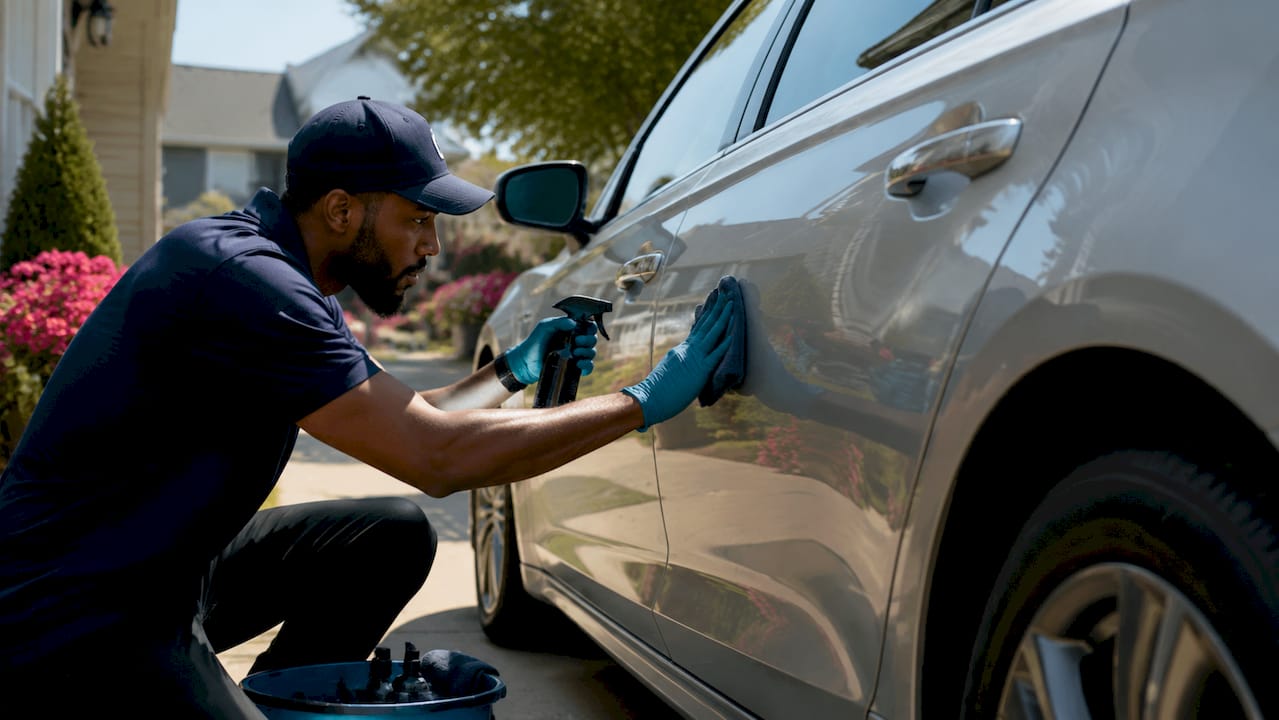
The method has a physics-based limit, though. Polymer films can only suspend a finite amount of contaminant. Heavy pet mud exceeds this limit, causing the particles to grind against the paint instead of lifting away. That grinding creates micro-scratches and can permanently damage a clear coat.
Pet-specific risks include:
- Dried paw prints packed with grit and organic debris that act like sandpaper under a microfiber towel
- Pet hair clumps that bunch under the towel and drag across the panel
- Mud from wet dogs that contains enough abrasive material to scratch paint on contact
- Biological residue such as saliva or waste that requires chemical breakdown, not just mechanical wiping
Waterless detailing is intended for lightly soiled vehicles, not for panels with visible dirt or heavy contamination. Applying it to a mud-caked door panel is one of the fastest ways to ruin a paint job.
Pro Tip: Before reaching for a waterless spray, run a clean finger lightly across the panel. If you feel grit or resistance, the vehicle needs a rinse-based wash first.
What are the best practices for removing pet biological messes inside vehicles?
Pet biological messes, including urine, vomit, and feces, require a completely different approach than exterior detailing. The industry term for this process is enzymatic stain treatment, and it targets the molecular structure of biological waste rather than simply masking it.
The correct sequence matters more than the product you choose.
- Blot immediately. Use a clean, dry cloth to absorb as much liquid as possible. Press firmly and lift straight up. Never scrub, because scrubbing spreads the contamination deeper into the fabric fibers.
- Apply an enzymatic cleaner. These products contain biological enzymes that decompose uric acid crystals at the molecular level. Standard household cleaners cannot do this.
- Allow the correct dwell time. Fresh stains need a minimum of 15 minutes. Older or set stains may require dwell times up to 24 hours for the enzymes to fully break down the biological components.
- Blot again to remove the cleaner. Do not rinse aggressively. Lift the product and residue with a clean cloth.
- Allow the area to air dry completely. Moisture trapped under carpet padding creates mold and secondary odors.
One mistake pet owners make repeatedly is reaching for steam or hot water to speed up the process.
Heat bonds proteins and uric acid to fabric fibers, making the stain and odor significantly harder to remove. Always use cool or lukewarm water with enzymatic cleaners, and never apply heat before the enzymatic treatment is complete.
Pet urine penetrates deeply into carpet padding and subflooring, not just the surface fibers. That depth is why a single surface treatment often fails. Uric acid crystals bond tightly as they dry, and without enzymatic breakdown, the odor returns every time humidity rises. For professional restoration of severely affected upholstery, the techniques used by trained detailers go well beyond what a spray bottle can accomplish. You can read more about restoring pet-damaged upholstery to understand what a full professional treatment involves.
How can pet owners safely maintain car exterior cleanliness between deep cleans?
Waterless detailing excels as a maintenance tool for pet owners who want to keep their vehicle looking clean between full washes. The key word is maintenance. It works best when the vehicle is already relatively clean and you are managing light accumulation, not recovering from a major mess.
The right approach follows a clear sequence:
- Assess the panel first. Look for visible dirt, mud, or pet hair clumps. If you see any, a waterless spray is not the right tool for that panel.
- Spray generously. Apply enough product to fully lubricate the surface. A thin application increases friction and scratch risk.
- Wipe in one direction only. Straight-line motions, following the body lines of the car, reduce the chance of swirl marks.
- Rotate your towel constantly. Failing to switch towels frequently turns a cleaning tool into a scratching tool. Use a fresh section of the towel after every two or three wipes.
- Finish with a dedicated buffing towel. A second, dry microfiber towel removes any remaining product haze and brings out the shine.
Common scenarios where waterless detailing genuinely excels for pet owners include wiping down a rear bumper after a dog jumps in, removing light paw dust from a hood, and clearing pet nose smudges from windows. These are quick, low-contamination jobs that take under 30 minutes and keep the car looking sharp between professional visits.
Pro Tip: Keep a small bag in your trunk with four to six clean microfiber towels and a travel-size waterless spray. After every dog trip, a two-minute wipe-down prevents light pet dust from building into a problem that requires a full wash.
The waterless car cleaning benefits for pet owners are real, but only when the method matches the mess. Choosing detailing products safe for paint also matters, since not all waterless sprays are formulated for all paint types or conditions.
How does waterless detailing compare to other wash methods for pet mess cleanup?
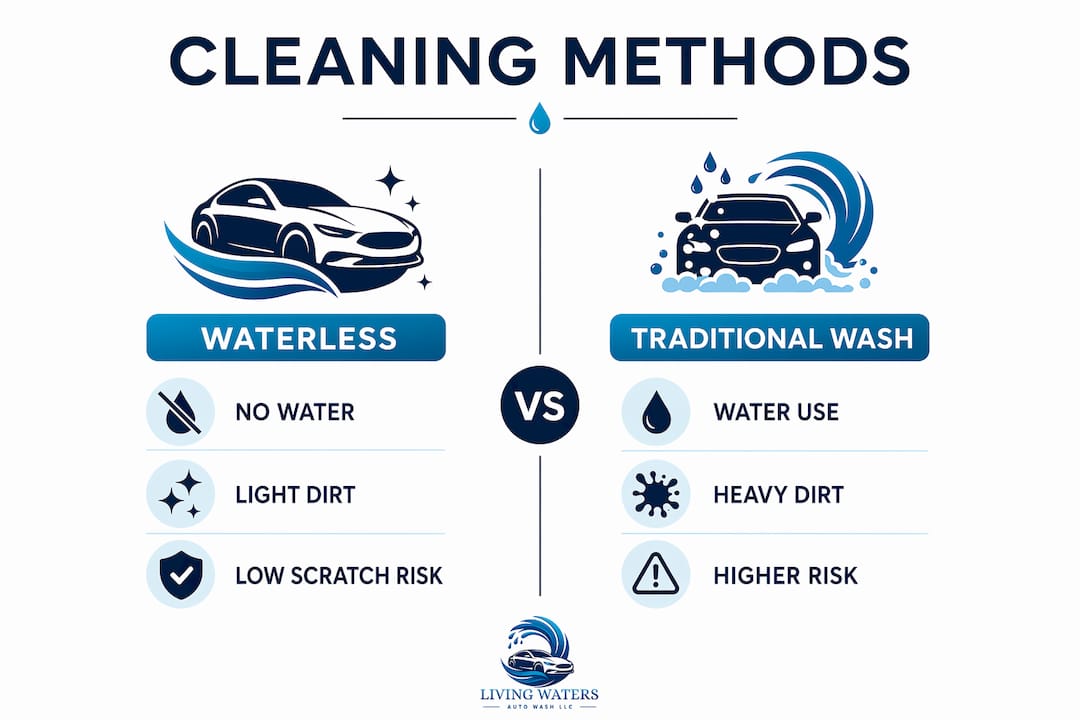
Pet owners benefit from knowing which cleaning method fits which situation. The three main options are waterless detailing, rinseless washing, and traditional two-bucket washing. Each has a specific role.
Waterless versus rinse-based methods differ most significantly in how much contamination they can safely handle and how much time they require.
| Method | Water use | Best for | Pet mess suitability | Scratch risk |
|---|---|---|---|---|
| Waterless detailing | None | Light dust, pet hair, smudges | Low contamination only | High if misused |
| Rinseless wash | Minimal (1–2 gallons) | Moderate dirt, light pet mud | Moderate contamination | Medium |
| Traditional two-bucket wash | High (20+ gallons) | Heavy mud, dried paw prints, full pet mess | All contamination levels | Low with correct technique |
Rinseless washing sits between the two extremes. It uses a small amount of water mixed with a concentrated solution, applied with a microfiber mitt and wiped off without rinsing. It handles more contamination than a waterless spray but still requires the vehicle to be free of heavy mud or caked debris.
Traditional washing remains the only safe option for a vehicle that has been through serious pet-related contamination. A dog that jumped in after a muddy trail run, or a car seat soaked with pet waste, needs a full rinse and wash before any detailing product touches the paint. For pet owners who want the convenience of a professional handling the full process, mobile detailing services like Living Waters Auto Wash LLC eliminate the need to choose between methods. The team assesses the vehicle's condition and applies the right technique for each panel and surface.
Key Takeaways
Waterless detailing is the right tool for light pet-related exterior maintenance, but enzymatic cleaners and traditional washing handle the messes it cannot.
| Point | Details |
|---|---|
| Waterless detailing has firm limits | It safely removes light dust and pet hair but causes paint damage on heavy mud or dried debris. |
| Enzymatic cleaners are non-negotiable for biological messes | They break down uric acid crystals at the molecular level; standard cleaners cannot do this. |
| Dwell time determines success | Fresh stains need 15 minutes; older stains may need up to 24 hours of enzyme contact time. |
| Microfiber towel management is critical | Rotating to a clean towel section every few wipes prevents contamination transfer and scratching. |
| Match the method to the mess | Use waterless for light upkeep, rinseless for moderate dirt, and traditional washing for heavy pet contamination. |
What I've learned from years of cleaning pet-soiled vehicles
The most common mistake I see pet owners make is treating waterless detailing as a universal solution. They grab a spray bottle after a muddy dog trip and start wiping. Within a few passes, they have ground grit into the clear coat. The product is not at fault. The mismatch between the tool and the job is.
The second mistake is underestimating interior biological messes. Pet owners blot a urine stain, spray something that smells like citrus, and consider the job done. Three weeks later, the odor is back because the uric acid crystals were never broken down. Enzymatic treatment is not optional for biological messes. It is the only chemistry that actually works.
What I have found works best is a two-track approach. Use waterless detailing consistently for light exterior maintenance after every pet trip. Reserve enzymatic treatment and professional extraction for anything biological inside the cabin. Integrating both keeps the vehicle genuinely clean rather than just looking clean on the surface.
When the mess is beyond what DIY methods can handle, calling in a professional is not a defeat. It is the right call. Living Waters Auto Wash LLC handles exactly these situations, bringing the right tools and techniques directly to your location. The time savings from mobile detailing alone make it worth considering for pet owners who are already stretched thin.
— Living
Professional pet mess cleanup, handled at your door
Pet messes in vehicles are not always a DIY situation. When the contamination is deep, the odor is persistent, or the paint needs careful attention, professional detailing delivers results that sprays and towels simply cannot match.
Living Waters Auto Wash LLC provides fully mobile detailing services across Boca Raton, Pompano Beach, Coral Springs, Parkland, and Palm Beach County. No water hookups or electricity required. The team comes to you, assesses the vehicle's condition, and applies the right cleaning method for every surface. From express interior treatments to full pet mess remediation, the service is built for pet owners who want a genuinely clean vehicle without the hassle of driving to a shop. Book your mobile detail and let the professionals handle what your spray bottle cannot.
FAQ
What does waterless detailing actually remove from a pet-soiled car?
Waterless detailing safely removes light surface contaminants like pet hair, dust, and nose smudges from exterior panels. It cannot handle heavy mud, dried paw prints, or any biological mess inside the cabin.
Can I use a waterless spray on pet urine inside my car?
No. Pet urine requires an enzymatic cleaner that breaks down uric acid crystals at the molecular level. A waterless spray is formulated for exterior paint surfaces, not fabric or carpet.
How long should I leave an enzymatic cleaner on a pet stain?
Fresh stains need at least 15 minutes of dwell time. Older or set stains may require up to 24 hours for the enzymes to fully decompose the biological material.
Why does my car still smell after I cleaned a pet stain?
The odor returns when uric acid crystals were not fully broken down. This happens when the enzymatic cleaner was not left on long enough, heat was applied before treatment, or the stain had already penetrated deep into the padding below the carpet.
When should I call a professional detailer instead of cleaning it myself?
Call a professional when the stain has soaked into carpet padding, the odor persists after two enzymatic treatments, or the exterior has heavy mud that requires rinsing before any detailing product can be safely applied.