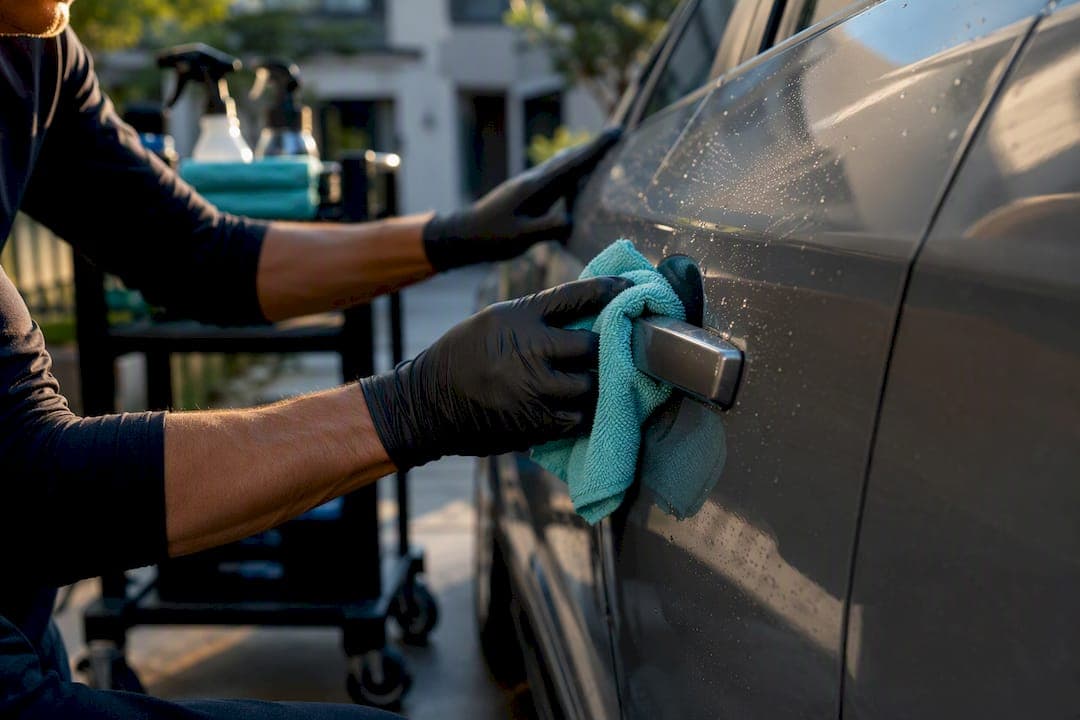
A focused pre-sale detail that eliminates odors, deep-cleans the interior, and decontaminates the wheels and paint typically pays for itself through better buyer confidence and sharper listing photos. Skip the full paint correction. Spend your money on the things buyers actually notice: a neutral-smelling cabin, clean glass, and wheels without brake dust. If you want it done without lifting a hose yourself, book a mobile detail timed a day or two before you list.
TL;DR:
- Pre-sale detailing focuses on removing odors, cleaning neglected areas, and improving buyer confidence more than pursuing full paint correction.
- Expect packages to include exterior wash, wheel cleaning, interior vacuuming, glass cleaning, door jamb wiping, and tire dressing, with optional add-ons like extraction and headlight restoration.
- Sequence your exterior cleaning by starting with wheels, then pre-wash, wash, decontamination if needed, and finish with protection, avoiding overspending on unnecessary paint correction.
- Interior cleaning should go from dry to wet, targeting odor sources with enzyme treatments, and finishing with glass and plastic cleaning to eliminate streaks and glare.
- Mobile services offer convenient, same-day pre-sale detailing saved for objections like odors and neglected trim, with costs varying based on vehicle size and condition.
Table of Contents
- Is Pre-Sale Car Detailing Worth It?
- What Should Be Included in a Pre-Sale Detail Checklist?
- How Do You Detail the Exterior Before Selling?
- What's the Right Order for Cleaning a Car's Interior?
- Which Add-On Services Are Worth the Extra Cost?
- How Much Does a Pre-Sale Detail Typically Cost?
- How Do You Prep a Freshly Detailed Car for Listing Photos?
- How Does Mobile Pre-Sale Detailing Actually Work?
- How Much Should You Actually Spend Before Selling?
- Book a Mobile Pre-Sale Detail Without Leaving Home
- Sources
- FAQ
Is Pre-Sale Car Detailing Worth It?
Yes, in most cases. Buyers form price expectations from what they can see, smell, and touch in the first ninety seconds of walking up to a car, and a clean presentation reduces the odds of a lowball opener before negotiation even starts, according to detailing industry analysis from The Mobile Buff. That's not a marketing claim, it's just how private-party and trade-in negotiations work: a dirty wheel well or a musty cabin gives a buyer a reason to knock $500 off before they've even started the car.
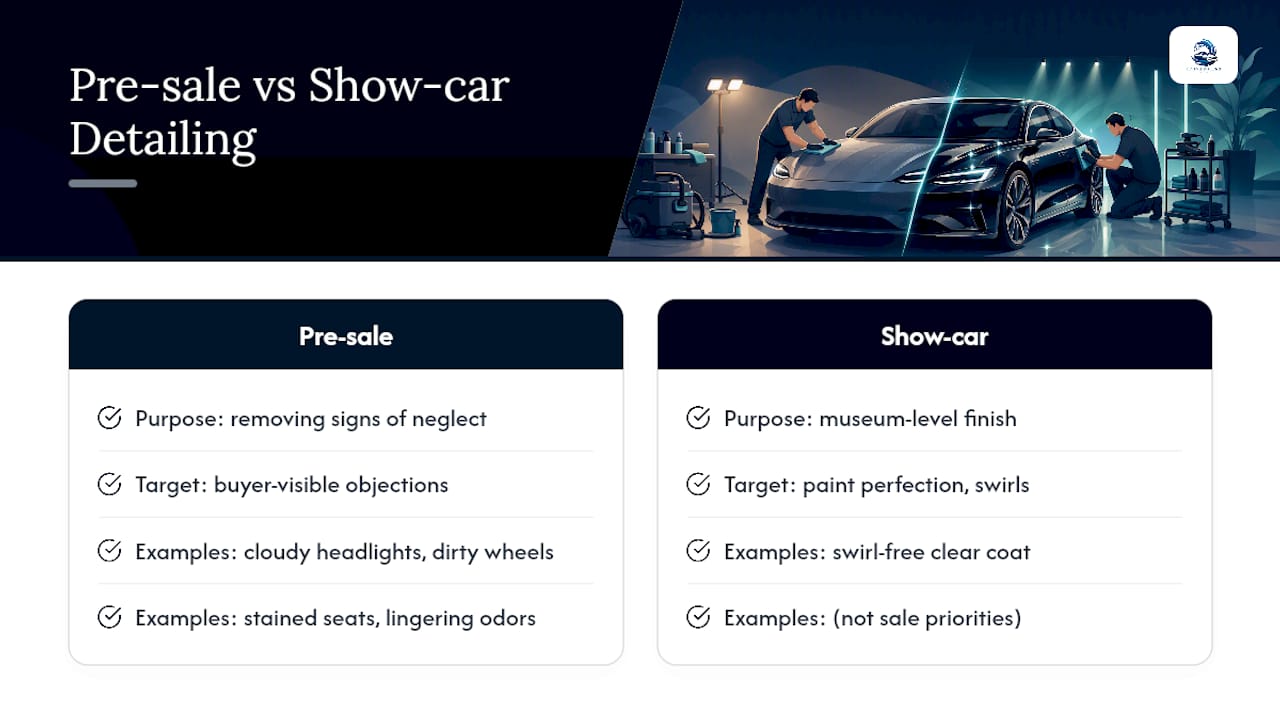
The standard industry term for this work is "pre-sale detailing" or "resale detailing," and it's a narrower job than a full detail. A pre-sale detail targets buyer objections specifically. It's not the same service as a show-car correction, and treating it that way wastes money on a car you're about to hand over to someone else. According to Car Care's pre-sale checklist, the goal is removing signs of neglect, not chasing museum-level paint. Cloudy headlights, dirty wheels, stained seats, and lingering odors cost you money at the negotiating table. Swirl-free clear coat on a 2019 Camry does not.
If presentation matters this much, the natural next question is what you're actually paying for, whether you DIY it or hire it out.
What Should Be Included in a Pre-Sale Detail Checklist?
Use this list to compare quotes from mobile detailers, shops, or your own weekend labor. If a provider's package skips several of these, ask why before you book.
Core inclusions to expect in any decent pre-sale package:
- Full exterior wash with wheel and tire cleaning
- Interior vacuum, including trunk and under seats
- Glass cleaned inside and out
- Door jambs wiped down
- Tire dressing applied
Add-ons worth requesting by name, since not every basic package includes them automatically:
- Carpet and upholstery extraction (not just a surface vacuum)
- Odor source treatment, not a fragrance spray
- Headlight restoration
- Single-stage machine polish for dull or oxidized paint
Ask providers three things before you book: what's included versus billed as an add-on, whether extraction is included or optional, and whether the quote is fixed or subject to change once they see the car in person. Get the scope in writing, even if it's just a text message confirming what was quoted. This matters more with mobile services, since a phone quote based on "a sedan" can shift once someone sees three months of dog hair in the back seat.
Comparing a mobile quote against a shop quote only works if you're comparing the same scope. A $120 "express detail" from a shop that skips extraction isn't cheaper than a $180 mobile package that includes it. It's a different job entirely, according to package breakdowns from Optimum Car Detail.
How Do You Detail the Exterior Before Selling?
Sequence matters here, and skipping steps is how DIYers end up with swirl marks in photos meant to sell the car.
Start with the wheels, not the paint. Brake dust is acidic and it's the dirtiest surface on the car, so cleaning it first stops you from dragging that grime across the wash mitt onto your paint later. Follow with a pre-wash or snow foam to loosen dirt before anything touches the surface, then wash using the two-bucket method: one bucket of soap, one of clean rinse water, so you're not reapplying grit back onto the panel with every pass. This sequence, wheels, pre-wash, two-bucket contact wash, decontamination, then protection, is the order recommended by professional detailing guides like Auto Finesse.
Decontamination comes next, but only if the paint needs it. Run a bare hand over the hood after washing. If it feels gritty, you've got embedded iron fallout or tar that soap won't remove, and a clay bar or clay-cloth lifts it. Clay isn't mandatory on every car, and on softer modern clear coats, a gentler clay-cloth reduces the risk of introducing fine scratches compared to traditional clay.
Polish is where sellers overspend. A single-stage polish knocks down light oxidation and restores gloss for photos in an hour or two. Full multi-stage paint correction, the kind that removes deep swirls and scratches, can take a full day and cost hundreds more. For a car headed to a private buyer or a trade-in appraisal, that investment rarely comes back dollar for dollar. Save it for cars where paint condition is the main selling point, like a low-mileage sports car or a certified pre-owned listing.
Finish with a coat of wax or paint sealant for gloss, and don't oversell it. A basic sealant gets the shine you need for photos. Skip the ceramic coating pitch for a car you're handing off in a few weeks. It's protection the next owner benefits from, not you.
- Restore headlights if they're cloudy or yellowed
- Wipe down door jambs and trunk seals, buyers open both
- Dress tires with a satin, not glossy, finish
Pro Tip: Headlight restoration costs almost nothing compared to what cloudy lenses do to a car's perceived age in photos. A $20 kit or a $50 professional restoration can visually knock five years off a car that otherwise looks tired.
What's the Right Order for Cleaning a Car's Interior?
Work from dry to wet, and from surface to source. Skipping this order means you're pushing dirt around instead of removing it.
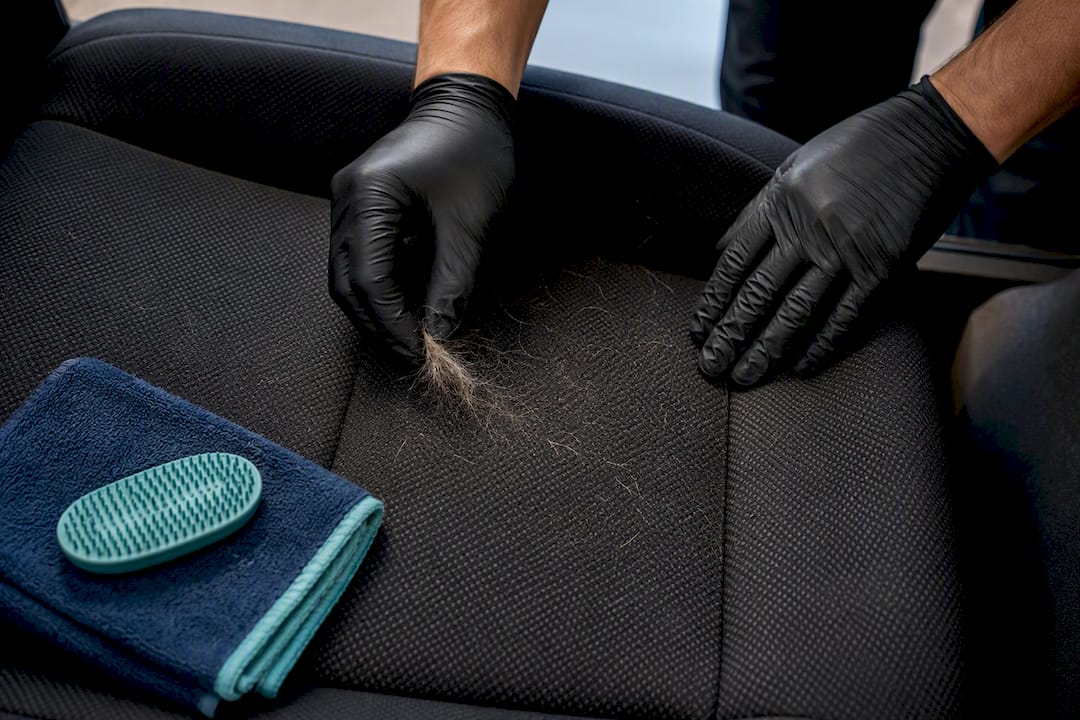
Start by pulling out floor mats and removing loose debris and pet hair with a vacuum before anything gets wet. Wet-vacuuming pet hair into carpet fibers is one of the more common DIY mistakes, and it turns a fifteen-minute job into an hour of pulling hair out of upholstery with a rubber glove.
Once the loose stuff is gone, move to extraction for anything embedded, ground-in dirt in carpet fibers, coffee stains on seats, salt residue on floor mats. A shop vac with a wet setting or a rented carpet extractor gets fibers clean at the root. Spot-treat isolated stains separately rather than shampooing the entire interior if only one seat has a problem.
Odor is the piece sellers most often get wrong, and it's worth calling out on its own: neutral interior smell disproportionately increases buyer trust, more than almost any other single interior detail, based on detailing industry observations from The Mobile Buff. Spraying air freshener over a smoke or pet odor doesn't fix it, it just adds a second smell on top of the first, and most buyers can tell. Treat the source instead. That means identifying where the odor lives, usually carpet padding, seat foam, or the HVAC system, and using an enzyme cleaner or ozone treatment rather than masking it. Diagnosing the actual source before treating it is the approach recommended by Diamond Brite's odor guide, and it's the difference between a smell that comes back in three days and one that's actually gone.
- Vacuum and remove debris before any wet cleaning
- Extract carpets and upholstery for embedded dirt
- Treat odors at the source, not with fragrance sprays
- Condition leather sparingly, avoid a greasy or slick finish
- Clean glass and vents last, streaks show up worst in these
Finish with plastics and leather. Use a low-sheen finish on dashboards and door panels; a glossy, wet-look dressing looks cheap in photos and creates glare under interior lighting. Avoid applying slippery or high-gloss protectant to the steering wheel, shifter, or pedals. It looks like it's masking wear, and a slick steering wheel is a legitimate safety concern for anyone test-driving the car, a caution echoed in product guidance from Stinger Chemicals. That same source flags ammonia-based glass cleaners as a risk on tinted windows, since ammonia can degrade tint film over time, so check the label before you clean the inside of tinted rear glass.
Which Add-On Services Are Worth the Extra Cost?
Not every optional service returns its price. Here's where the money actually helps.
Worth adding for most sellers:
- Headlight restoration, cheap and immediately visible in every listing photo
- Trim revival for faded plastic bumpers and mirror caps
- Odor-source treatment if there's any lingering smell from smoke, pets, or spills
- A light engine bay clean, but only if the bay looks visibly neglected
Usually not worth it for a standard resale:
- Multi-stage paint correction on an average daily driver
- Ceramic coating application
- Full engine bay detailing on a clean, unremarkable bay
The logic is simple: buyers punish visible neglect, cloudy headlights, faded trim, a smoky smell, far more than they reward flawless paint they can't fully evaluate in a fifteen-minute test drive anyway. A dull-paint sedan usually benefits more from a $75 single-stage polish than a $400 correction job, according to pre-sale guidance from Car Care. Save the two-stage correction for cars where paint condition is genuinely part of the sale pitch, low-mileage performance cars, collector vehicles, anything being sold at a premium where a buyer will actually inspect the clear coat under good light.
How Much Does a Pre-Sale Detail Typically Cost?
Price scales with vehicle size, interior condition, and how much extraction or odor work is needed. A two-seat coupe with a clean interior costs less than a family SUV with three kids' worth of spilled juice in the back seat, regardless of exterior condition.
Three rough categories to think in:
- Express or basic detail: exterior wash, vacuum, glass, and wheels. Fits a car that's already in decent shape and just needs a refresh before photos.
- Full pre-sale detail: adds carpet extraction, odor treatment, and door jamb cleaning. This is the right tier for most private-party sales.
- Premium detail with paint correction: adds machine polish or multi-stage correction. Reserve this for higher-value vehicles where paint condition genuinely affects price.
Pricing based on vehicle size and condition is standard practice across pre-sale service providers, per Optimum Car Detail's package structure, so expect a quote that asks about your specific vehicle rather than a flat number.
Timing matters as much as price. Complete any mechanical work, inspections, or repairs first. Detailing a car that then goes back into a service bay for a leaking valve cover means redoing engine bay and paint work you already paid for. Schedule the detail 24 to 72 hours before your listing photos and showings, close enough that the car stays clean, far enough out that you're not rushing. This sequencing, mechanical work first, detail last, is standard advice from providers who handle pre-sale packages regularly, including Optimum Car Detail.
When you get a quote, ask what triggers an add-on charge. Pet hair, heavy staining, and smoke odor are the three most common reasons a quoted price changes once the detailer sees the car in person.
How Do You Prep a Freshly Detailed Car for Listing Photos?
The detail is only half the job if your photos don't show it off. A few minutes of staging makes a real difference in how the car reads online.
- Shoot in early morning or late afternoon light, direct midday sun creates harsh glare and washes out paint color.
- Do a thirty-second wipe-down of glass and any dust that settled since the detail, dust shows up worse in photos than in person.
- Remove personal items completely: no parking permits, no phone chargers, no gym bag in the back seat.
- Straighten the steering wheel and open the driver's door for at least one interior shot showing the clean cabin.
- Right before any in-person showing, air out the car for a few minutes, wipe the steering wheel and shifter, and do a quick smell check.
If weather changes, rain, pollen, dust, between the detail and your shoot, reshoot rather than posting photos of a car that no longer matches its description. Buyers notice the mismatch, and it undermines trust in everything else in the listing.
How Does Mobile Pre-Sale Detailing Actually Work?
A mobile detailing team brings its own water and power, so there's no need for a garage hookup or a trip to a shop. A mobile detailing team operates on-site while you keep the car available for other errands or appraisals the same day.
What to expect and confirm before booking:
- Trained technicians who handle the full sequence, wash, decontamination, interior extraction, and protection, on location
- A time window appropriate to the package, express jobs run faster than a full pre-sale detail with extraction
- Confirmation of exactly what's included versus billed separately
- A clear photo or documentation policy if you want before/after shots for your own listing
- Cancellation and rescheduling terms, especially useful if weather or a buyer's appraisal date shifts
Mobile service tends to make the most sense when you're juggling a sale timeline against a job, kids, or a car you can't be without for a full day at a shop. Read a step-by-step breakdown in this guide to appointment prep before your booking so nothing gets missed on either end.
How Much Should You Actually Spend Before Selling?
Spend to remove objections, not to chase perfection. A buyer who smells smoke or sees brake dust caked on the wheels will negotiate harder regardless of how flawless your clear coat is. That's where your money belongs.
DIY makes sense if you've got a weekend, the right tools, and a car that isn't dealing with deep odor problems or heavy staining. Once you're facing embedded pet hair, a lingering smoke smell, or paint that needs more than a wipe-down, professional work earns its cost back faster than the hours you'd sink into it yourself. Reserve premium correction work for vehicles where paint condition is genuinely part of the sale, not as a default upgrade.
— Living
Book a Mobile Pre-Sale Detail Without Leaving Home
Mobile pre-sale prepping services offer an alternative to a shop drop-off: no driving to an appointment, no waiting room, and no losing the car for a full day when you need it for a trade-in appraisal or a buyer's test drive the same week.
A mobile detailing team brings its own water and power and runs the full sequence on-site, wheels and pre-wash through decontamination, interior extraction, and final protection, in the time window that fits your listing date. Before booking, confirm the scope (basic wash versus full pre-sale package with extraction), any add-ons you want quoted upfront like headlight restoration or odor treatment, and whether you'd like before-and-after photos for your listing. Check out what actually raises resale value before you book, then schedule your mobile detail timed for a day or two before your photos go live.
Sources
- Pre Sale Car Detailing: A Guide to a Higher Resale Value - The Mobile Buff
- Pre-Sale Car Detailing Mornington Peninsula — Get More When You Sell - Optimum Car Detail
- Pre-Sale Car Detailing Checklist: What's Included - Car Care
- The Pre-Sale Detail - How To Clean a Car Ready To Sell - AutoFinesse
FAQ
Is It Worth Getting a Car Detailed Before Selling?
Yes, for most vehicles. A targeted pre-sale detail addresses the odors, stains, and dirty wheels that buyers use to justify lower offers, and it usually returns its cost through better buyer confidence and photos.
What Is a Fair Price for a Pre-Sale Detail?
Pricing depends on vehicle size and interior condition, with basic express packages costing less than a full pre-sale package that includes carpet extraction and odor treatment. Get a quote based on your specific car rather than relying on a flat published rate.
How Much Should You Tip on a $200 Car Detail?
Tipping isn't standard across the detailing industry the way it is in restaurants, but many customers add a tip for exceptional work, particularly for mobile services where the technician handled tough stains or odor removal beyond the basic scope.
How Much Does Auto Detailing Typically Cost?
Cost varies by vehicle size, condition, and package scope, with basic exterior-only services priced lower than full interior-and-exterior packages that include extraction and protection. Ask providers for a quote based on your car's actual condition rather than assuming a single industry-wide rate.
Should You Detail the Interior or Exterior First When Selling?
Neither should be skipped, but interior odor and stain issues tend to influence buyer perception more heavily than exterior polish, since buyers spend more time sitting inside the car than inspecting paint depth. Address both, but prioritize interior cleanliness and odor removal if you have to choose where to spend more.