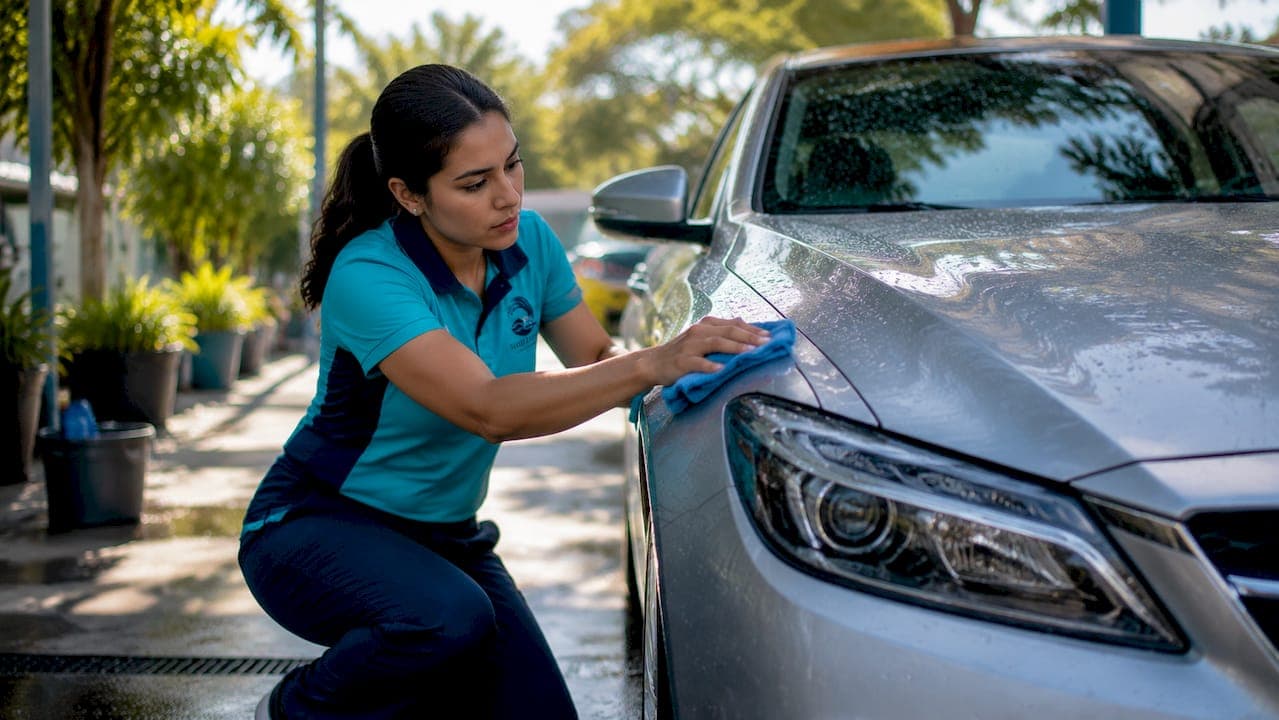
Professional auto detailing is defined as a technical restoration process that removes cosmetic flaws, eliminates odors, and signals maintenance care to buyers. Understanding how detailing improves car value starts with one fact: a professionally detailed vehicle can sell for 3%–15% more than an undetailed one, depending on vehicle condition and detail cost. On a $40,000 vehicle, that gap reaches $4,000–$6,000 from a single service. Buyers make visual judgments fast, and a clean car signals that the owner cared about more than just appearances. Living Waters Auto Wash LLC sees this play out with every pre-sale detail they complete across Boca Raton, Pompano Beach, Coral Springs, and Parkland.
How detailing improves car value: the services that matter most
Not every detailing service delivers the same return. The highest-ROI work targets the areas buyers notice first and use to justify lower offers.
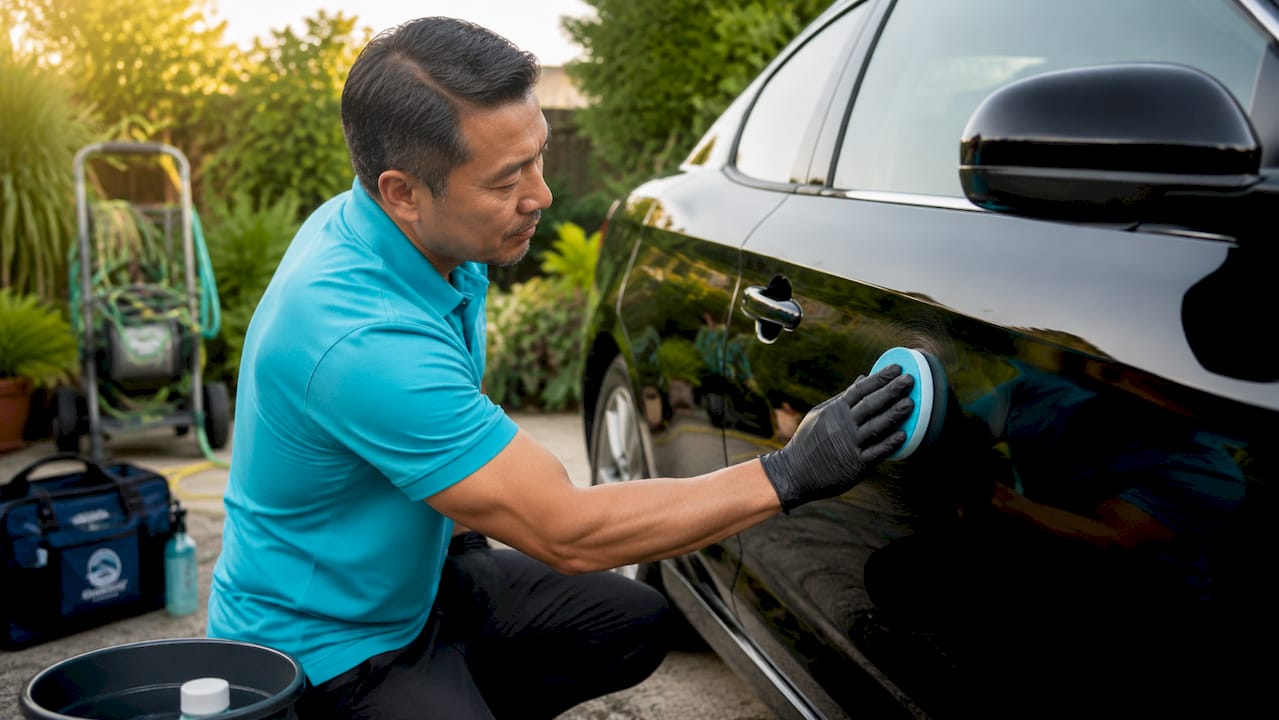
Exterior services
Paint correction, wax application, and ceramic coating restore depth and gloss to oxidized or scratched paint. Headlight restoration removes the yellowed haze that makes a car look older than it is. Wheel cleaning and tire dressing complete the visual package. Exterior detailing can add $500–$1,500 to perceived value on its own, and ceramic coatings extend that protection for years.
Interior services
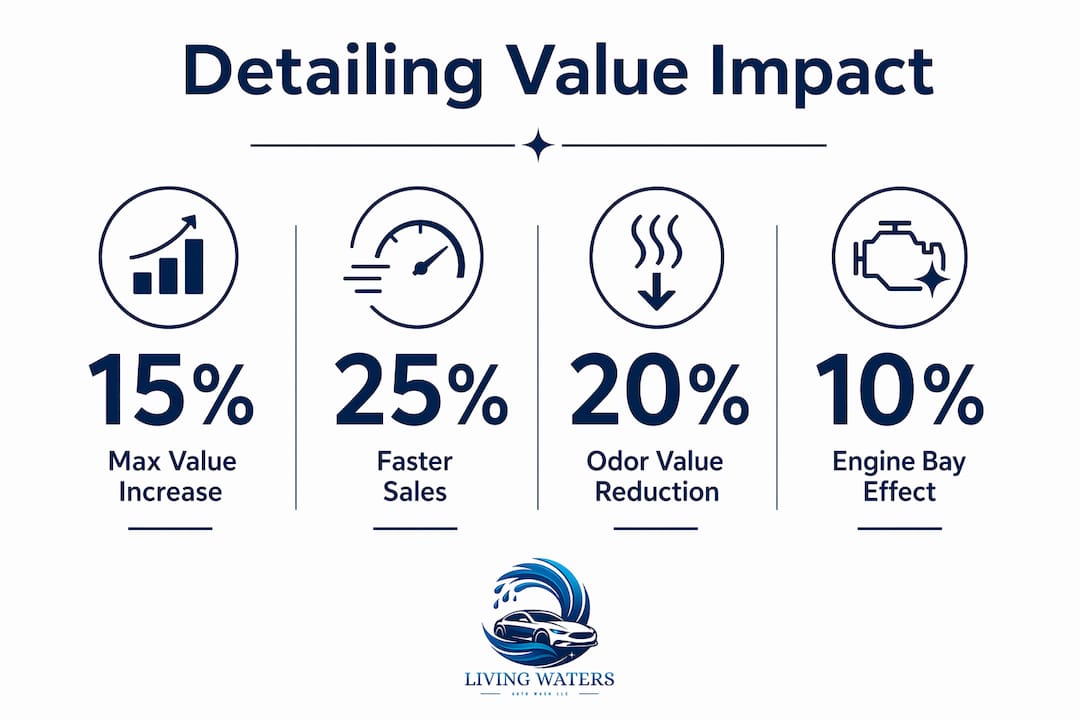
Interior deep cleaning delivers some of the strongest returns per dollar spent. Interior odors reduce resale value by as much as 20%–30%, making odor removal the single most critical interior task before listing. Carpet shampooing, upholstery cleaning, stain removal, and full surface wipe-downs restore a cabin that feels new. A clean interior signals that the car was lived in carefully, not abused. Detailed interior cleaning work can add $800–$2,000 to buyer perception of value.
Engine bay cleaning
Engine bay detail is the most underused pre-sale service. Engine cleanliness signals fluid discipline and mechanical maintenance to buyers, improving perceived condition by up to 10%. A buyer who opens the hood and sees a clean, degreased engine bay assumes the rest of the car was maintained the same way. That assumption translates directly into higher offers and fewer questions.
| Service | Typical value impact | Best for |
|---|---|---|
| Paint correction + wax | $500–$1,500 | Vehicles with light scratches or oxidation |
| Ceramic coating | Long-term protection | Newer vehicles with strong paint |
| Interior deep clean | $800–$2,000 | Any vehicle with stains or odors |
| Odor removal | Prevents 20%–30% value loss | Vehicles with pet, smoke, or food smells |
| Engine bay detail | Up to 10% perceived improvement | Older vehicles or high-mileage cars |
| Headlight restoration | Moderate visual improvement | Vehicles over 5 years old |
Pro Tip: Avoid over-investing in paint correction on vehicles worth under $15,000. The cost rarely returns proportionally. Focus your budget on odor removal and interior freshness first.
How does professional detailing affect buyer perception and negotiation?
Buyers do not evaluate cars in isolation. Cleanliness builds subconscious trust about mechanical maintenance and overall care, even when buyers have no technical knowledge. A dirty car triggers doubt. A clean car triggers confidence. That shift in confidence changes what buyers are willing to pay before a single word of negotiation begins.
93% of a buyer's visual assessment occurs within the first five minutes of inspection. That window is where the sale is won or lost. Every visible flaw, stain, or odor becomes a negotiation chip that a buyer uses to push the price down. Detailing removes those chips before the buyer ever arrives.
Here are the specific concerns that detailing eliminates:
- Smoke, pet, or food odors that trigger immediate low offers
- Stained seats or carpets that suggest neglect
- Grimy door jambs and sills that signal infrequent cleaning
- Yellowed headlights that make the car look older
- Dirty engine bays that raise mechanical doubts
- Scuffed trim and oxidized paint that reduce perceived condition
"Detailing eliminates the buyer's justifications for low offers, providing a psychological advantage in negotiations. A seller who presents a clean, documented vehicle controls the conversation from the start."
Pro Tip: Take listing photos immediately after the detail is complete, before the car is driven again. Fresh photos of a freshly detailed car generate more clicks and more inquiries on digital marketplaces.
Vehicles with professional detailing records sell 25% faster than undetailed vehicles. Speed matters because every week a car sits unsold carries costs: insurance, storage, and the psychological pressure to accept a lower offer.
When and how should you detail your car to maximize resale value?
Timing is as important as the detail itself. Detailing too early means the car collects dust, bird droppings, and minor scuffs before photos are taken. Timing the detail immediately before listing photos maximizes the visual impact and click-through rates on platforms like CarGurus, AutoTrader, and Facebook Marketplace.
Follow this sequence for the best result:
- Assess your vehicle's condition honestly. Identify odors, stains, paint issues, and mechanical concerns. Separate what detailing can fix from what it cannot.
- Choose the right detail level. A five-year-old daily driver needs a full interior and exterior detail. A two-year-old lease return may only need a maintenance detail and odor treatment.
- Book the professional detail 48–72 hours before photos. This gives surfaces time to cure and allows any residual odors from cleaning products to dissipate.
- Document the service. Get a receipt or service record from the detailer. Documented professional detailing substantiates your asking price during negotiation.
- Take photos the same day as the detail. Shoot in natural light, early morning or late afternoon, to capture paint depth and interior cleanliness accurately.
- List immediately after photos. Do not wait. The car is at peak presentation condition right now.
Pro Tip: Review your car detailing frequency history before listing. If you have records of regular professional details, include them in your listing description. Documented care history is a legitimate price justification.
The detail level should match the vehicle's market value. Spending $800 on paint correction for a car worth $8,000 rarely makes financial sense. Spending $400 on a full interior and exterior detail for a $25,000 vehicle, where the ROI can reach 400%, is a straightforward decision.
What common mistakes reduce the effectiveness of detailing for resale?
Detailing done wrong can waste money without improving the sale price. These are the mistakes that cost sellers the most:
- Over-polishing paint. Excessive machine polishing removes clear coat. A paint thickness gauge prevents this, but most DIY sellers skip it. Professional detailers use controlled processes that differ fundamentally from superficial washing.
- Masking odors instead of removing them. Air fresheners and sprays cover smells temporarily. Buyers notice the moment the car warms up. Ozone treatment and enzyme-based cleaners eliminate the source.
- Skipping door jambs and sills. Buyers open every door during inspection. Dirty jambs signal that cleaning was rushed and superficial.
- Ignoring the engine bay. A clean exterior with a grimy engine bay creates a mismatch that raises questions.
- Relying on DIY washes for pre-sale prep. A garden hose and a sponge do not remove embedded contamination, swirl marks, or odors. Excessive focus on paint correction is less valuable than odor removal and interior freshness, but both require professional tools and products to do correctly.
Pro Tip: If your budget is limited, spend it on interior odor removal and a thorough interior clean before anything else. Buyers sit inside the car. That sensory experience shapes their offer more than paint gloss.
The goal is not a showroom finish. The goal is a car that gives buyers no reason to negotiate down.
Key Takeaways
Professional detailing is the highest-ROI pre-sale investment a car owner can make, with returns of 3%–15% in added value and 25% faster sale times when done correctly and timed well.
| Point | Details |
|---|---|
| Detailing boosts resale price | A professional detail can add 3%–15% to a vehicle's sale price, with ROI up to 400%. |
| Interior odors cost the most | Unaddressed odors reduce resale value by 20%–30%, making odor removal the top priority. |
| Timing determines impact | Detail immediately before listing photos to maximize visual appeal and buyer inquiries. |
| Documentation supports asking price | A professional service record gives sellers a factual basis to hold their price in negotiation. |
| Avoid over-investing | Match detail spend to vehicle value; interior freshness outperforms paint correction for most used cars. |
What I've learned about detailing and resale value after years in the field
Most sellers think about detailing as a cleaning step. It is not. It is a negotiation strategy executed before the buyer ever arrives.
The sellers who get the best prices are the ones who remove every visible reason for a buyer to push back. They do not leave stains, odors, or grimy door jambs for a buyer to photograph and use as leverage. They present a car that looks and smells cared for, and they have a receipt to prove it.
What surprises people most is how much the interior matters relative to the exterior. Paint correction gets all the attention, but a buyer who sits in a fresh, odor-free cabin with clean seats and clear windows is already emotionally sold. That emotional state is worth more than a mirror-perfect hood.
The other thing I have seen consistently: sellers who wait until the last minute and rush a DIY wash lose money. A professional detail done 48–72 hours before photos, followed by immediate listing, is the sequence that works. The car is at its best, the photos capture that, and the listing attracts serious buyers from day one.
Documentation is the final piece most sellers skip. A receipt from a professional detailer is a quiet signal to every buyer that this seller took care of the vehicle. It removes doubt before the buyer even asks a question.
— Living
Living Waters Auto Wash LLC: professional detailing built for resale
Car owners in Boca Raton, Pompano Beach, Coral Springs, and Parkland have a direct path to a higher sale price through Living Waters Auto Wash LLC. The team brings fully mobile, professional-grade detailing to your driveway, no electricity or water hookups required.
Living Waters Auto Wash LLC offers packages from express interior detailing to full pre-sale preparation, matched to your vehicle's condition and your budget. Every service comes with the documentation you need to justify your asking price. Whether you are preparing a single vehicle or managing a fleet detail before a sale cycle, the team delivers the same meticulous standard. Book your pre-sale detail and put your vehicle at peak presentation before the first buyer walks up.
FAQ
Does detailing actually increase car resale value?
Yes. Professional detailing increases resale value by 3%–15% depending on vehicle condition and detail cost. On a $25,000 vehicle, that translates to $750–$2,500 in added value from a single service.
What detailing service has the biggest impact on resale price?
Odor removal and interior deep cleaning deliver the strongest return. Interior odors alone can reduce resale value by 20%–30%, making them the highest-priority fix before listing.
How long before selling should I get my car detailed?
Detail your vehicle 48–72 hours before listing photos. This timing gives surfaces time to cure and lets you capture the car at peak condition for online listings.
Does a clean engine bay help with resale value?
Engine bay cleaning improves perceived mechanical condition by up to 10%. Buyers who see a clean engine bay assume the rest of the car received the same level of care.
Is professional detailing worth it compared to a DIY wash?
Professional detailing removes embedded contamination, swirl marks, and odor sources that a standard wash cannot address. The ROI on a professional pre-sale detail can reach 400%, making it one of the most cost-effective steps before listing.