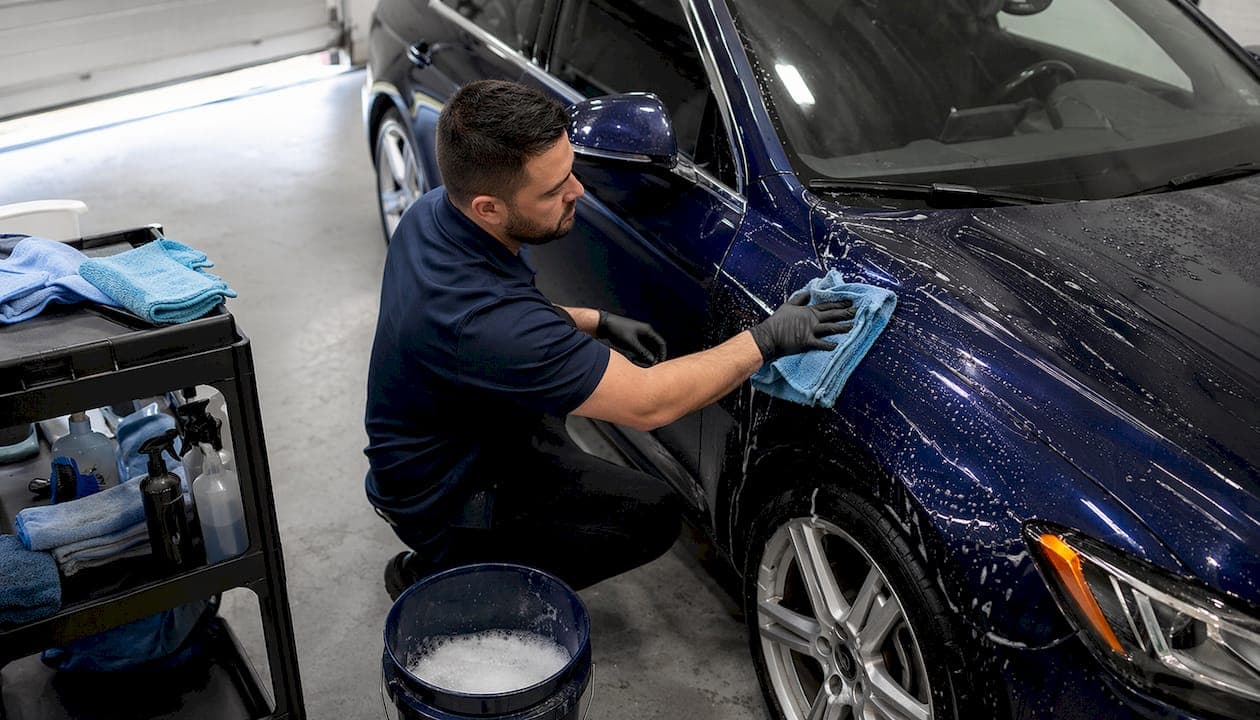
Professional car detailing is defined as a hands-on cleaning and protection process that surpasses automatic car washes in preserving your vehicle's finish, interior condition, and long-term value. Understanding why detailing beats automatic car wash comes down to one core fact: machines clean surfaces, but detailers restore and protect them. A clay bar treatment removes bonded road salt and brake dust that no spray can touch. Polymer-based waxes and ceramic coatings applied during detailing last weeks longer than any rinse-aid. For car owners who care about paint quality and resale value, the difference is not cosmetic. It is structural.
Why detailing beats automatic car wash: the process difference
Detailing and automatic washing are not two versions of the same service. They are fundamentally different approaches with different outcomes.
A full detail takes 4–6 hours and includes hand washing, clay bar decontamination, paint correction, and protective coating application. That time investment exists because each step builds on the last. You cannot apply a ceramic coating to a contaminated surface and expect it to bond correctly.
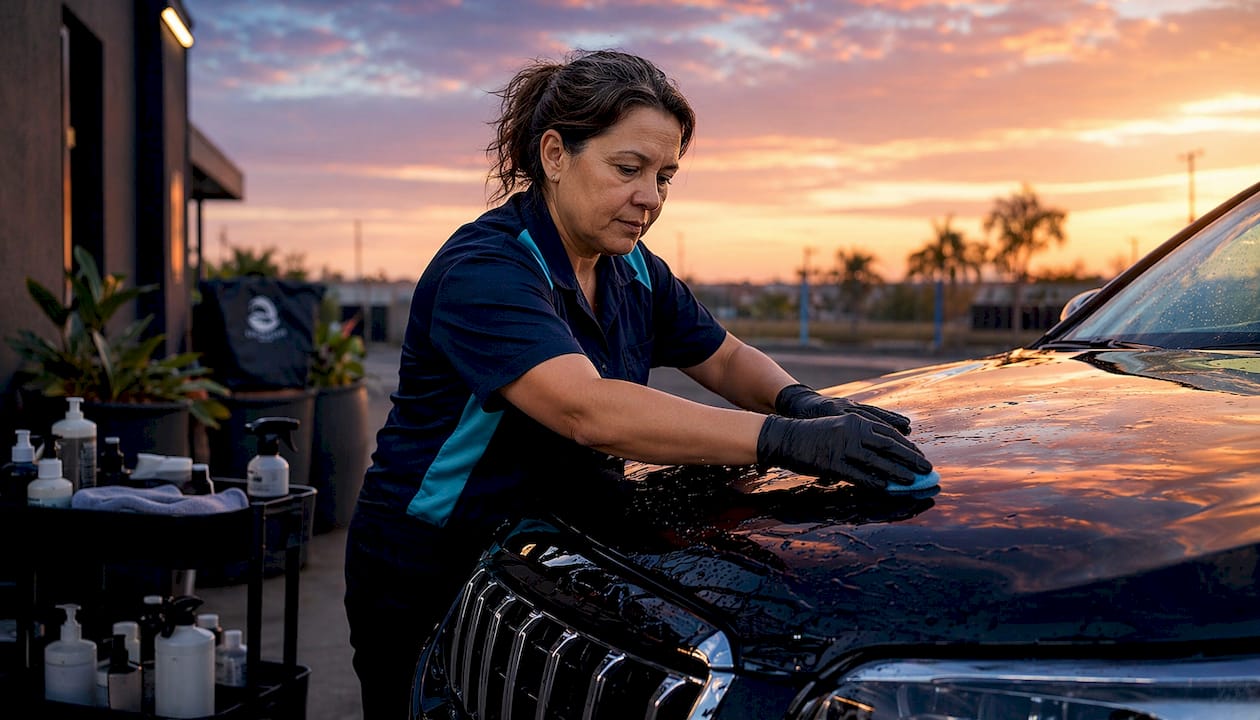
Automatic washes finish in under 10 minutes. That speed is the product. The machine does not assess your paint condition, adjust pressure for a soft-top, or notice that your door jambs are caked with road grime. It runs the same cycle on every vehicle.
The equipment difference matters just as much as the time difference:
- Fresh microfiber mitts used in detailing pick up dirt and release it safely into a rinse bucket. Each vehicle gets a clean mitt.
- Communal brushes in automatic washes trap abrasive grit from previous vehicles and drag it across your paint like fine sandpaper.
- Clay bar decontamination physically lifts bonded contaminants from the clear coat. No spray or brush replicates this.
- Interior deep cleaning in detailing covers vacuuming, upholstery shampooing, leather conditioning, and odor removal. Automatic washes do not touch the interior at all.
- Paint correction removes existing swirl marks and oxidation. Automatic washes add them.
Pro Tip: Ask your detailer to use a two-bucket wash method: one bucket for soapy water, one for rinsing the mitt. This single habit eliminates most swirl mark risk during hand washing.
How does detailing protect paint better than automatic washes?
Paint protection is where the gap between detailing and automatic washing becomes most expensive to ignore.
Automatic wash chemicals strip wax and sealant prematurely, accelerating paint aging up to three times faster than with proper detailing and protective coatings. Every time you run your car through a standard tunnel wash, you are removing the protective layer you paid to apply. Over months, the clear coat thins, oxidation sets in, and the paint loses its depth.
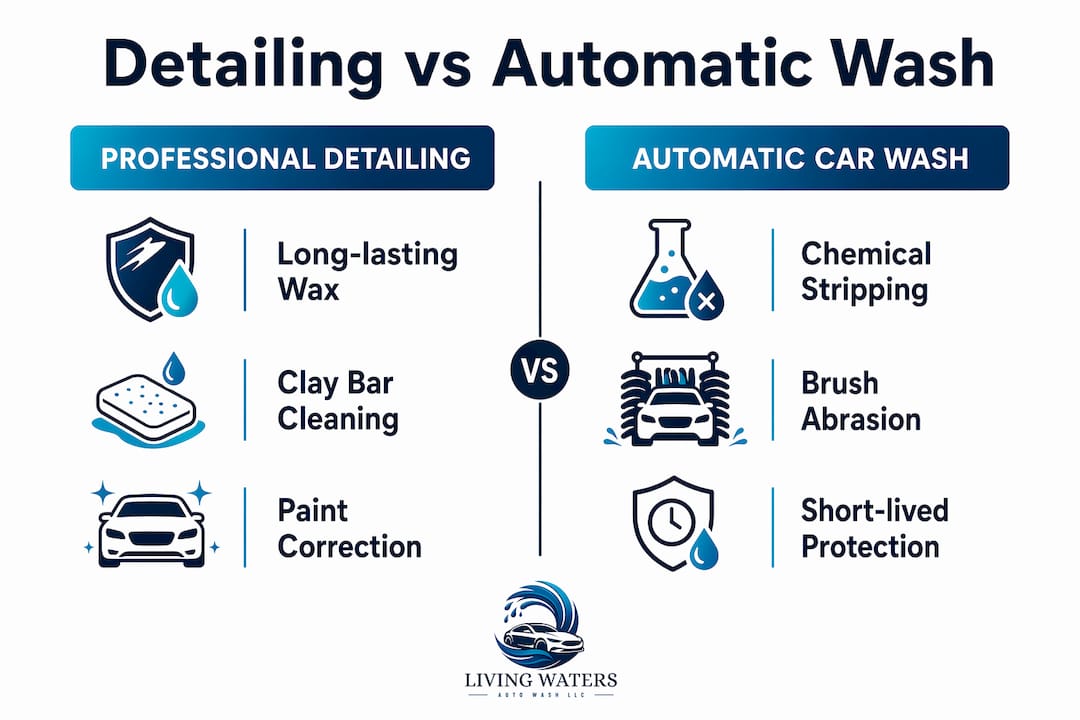
Detailing applies polymer-based waxes or ceramic coatings that last 4–8 weeks or more. These coatings bond to the clear coat and create a sacrificial layer that takes the abuse from UV rays, bird droppings, and road debris. Rinse-aids applied at automatic washes evaporate within days.
The clay bar step is the one most car owners do not realize they are missing. Road salt bonds chemically to the clear coat and cannot be removed by water pressure alone. Left in place, it causes corrosion from underneath the paint surface. Detailing removes it. Automatic washes leave it.
Touchless washes reduce brush abrasion risk, but they are not a clean solution. Touchless wash chemicals are aggressive enough to strip wax and dry out exterior trim, creating a different category of damage over time. You trade micro-scratches for chemical degradation.
Pro Tip: Schedule a clay bar treatment at least twice a year, ideally before applying a fresh coat of wax or sealant. Spring and fall are the best times in most climates.
The table below shows how paint protection methods compare across key factors:
| Factor | Professional detailing | Automatic car wash |
|---|---|---|
| Protective coating durability | 4–8 weeks or longer | Days, if applied at all |
| Contaminant removal | Clay bar removes bonded particles | Surface rinse only |
| Swirl mark risk | Minimal with fresh microfiber | High with communal brushes |
| Chemical impact on paint | Gentle, pH-balanced products | Harsh chemicals strip wax |
| Paint correction | Included in full detail | Not available |
What interior cleaning benefits does detailing provide?
The interior of your vehicle is where you spend every minute of your drive. Automatic washes never address it.
Professional interior detailing covers deep vacuuming, upholstery shampooing, leather conditioning, and odor elimination. These are not luxury add-ons. They directly affect your health, comfort, and the vehicle's resale value. A buyer inspecting a used car notices stained seats and musty odors immediately.
Interior detailing targets hidden contaminants including allergens, bacteria, and deeply embedded dirt in upholstery seams. These particles affect air quality inside the cabin and accelerate fabric wear. A vacuum pass at home does not reach seam-level contamination.
Car owners are often surprised by how much a professional interior detail removes beyond what a typical wash addresses. Pet hair embedded in carpet fibers, food residue under seat rails, and mold spores in air vents are common finds. None of these are visible until a detailer extracts them.
The areas most commonly neglected include:
- Door panel pockets collecting crumbs, dust, and moisture
- Seat belt webbing harboring bacteria from skin contact
- Air vents trapping dust and mold spores that circulate through the cabin
- Under-seat rails collecting debris that standard vacuuming misses
- Dashboard seams where UV damage and dust combine to crack surfaces over time
What are the long-term cost and value implications?
The upfront cost of detailing is real. So is the cost of skipping it.
Professional detailing costs $200–$600+ per session compared to $15–$25 per automatic wash. At first glance, the math favors the tunnel wash. But frequent automatic car washes cause cumulative finish damage that eventually requires professional paint correction, which can cost over $1,000 in a single year.
Detailing specialists describe automatic washes as "convenience with damage attached" versus detailing's "convenience with a professional finish." That framing captures the real trade-off: you pay less per visit but more per year, and you get a worse result.
The resale value argument is equally direct. A vehicle with well-maintained paint and a clean interior commands a higher price. Regular detailing preserves vehicle condition in ways that show up on the appraisal. Swirl-marked paint and stained upholstery reduce offers. Neither condition develops overnight, but both develop predictably when automatic washes replace proper care.
Mobile detailing also removes the time cost of driving to a facility and waiting. A technician comes to your home or office, works while you do something else, and leaves your vehicle in better condition than any drive-through wash can achieve. That convenience factor changes the cost calculation for busy car owners.
| Service | Cost per visit | Annual frequency | Estimated annual cost |
|---|---|---|---|
| Automatic car wash | $15–$25 | 24–52 visits | $360–$1,300+ |
| Professional detailing | $200–$600 | 4–6 sessions | $800–$3,600 |
| Paint correction (damage repair) | $500–$1,500 | 1–2 times | $500–$3,000 |
The math shifts when you factor in damage prevention. Detailing avoids the paint correction cost entirely.
How can car owners use detailing and automatic washes together?
Detailing and automatic washing are not mutually exclusive. Used correctly, they complement each other.
- Schedule professional detailing every 4–6 weeks or at minimum each season. This maintains protective coatings and catches interior contamination before it sets permanently.
- Use touchless washes only between detailing sessions when your vehicle needs a quick dirt removal. Avoid brush-based tunnel washes entirely if you care about paint condition.
- Rinse your vehicle at home with a garden hose after rain or heavy road salt exposure. This removes surface-level contamination without stripping wax.
- Avoid automatic washes within one week of a fresh wax or ceramic coating application. The coating needs time to cure fully before exposure to chemicals.
- Consult your detailer about your specific vehicle's needs. Older paint, dark colors, and soft-top convertibles each require different care frequencies and product choices.
Pro Tip: Dark-colored vehicles show swirl marks far more visibly than light colors. If you drive a black or dark gray car, skip brush washes entirely and rely on hand washing or touchless rinses between details.
Preparing your vehicle correctly before each detailing appointment also improves results. Remove personal items, note any specific problem areas, and let your detailer know about recent exposures like bird droppings or tree sap.
Key Takeaways
Professional detailing protects paint, removes bonded contaminants, and cleans interiors in ways automatic car washes cannot replicate, making it the superior choice for long-term vehicle care.
| Point | Details |
|---|---|
| Process depth matters | Detailing takes 4–6 hours and includes clay bar, paint correction, and protective coatings. |
| Paint protection lasts longer | Polymer waxes and ceramic coatings from detailing last 4–8 weeks versus days for rinse-aids. |
| Interior care is exclusive to detailing | Automatic washes never address allergens, bacteria, or embedded debris inside the cabin. |
| Long-term costs favor detailing | Frequent automatic washes can generate over $1,000 in annual paint damage requiring correction. |
| Smart combination works best | Use touchless rinses between sessions and schedule professional detailing every 4–6 weeks. |
What I've learned after years of watching cars age too fast
Car owners consistently underestimate what automatic washes cost them over time. The damage is invisible at first. Swirl marks appear gradually. Paint oxidation creeps in. Interior fabrics wear faster than they should. By the time the problem is obvious, the repair bill is significant.
The vehicles I see that hold their finish and interior quality over years share one thing: their owners treat detailing as maintenance, not a luxury. They schedule it the same way they schedule oil changes. They do not wait until the car looks bad. They prevent it from getting there.
Automatic washes have a role. A quick touchless rinse after a muddy drive makes sense. But relying on them as your primary car care method is a false economy. You pay less per visit and more per year, and you end up with a vehicle that shows its age faster than it should.
The exterior detailing process is not complicated to understand. It is just thorough in ways machines cannot be. A trained detailer reads your paint, adjusts their approach, and applies products that actually bond and protect. A tunnel wash applies the same cycle to your car that it applied to the pickup truck in front of you.
Prioritize regular detailing. Your paint, your interior, and your resale value will reflect that choice clearly.
— Living
Living Waters Auto Wash LLC: mobile detailing at your door
Living Waters Auto Wash LLC brings professional detailing directly to car owners in Boca Raton, Pompano Beach, Coral Springs, and Parkland. No drive, no wait, no compromises on quality.
Every service is performed by a highly trained team with no need for electricity or water hookups at your location. From full exterior and interior detailing to express sessions, the service adapts to your vehicle's specific condition and your schedule. If you want to see what professional care looks like without leaving your driveway, Living Waters Auto Wash LLC currently offers a $30 mobile exterior wash as an entry point. For the full range of mobile detailing services, book directly through the website and protect your vehicle the right way.
FAQ
Why does detailing beat automatic car wash for paint care?
Detailing uses clay bar decontamination, fresh microfiber mitts, and protective coatings that last 4–8 weeks. Automatic washes use communal brushes that cause swirl marks and chemicals that strip wax within days.
How often should car owners schedule professional detailing?
Professional detailing every 4–6 weeks maintains protective coatings and prevents interior contamination from setting permanently. Seasonal detailing is the minimum for vehicles exposed to road salt or heavy UV.
Do touchless car washes damage paint?
Touchless washes reduce brush abrasion but use aggressive chemicals that strip wax and dry out exterior trim over time. They are safer than brush washes but still cause gradual paint degradation.
What does interior detailing remove that regular cleaning misses?
Professional interior detailing removes allergens, bacteria, and deeply embedded debris from upholstery seams, air vents, and under-seat rails that standard vacuuming and home cleaning cannot reach.
Is mobile detailing worth the cost compared to a car wash?
Mobile detailing costs more per session but prevents cumulative paint damage that can exceed $1,000 annually in correction costs. It also saves driving time and delivers results that preserve resale value.