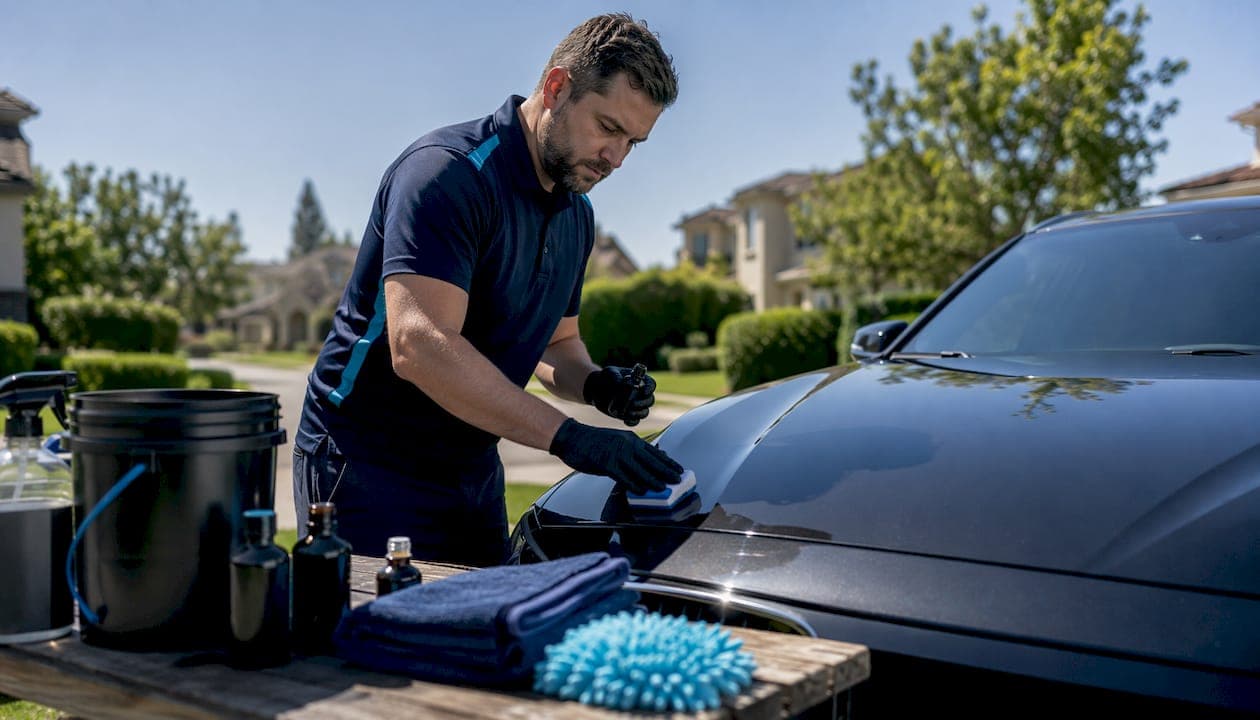
For most daily-driven vehicles, the right choice is a multi-layer professional ceramic coating package with targeted paint protection film (PPF) on high-impact zones. That combination covers the widest range of threats — UV, chemical fallout, road debris — without requiring a show-car budget.
Here is how the three tiers break down:
- Basic/Express: Hand wash, light decontamination, and a spray wax or paint sealant. Best for owners who want a clean, protected car between deeper services or who lease and don't plan to keep the vehicle long.
- Deluxe/Sealant: Adds clay bar decontamination, light polish, and a professional-grade paint sealant or ceramic spray. Right for daily commuters who want medium-term protection without a multi-day commitment.
- Premium/Ceramic & PPF: Full decontamination, single- or multi-stage paint correction, multiple layers of ceramic coating, and optional PPF on the front bumper, hood leading edge, and rocker panels. This is the tier for owners who plan to keep their vehicle long term, care about resale value, or drive significant highway miles.
Living Waters Auto Wash LLC offers all three tiers as fully mobile services across Boca Raton, Pompano Beach, Coral Springs, Parkland, and Palm Beach County, with no water or power hookup required at your location, similar to other efficient mobile cleaning providers utilizing modern operational best practices.
Table of Contents
- What does each exterior protection package actually include?
- How do wax, sealant, ceramic coating, and PPF actually compare?
- Why paint correction before premium protection is non-negotiable
- What should you expect to pay, and how long does it take?
- How do you choose the right package for your car and lifestyle?
- What add-ons and maintenance habits actually preserve your protection?
- Living Waters Auto Wash LLC: mobile exterior protection in South Florida
- Key Takeaways
- What mobile detailers actually see on premium install days
- Useful sources and further reading
What does each exterior protection package actually include?
The gap between a basic wash and a premium ceramic install is not just price. It is the number of prep steps, the protection type applied, and how long that protection holds.
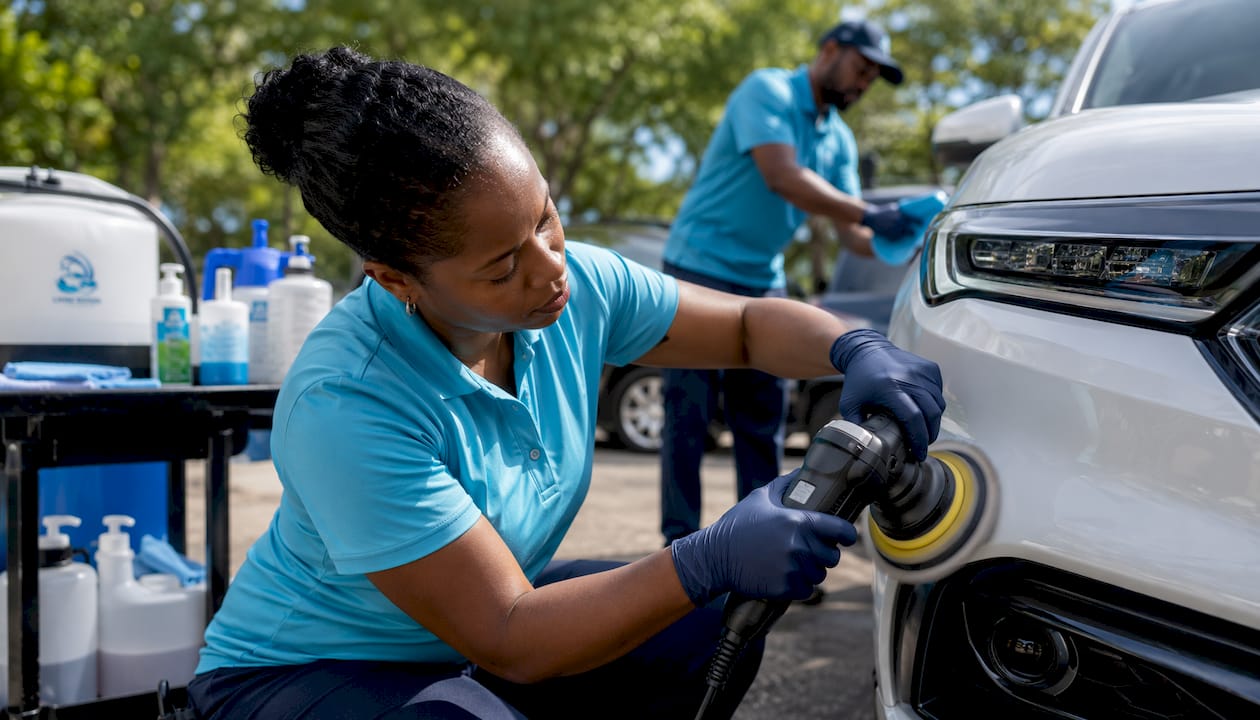
| Package Tier | Best For | Included Prep | Protection Applied | Typical Longevity | Typical Cost | Turnaround |
|---|---|---|---|---|---|---|
| Basic/Express | Lease vehicles, maintenance washes | Hand wash, rinse, light decon | Spray wax or sealant | short term | moderate cost | 1–2 hours |
| Deluxe/Sealant | Daily commuters, budget-conscious owners | Clay bar, iron decon, light polish | Paint sealant or ceramic spray | moderate duration | moderate cost | 3–5 hours |
| Premium/Ceramic & PPF | Long-term owners, highway drivers, show cars | Full decon, single- or multi-stage paint correction, IPA wipe | Multiple ceramic layers + optional PPF | extended longevity | higher investment | 1–3 days |
The jump from Deluxe to Premium is where paint correction enters the picture. Without it, a ceramic coating bonds to a surface that still has swirl marks, light scratches, and oxidation locked underneath. You end up with a glossy, hard shell over defects you can never fix without stripping the coating first.
Common add-ons that fit across tiers:
- Wheel coating: Applied after wheel cleaning; adds hydrophobicity and makes brake dust cleanup far easier.
- Glass coating: Bonds to windshields and side glass; water sheets off at highway speeds.
- Headlight restoration: Removes UV haze and oxidation from polycarbonate lenses; often paired with a sealant to slow re-yellowing.
- PPF for rocker panels and mirrors: Targeted film on the areas that take the most stone chip and door-ding abuse.
Pro Tip: Ask your detailer whether add-ons are applied before or after the main coating. Wheel coatings and glass coatings should go on after the paint coating cures, not before, to avoid contamination.
How do wax, sealant, ceramic coating, and PPF actually compare?
Exterior protection options fall into four durability tiers, and each one works differently at the surface level. Knowing the trade-offs saves you from overpaying for gloss you don't need or underpaying for protection that won't last.
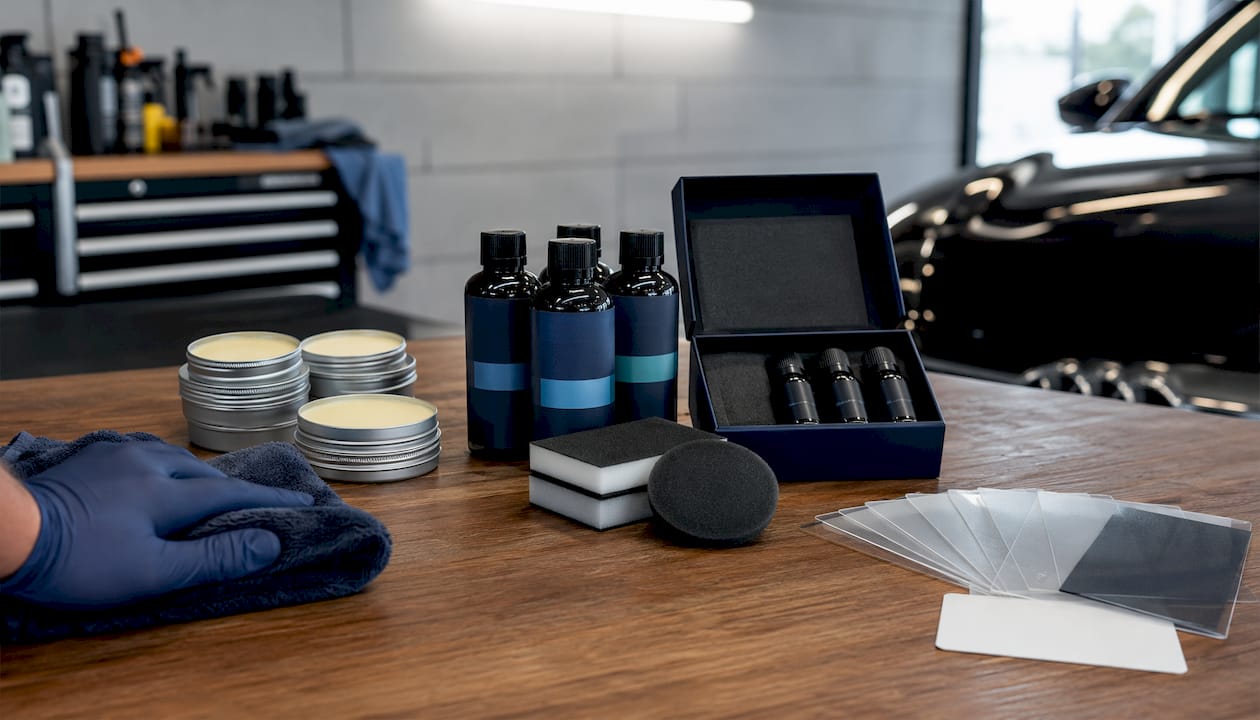
| Protection Type | How It Works | Typical Lifespan | Strengths | Limitations |
|---|---|---|---|---|
| Carnauba/Synthetic Wax | Sits on top of clear coat | 1–3 months | Easy to apply, warm gloss, low cost | No impact resistance, degrades fast |
| Paint Sealant (polymer) | Bonds lightly to clear coat | 6–12 months | Better UV and chemical resistance than wax | Still no physical impact protection |
| Ceramic Coating (SiO2) | Chemical bond with clear coat | 2–7+ years | Hydrophobic, UV-resistant, chemical-resistant, high gloss | Cannot stop stone chips; requires prep |
| Paint Protection Film (PPF) | Physical urethane film over paint | 5–10+ years | Self-healing, absorbs stone chips and debris | Higher cost; requires professional install |
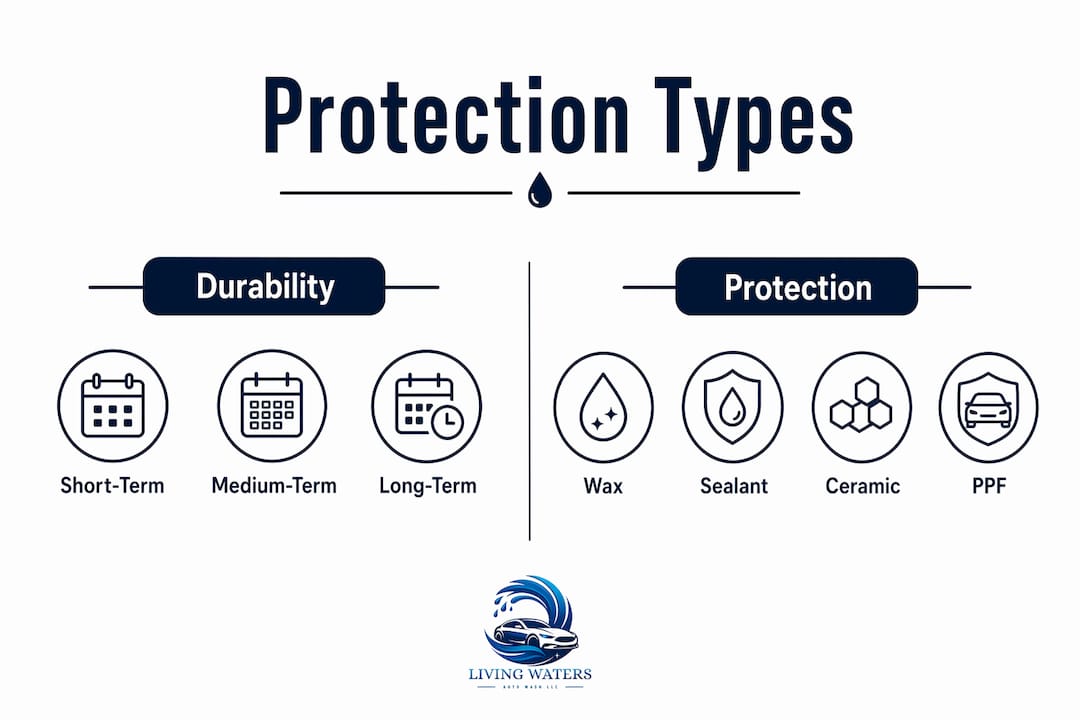
PPF is the only option that provides genuine physical impact resistance. Ceramic coating adds hydrophobicity, UV protection, and chemical resistance, but it will not stop a stone chip. That is why technicians commonly recommend a hybrid approach: PPF on high-impact strike zones and ceramic coating on the remaining painted surfaces.
Quick recommendation map:
- Tight budget or short ownership window: Sealant package, refreshed every six to twelve months.
- Daily highway commuter: PPF on the front end plus ceramic on the rest.
- Weekend show car: Multi-layer ceramic with thorough paint correction for maximum gloss depth.
- Business fleet: Sealant or entry ceramic on each unit, maintained on a recurring schedule.
Why paint correction before premium protection is non-negotiable
Paint correction is the most labor-intensive step in any premium package, and it is also the one most often skipped by low-bid detailers. Skipping it does not just reduce gloss. It can void the coating manufacturer's warranty entirely.
The standard prep sequence for a premium install runs in this order:
- Thorough hand wash with pH-neutral shampoo to remove loose contamination.
- Iron decontamination using a fallout remover to dissolve embedded ferrous particles.
- Clay bar treatment to pull bonded contaminants (tar, industrial fallout, rail dust) off the surface.
- Single- or multi-stage machine polish to remove swirl marks, light scratches, and oxidation.
- IPA (isopropyl alcohol) panel wipe to strip any polish oils before coating application.
- Coating or PPF application in a controlled environment, away from direct sun and wind.
Dealership-applied coatings frequently skip steps two through five entirely. The result is a coating applied over contaminated, unpolished paint that may last months instead of years. Professional detailers who follow the full sequence can offer warranties of 2–9 years, compared to the six to twelve months typical of dealership packages.
Time and cost impact: a single-stage correction on a sedan in good condition adds two to four hours and $150–$300 to the appointment. A two-stage correction on a dark-colored vehicle with heavy swirling can add a full day and $300–$600. That cost is real, but it is also the difference between a coating that performs for five years and one that looks dull by year two.
Pro Tip: Before booking, ask the detailer to show you a paint thickness gauge reading and a before/after photo from a recent correction job. Any shop doing legitimate multi-stage polishing has both on file.
What should you expect to pay, and how long does it take?
Pricing for ceramic coating packages varies based on layers, prep depth, and vehicle size. Partial PPF installations cover high-impact areas, while full-vehicle wraps cost substantially more.
Here is how the tiers typically break down for a mid-size sedan at a U.S. mobile detailer:
- Basic/Express: Moderate cost, one to two hours, spray wax or sealant included.
- Deluxe/Sealant: Moderate cost, three to five hours, clay bar and light polish included.
- Premium/Ceramic: Higher cost, one to two days across sessions, full correction and multi-layer ceramic included.
- Premium/Ceramic + PPF: High cost, two to three days, correction plus ceramic plus targeted film.
Larger vehicles typically incur additional charges to base pricing. Vehicles in poor paint condition (heavy oxidation, deep scratches) add correction time and cost on top of that.
High-end mobile appointments often span multiple sessions: a correction day running four to ten or more hours, followed by a coating application session, and then a 24–48 hour cure window before the vehicle is back in regular use. PPF installations may also require a shaded or climate-controlled environment to prevent dust contamination during film application.
On warranties: professional ceramic warranties from certified installers generally last multiple years with annual maintenance needed to maintain coverage. This duration often surpasses the shorter coverage periods typical of dealership add-ons.
How do you choose the right package for your car and lifestyle?
Work through these four steps before you call a detailer:
- Assess your use case. Daily highway commuter? Front-end PPF is worth the investment. Mostly city driving with garage storage? Ceramic alone covers you. Leased vehicle you return in two years? A sealant package is the practical call.
- Inspect your paint condition. Run your hand over the hood in indirect light. Swirl marks, water spots, and oxidation visible to the naked eye mean you need at least a single-stage correction before any coating.
- Prioritize PPF for strike zones. Front bumper, leading edge of the hood, side mirrors, and rocker panels take the most road debris. Film on those areas, ceramic everywhere else, is the hybrid approach most technicians recommend.
- Confirm coating layers and warranty terms. One layer of ceramic is a starting point. Two or more layers with a documented warranty from a named manufacturer is what you are paying for in a premium package.
Before you book, ask every detailer these questions: What specific coating product do you use, and is it manufacturer-certified? How many stages of paint correction are included? What does the warranty cover, and what voids it? Can you show me before/after photos from a recent job on a similar vehicle? Do you carry general liability insurance?
Red flags to walk away from:
- No mention of paint correction in a "ceramic coating" quote.
- Vague product names like "professional-grade coating" with no brand specified.
- No written warranty or a warranty that only covers "application defects."
- No before/after photo gallery from real customer vehicles.
Scenario examples: A daily commuter with a dark-colored sedan should book a two-stage correction plus two-layer ceramic and add PPF to the front bumper. A family SUV used for school runs and road trips benefits from the same ceramic package with rocker panel film. A show car owner should prioritize multi-stage correction and the deepest ceramic layers available. A leased vehicle coming off a three-year term needs only a sealant refresh to maintain appearance without over-investing.
What add-ons and maintenance habits actually preserve your protection?
The coating is only as good as the care that follows it. Most premature coating failures trace back to maintenance habits, not product quality.
Common add-ons worth considering at booking:
- Wheel coating: Keeps brake dust from bonding; makes weekly wheel cleaning a two-minute job instead of a twenty-minute scrub.
- Glass coating: Dramatically improves wet-weather visibility; pairs well with any ceramic package.
- Trim restoration and sealant: Faded plastic trim absorbs ceramic poorly; a dedicated trim sealant keeps it from going gray again.
- Headlight restoration: Restores clarity and adds a UV sealant to slow re-oxidation; typically $50–$150 as an add-on.
- Front-end PPF: The single highest-value add-on for highway drivers; protects the area most vulnerable to stone chips.
Maintenance schedule by protection type:
- Wax/Sealant: Hand wash every two weeks; reapply sealant every six to twelve months.
- Ceramic Coating: Hand wash every two to four weeks with pH-neutral shampoo; annual inspection wash recommended; avoid automated tunnel washes, which can degrade hydrophobic properties over time.
- PPF: Same wash cadence as ceramic; inspect edges every six months for lifting; film typically self-heals minor surface scratches with heat.
The two-bucket wash method is the single most effective habit for preserving any coating. One bucket for clean shampoo solution, one for rinsing the mitt. It keeps grit from cycling back onto the paint and scratching the coating on every wash pass. pH-neutral shampoo is non-negotiable; anything alkaline strips the hydrophobic layer faster than normal weathering would.
For fleet operators, recurring maintenance plans that schedule washes every two to four weeks keep coated vehicles looking sharp without requiring individual booking decisions for each unit.
Living Waters Auto Wash LLC: mobile exterior protection in South Florida
Skipping the shop and having a certified detailer come to your driveway, office parking lot, or condo garage is not just convenient. For coated vehicles, it often means a cleaner application environment than a busy fixed-location shop.
Living Waters Auto Wash LLC brings full exterior protection packages directly to customers across Boca Raton, Pompano Beach, Coral Springs, Parkland, and Palm Beach County, with no water or power hookup needed at your location. The team handles everything from express wash-and-sealant appointments to multi-day premium ceramic installs, using the same progressive tier structure described in this article. Before-and-after documentation comes standard on premium packages, and the team carries the insurance and training that warranty-backed applications require.
Five-star reviews from local vehicle owners reflect consistent results across vehicle types, from daily commuters and family SUVs to motorcycles and commercial fleets. Fleet managers can request recurring maintenance plans through the fleet wash services page, which covers multi-vehicle scheduling across Palm Beach County. Individual owners can book a mobile detailing appointment or request a quote directly through the website. If you want to see the work before you commit, ask for the before/after gallery when you reach out.
Key Takeaways
For most vehicle owners, a multi-layer professional ceramic coating with targeted PPF on high-impact zones delivers the best balance of protection, longevity, and maintenance simplicity across all driving patterns.
| Point | Details |
|---|---|
| Choose the right tier by use case | Lease vehicles need sealant; daily commuters need ceramic; highway drivers need PPF on the front end. |
| Paint correction is mandatory before ceramic | Skipping correction seals in defects and can void the coating manufacturer's warranty. |
| Ceramic warranties outperform dealership packages | Professional installs typically carry 2–9 year warranties versus 6 months from dealership coatings. |
| Maintenance habits determine actual longevity | pH-neutral shampoo, two-bucket washing, and avoiding tunnel washes preserve hydrophobic properties. |
| Living Waters Auto Wash LLC | Offers mobile ceramic, sealant, and PPF-ready packages across Boca Raton, Pompano Beach, Coral Springs, Parkland, and Palm Beach County. |
What mobile detailers actually see on premium install days
The conventional wisdom about exterior protection tends to focus on the coating itself. The product gets the marketing attention, the warranty gets the headline, and the prep work gets a single line in the package description. That framing gets it backwards.
On a real premium install day, the coating application is the shortest part of the appointment. The correction work, the decontamination, the panel wipes, the inspection under a paint depth gauge — that is where the hours go, and that is where the outcome is actually determined. A two-layer ceramic applied over a properly corrected surface looks fundamentally different from the same product applied over unpolished paint. The gloss depth, the clarity, the way light moves across a panel — none of that comes from the coating alone.
The mistake owners make most often is choosing a quote based on price without asking what prep is included. A $500 "ceramic coating" that skips correction is not a bargain. It is a coating that will look mediocre from day one and fail ahead of its warranty window. The second most common mistake is neglecting maintenance after the install. A ceramic coating that never sees a proper hand wash will degrade in eighteen months. The same coating washed correctly every two to three weeks, with an annual inspection, can perform for five years or more.
Living Waters Auto Wash LLC documents every premium appointment with before/after photos and provides warranty paperwork at completion. That paper trail matters when you go to sell the vehicle and want to show a buyer that the paint has been professionally protected and maintained.
Useful sources and further reading
The claims in this article draw from a combination of industry research, published detailer package data, and manufacturer warranty documentation. Here are the most relevant sources for readers who want to verify specifics or read deeper:
- Best Paint Protection for New Car: Your 2026 Guide — Covers the four durability tiers (wax, sealant, ceramic, PPF) with lifespan bands; useful for understanding why protection type selection matters before you book.
- Which Detailing Package Is Best for Protecting New Cars? — Detailed comparison of dealership versus professional detailer packages, including warranty ranges and prep standards; the source for the 2–9 year professional warranty figure cited above.
- Ceramic Coating Pro — 5-Year Paint Protection — Real-world example of a premium package (two-stage correction, two-layer 9H ceramic, wheel and glass coatings, 5-year warranty) and timeline expectations for multi-session installs.
- Best Car Paint Protection: PPF vs. Ceramic Coating Compared — Clear breakdown of why PPF and ceramic serve different functions and why the hybrid approach is the standard recommendation for daily drivers.
- How to Protect New Car Paint: Film, Coatings & Tips — Price reference for partial PPF and ceramic coating ranges used in the pricing section of this article.
- How exterior detailing protects paint — Living Waters Auto Wash LLC's own guide to paint protection science, decontamination, and long-term value; good starting point for owners new to professional detailing.
- Mobile detailing for busy car owners — Explains how mobile service logistics work and what to expect on appointment day.
For proprietary proof points — warranty documentation, certified product brands used, and before/after galleries from recent South Florida installs — contact Living Waters Auto Wash LLC directly through lwautowash.com.