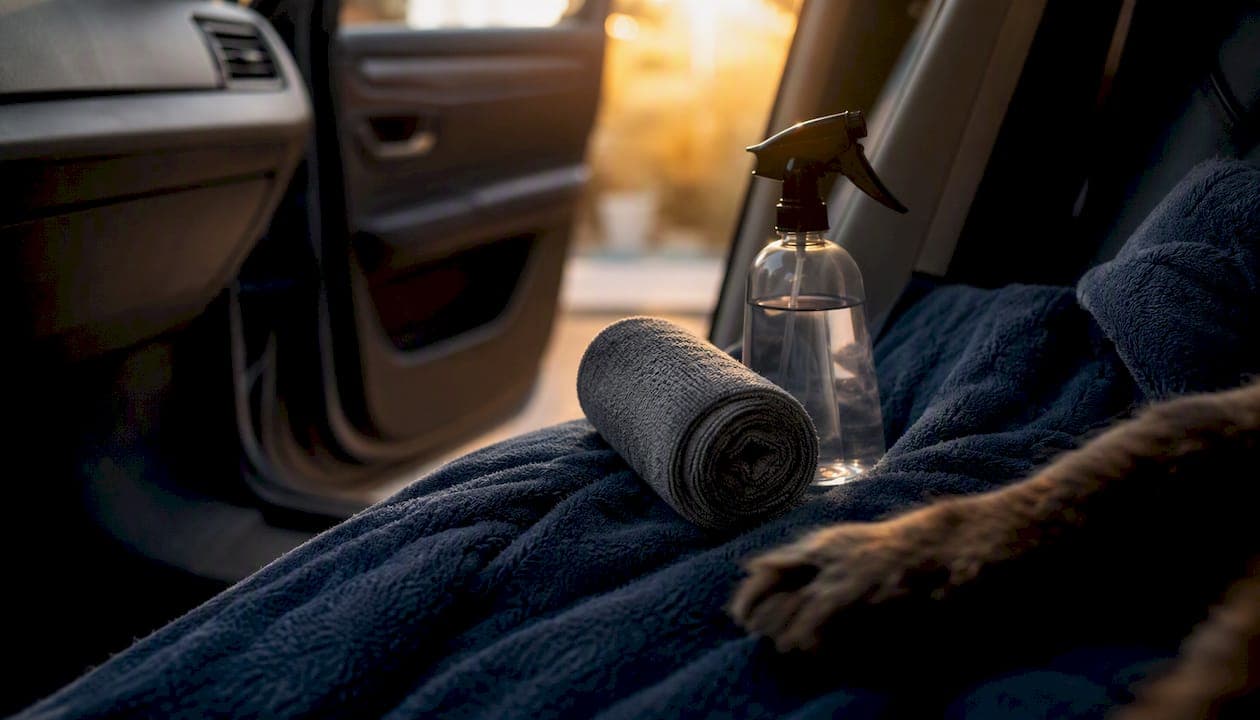
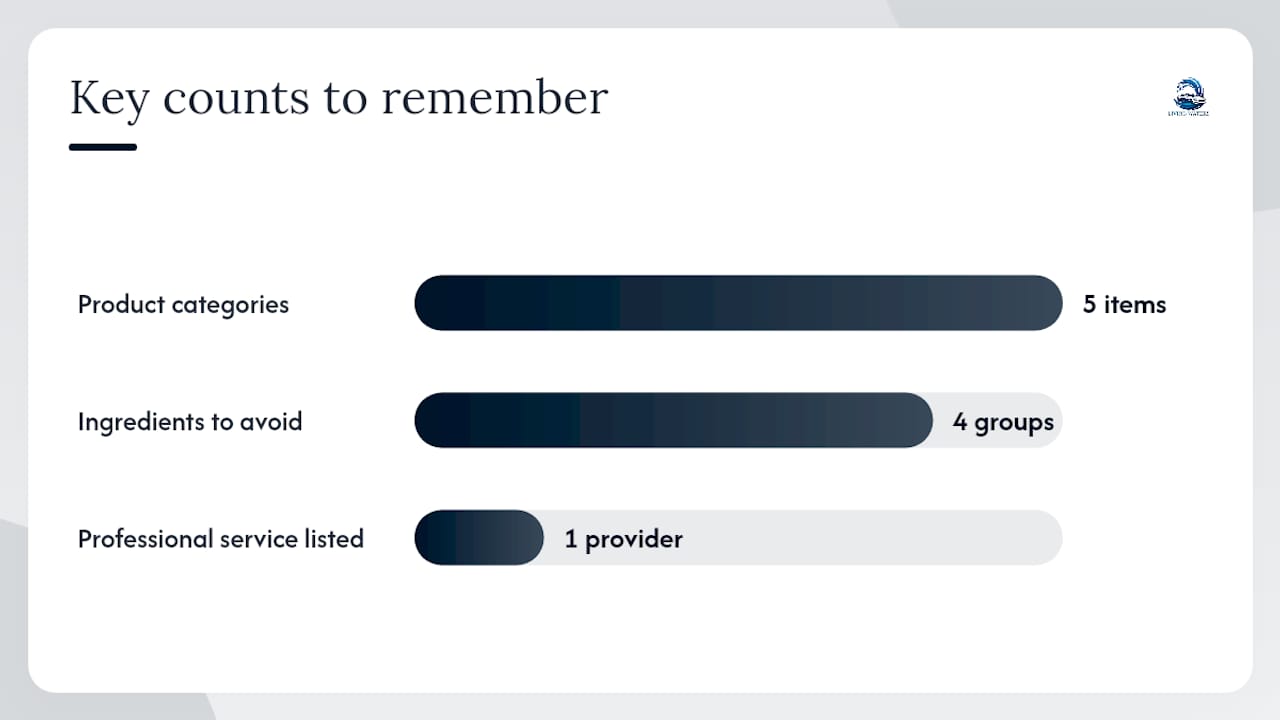
For a pet-safe vehicle interior, you need five product types: a low-residue interior detailer, an upholstery shampoo with APG or CAPB surfactants, an enzymatic odor neutralizer, mechanical pet-hair removal tools, and a rinse-less or waterless cleaner for quick touch-ups. The one rule that overrides every product choice: never mask odors with synthetic fragrances. Synthetic fragrances are respiratory irritants for dogs and cats — source removal is the only real solution.
Keep these on hand for a pet-safe clean:
- Interior detailer (near-neutral pH, no ammonia, no high-concentration alcohol)
- Upholstery shampoo (APG or CAPB surfactant base, low-residue)
- Enzymatic odor neutralizer (breaks down biological waste at the molecular level)
- Rubber pet-hair brush or extraction vacuum
- Rinse-less or waterless wash for exterior quick cleans
- Coating-safe exterior shampoo (pH 6.5–8, APG-forward formula)
Pro Tip: Ventilate the cabin thoroughly after any wet cleaning before allowing pets back inside. Even products marketed as "safe" can off-gas until fully dry.
Table of Contents
- What product categories do you need for pet-safe detailing?
- Which specific products are worth buying?
- How do you read an SDS to spot pet risk?
- How should you apply pet-safe products to protect your pets?
- When should you call a pet-aware professional detailer?
- Living Waters Auto Wash LLC serves Boca Raton pet owners
- Key Takeaways
- Why pet-safe protocols protect more than just your pet
- Useful sources for further verification
What product categories do you need for pet-safe detailing?
Every category below addresses a specific risk: ingestion through paw grooming, contact irritation, or respiratory exposure from residual vapors.
| Category | What it does | Pet risk it addresses | Chemistry to prefer | Chemistry to avoid |
|---|---|---|---|---|
| Interior detailer | Cleans hard surfaces, plastics, screens | Residue pets lick off surfaces | Near-neutral pH, water-based, antistatic agents | Ammonia, high-conc. alcohol, phenols |
| Upholstery/fabric shampoo | Lifts stains from fabric and carpet | Ingestion via grooming after cleaning | APG, CAPB, nonionic blends | SLS, SLES, LAS-heavy formulas |
| Enzymatic odor neutralizer | Breaks down organic odor at the source | Masking agents that irritate airways | Enzyme-based, fragrance-free | Synthetic fragrance, high-VOC solvents |
| Pet-hair removal tools | Mechanical removal before wet cleaning | Embedded allergens, matting during wet clean | Rubber brushes, extraction vacuums | N/A |
| Rinse-less/waterless cleaner | Low-moisture exterior and interior touch-up | Over-saturation, mold risk | Polymer-based, low-residue | Solvent-heavy, high-fragrance |
| Coating-safe exterior shampoo | Exterior wash without stripping protection | Exterior contact after wash | APG + CAPB, pH 6.5–8 | — |
Interior-safe formulas avoid ammonia and high-concentration alcohol because both damage oleophobic touchscreen coatings and irritate pets simultaneously. The chemistry that protects your dashboard also protects your dog.
Phenols deserve a specific callout. They appear in some disinfectant-style cleaners and are acutely toxic to cats, whose livers cannot metabolize them. If a product lists phenol, cresol, or pine oil in Section 3 of its SDS, it has no place inside a vehicle that carries cats.
Which specific products are worth buying?
The products below cover every use case in the table above. For each one, the SDS chemistry signals matter more than the marketing label.
-
Mothers California Gold Car Wash — Gentle formula, good for weekly maintenance washes. Low-fragrance compared with many consumer shampoos. Check surfactant order in Section 3 — if SLES appears first, dilute more aggressively than the label suggests.
-
Adam's Waterless Wash — Spray-and-wipe for light dust and fingerprints. Low-VOC, no ammonia. Useful for pet mess quick-cleans between full details.
For upholstery and odor, pair any APG-based fabric shampoo with an enzyme neutralizer. The enzyme product does the real work on pet accidents; the shampoo handles surface soil. Non-toxic detailing guidance consistently points to fragrance-free, low-VOC enzyme cleaners as the safest choice for pet-occupied vehicles.
How do you read an SDS to spot pet risk?
Pull the SDS from the manufacturer's website before you buy. Three sections tell you almost everything.
| SDS section | What to look for | Green signal | Red flag |
|---|---|---|---|
| Section 2 — Hazard identification | H-codes and signal words | No H-codes, or only H316/H317 (mild skin) | H301, H311, H331 (acute toxicity oral/skin/inhalation) |
| Section 3 — Composition | Surfactant names and order | APG, decyl glucoside, CAPB listed first | Phenol, cresol, LAS, or SLES listed first |
| Section 9 — Physical properties | pH and flash point | pH 6.5–8, high flash point or N/A | pH above 9, low flash point (solvent base) |
Surfactant order in Section 3 is a fast shorthand. If APG (alkyl polyglucoside) or decyl glucoside appears before SLES or SLS, the formula leans gentle. If SLES leads the list, the product is more aggressive and needs heavier dilution around pets. Preservatives like MIT (methylisothiazolinone) or BIT appear in most water-based products at trace levels; their presence is normal and not the primary concern. The bigger risks are volatile solvents and phenolic chemistry.
"Biodegradable" on a label means nothing specific about pet safety. It describes environmental breakdown, not acute toxicity. Always verify with the SDS rather than trusting front-label claims.
How should you apply pet-safe products to protect your pets?
Follow this sequence every time.
- Remove pet hair first. Use a rubber brush or embedded-hair removal technique before any wet product touches the fabric. Wet hair mats into padding and traps odor-causing bacteria.
- Vacuum thoroughly. Get into seat seams and under floor mats. Pre-treat visible organic spots with your enzyme neutralizer and let it dwell for 5–10 minutes.
- Dilute correctly. Over-concentrated product leaves more residue. Follow the label dilution, or go slightly more dilute for interior fabric work.
- Avoid over-saturating padding. Wet padding takes hours to dry and creates mold risk. Use a damp microfiber rather than a soaked one for hard surfaces; use an extractor for fabric.
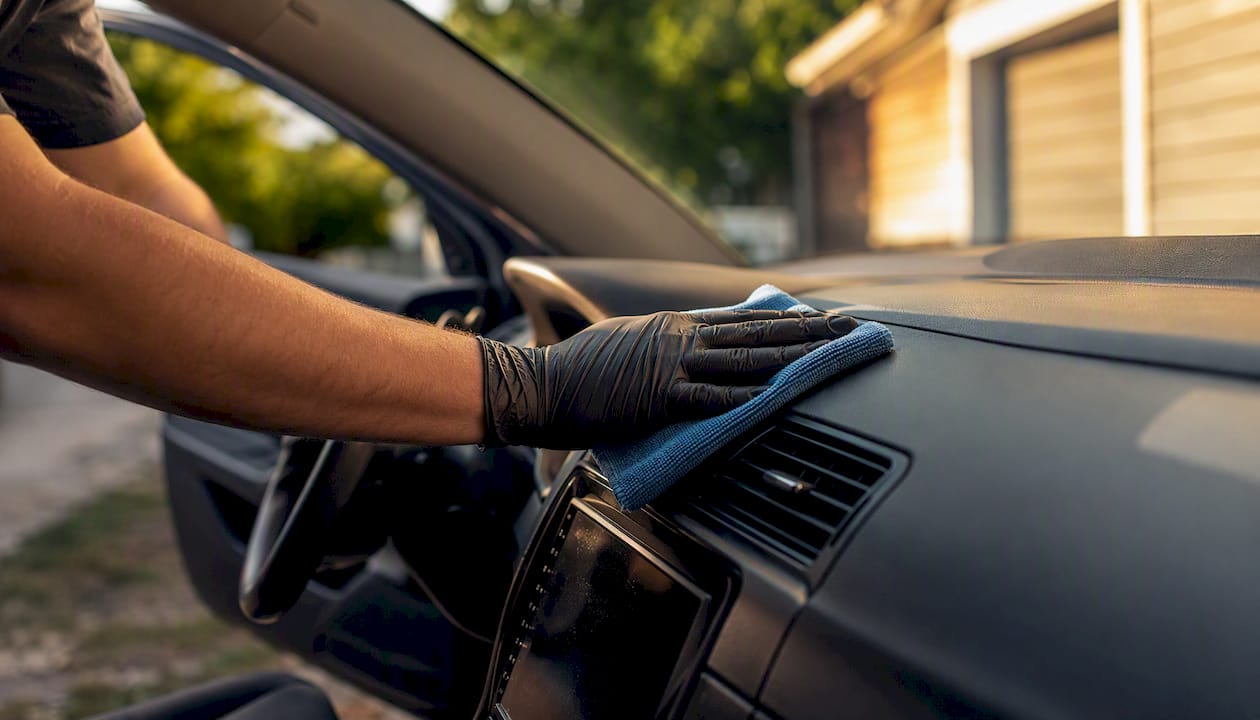
- Apply interior detailer to screens and plastics with a cloth, not a spray. Direct spray mist settles on surfaces pets contact.
- Ventilate the cabin. Open all doors and windows after cleaning. Run the fan on fresh-air mode for 15–20 minutes.
- Confirm full drying before pets re-enter. Fabric should feel dry to the touch and carry no chemical smell. If you detect fragrance, ventilate longer.
- Monitor for reactions. Watch for excessive paw-licking, sneezing, or eye watering after the first ride post-clean. These are early signs of residue sensitivity.
Pro Tip: Steam cleaning is the lowest-residue wet method available. A handheld steamer sanitizes fabric without soaking the padding, which cuts drying time dramatically and reduces the window of chemical exposure for pets.
When should you call a pet-aware professional detailer?
DIY works well for routine maintenance. Call a professional when you face any of these:
- Urine or feces that has soaked into the padding beneath the fabric layer
- Odor that returns within 48 hours of cleaning
- Visible mold or mildew on fabric or under mats
- Multiple pets or recurring accidents in a fleet vehicle
- A smell you cannot locate (often embedded in the headliner or under the seat)
When you call a mobile detailer, ask these questions directly: What products do you use, and can you share the SDS? Do you offer fragrance-free protocols? How do you extract moisture from fabric? How long before pets can safely re-enter the vehicle? A pet-aware detailing service will answer all of these without hesitation and will use non-saturating methods, enzyme treatments, and extraction rather than heavy-chemistry soaking.
Expect a professional to document the products used. If a detailer cannot name the products or refuses to share SDS sheets, that is a reason to look elsewhere.
Living Waters Auto Wash LLC serves Boca Raton pet owners

Pet owners in Boca Raton, Pompano Beach, Coral Springs, and Parkland have a direct option: Living Waters Auto Wash LLC brings trained technicians to your driveway, parking lot, or office with no water or power hookup required from you. The team uses low-residue, fragrance-free protocols, enzyme-based odor treatment, and extraction methods that avoid saturating seat padding. Every service is backed by 5-star local reviews and a commitment to transparency — ask for the product list and SDS before the appointment, and the team will provide them.
For fleet managers dealing with recurring pet transport, the recurring maintenance plan keeps vehicles clean on a schedule rather than waiting for odor to build. Book your mobile pet-safe detail in Boca Raton and get a cabin your pets can ride in safely.
Key Takeaways
Non-toxic vehicle detailing for pet owners requires the right product categories, correct application sequence, and full drying before pets re-enter the cabin.
| Point | Details |
|---|---|
| Five product categories | Interior detailer, upholstery shampoo, enzyme neutralizer, hair removal tools, and rinse-less wash cover every pet-related need. |
| Avoid these ingredients | Ammonia, phenols, high-concentration alcohol, and synthetic fragrances are the four categories to eliminate from your product shelf. |
| SDS Section 3 shortcut | APG or CAPB listed before SLES/SLS signals a gentler, coating-safe, lower-residue formula. |
| Full drying is non-negotiable | Pets should not re-enter until fabric is dry to the touch and carries no chemical odor; ventilate for 15–20 minutes post-clean. |
| Living Waters Auto Wash LLC | For embedded odor, saturated padding, or fleet-level pet messes, Living Waters Auto Wash LLC provides fragrance-free mobile extraction in Boca Raton and surrounding areas. |
Why pet-safe protocols protect more than just your pet
The conventional framing around pet-safe detailing focuses on the pet. That is correct but incomplete. The same chemistry that harms a dog — ammonia, phenols, high-VOC solvents — also degrades modern vehicle interiors faster than gentle alternatives do. Oleophobic screen coatings, soft-touch plastics, and coated leather all respond poorly to aggressive anionic surfactants and high-pH formulas. Choosing pet-safe products is not a compromise; it is the technically correct choice for the vehicle too.
The part most pet owners miss is the process, not the product. A fragrance-free enzyme cleaner applied to a hair-matted seat without vacuuming first will underperform every time. The hair traps the odor source and blocks the enzyme from reaching the organic material. Remove the hair mechanically, then treat the source, then clean the surface. That sequence is what separates a cabin that stays fresh from one that smells fine for three days and then returns to its previous state.
Useful sources for further verification
- Car Shampoo Ingredients: What's Actually in the Bottle · CarCareTruth
- How interior detailers clean without damaging modern surfaces · NationalSynthetics
- Are Car Detailing Chemicals Safe for My Family and Pets? - Sparkle Armor Auto Detailing
- Child & Pet Safe Detailing FAQ | Gentle Products for Sensitive Passengers — The Detailing Gent
- Toxic car cleaning products to avoid
- Non-Toxic Cleaning Products: A Car Owner's Guide
Request SDS sheets directly from any mobile detailer before booking. Reputable services keep them on file and share them on request.