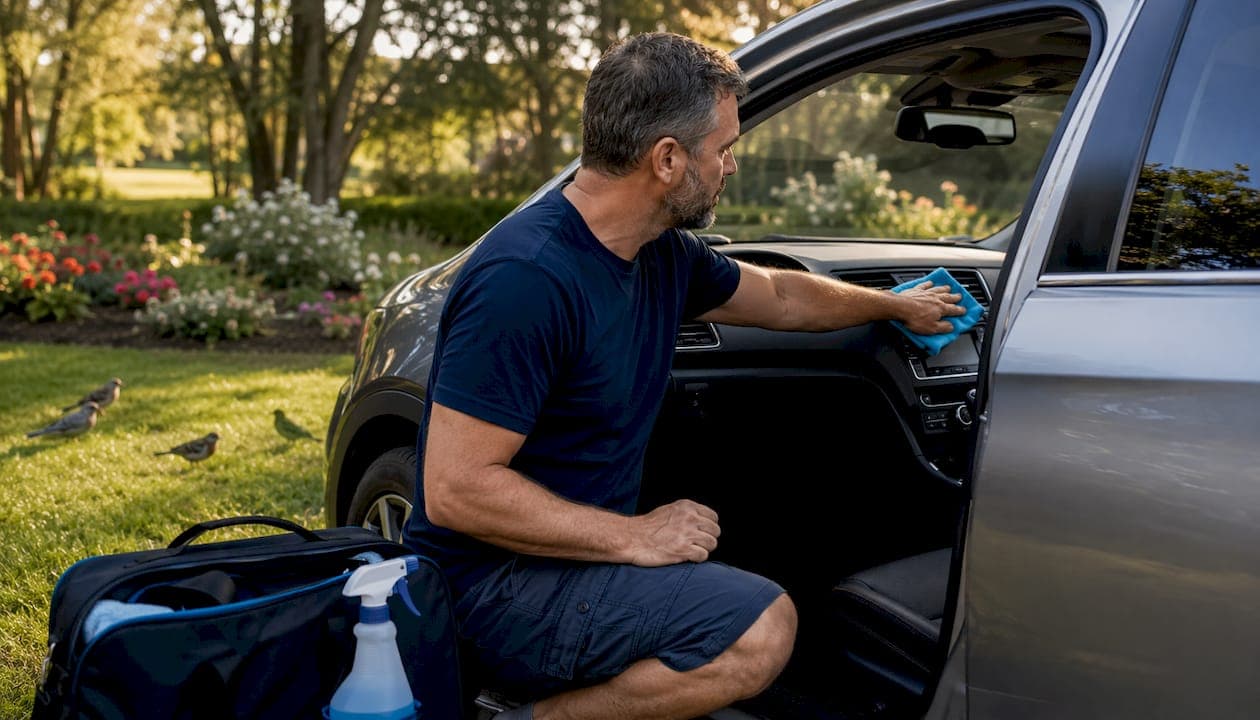
You don't need a bucket, a hose, or a driveway drain to get your car's interior spotless. The waterless approach relies on specialized cleaning products, multiple microfiber cloths, and a methodical sequence that protects every surface while using minimal moisture. Here's the short version before the full breakdown:
- Remove all trash and loose debris first
- Vacuum carpets, seats, and crevices thoroughly
- Apply waterless or low-moisture cleaners to microfiber cloths, never directly to surfaces
- Clean sensitive screens with a microfiber cloth dampened with isopropyl alcohol, and avoid ammonia-based cleaners that can damage display coatings
- Pull out floor mats and clean them separately
- Ventilate the vehicle fully after cleaning to prevent mold and odors
That sequence covers the core. The details below are what separate a clean car from a damaged one.
Table of Contents
- Step-by-step waterless interior cleaning you can do at home
- How to clean car screens, mats, and glass without water
- Expert tips on protecting interior materials and preventing odors
- How Living Waters Auto Wash LLC approaches waterless interior detailing
- Get professional waterless interior cleaning at your door
- Key Takeaways
Step-by-step waterless interior cleaning you can do at home
What you'll need
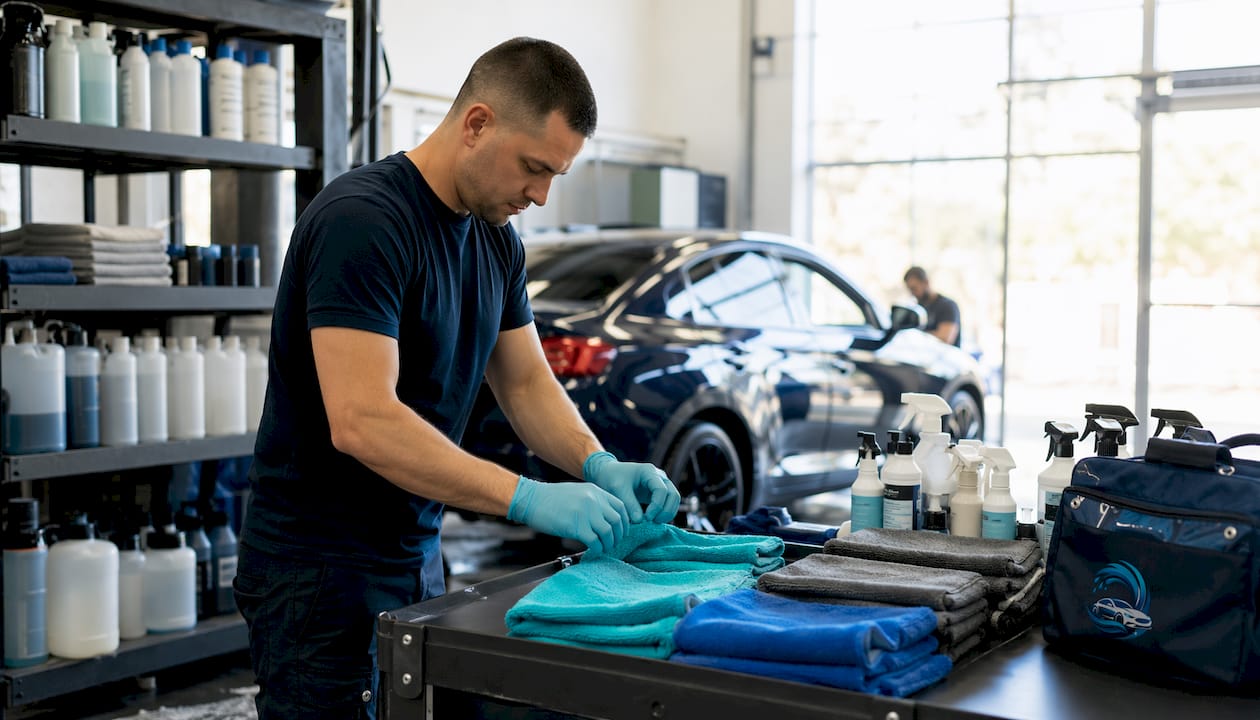
Gather your supplies before you start: multiple clean microfiber cloths folded into quarters, a citrus-based all-purpose cleaner, a dedicated upholstery cleaner, isopropyl alcohol, and a small soft-bristle brush for vents and seams. Waterless cleaning products contain lubricants and polymers that encapsulate dirt for easy wiping, but they work best on light dust and grime, not caked-on buildup.
The cleaning sequence
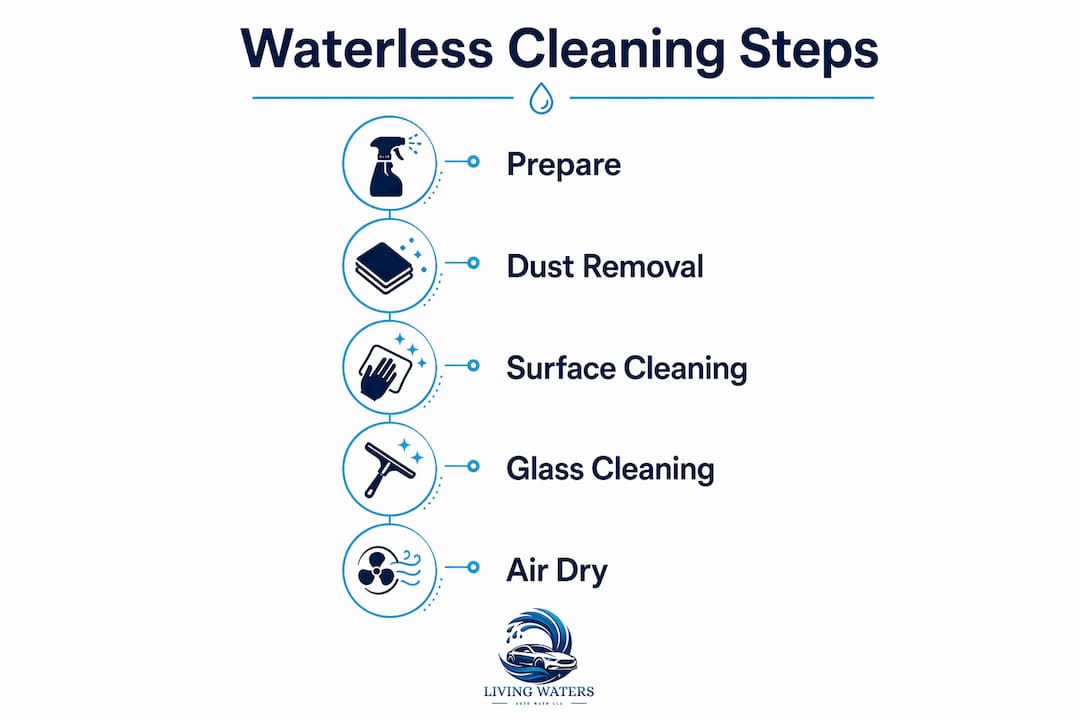
- Remove trash and floor mats first. Take everything out of the cabin, then pull the mats and set them aside for separate treatment.
- Vacuum the interior. Run the vacuum over seats, carpets, and crevices using the right attachments. A crevice tool reaches under seats; an upholstery brush agitates dirt out of cloth.
- Dust the dashboard and vents. Use a dry microfiber cloth or a small soft brush to clear vents and seams before applying any product.
- Disinfect hard surfaces. Spray your citrus-based cleaner onto a microfiber cloth, then wipe the dashboard, console, steering wheel, and door panels. Never spray directly onto hard surfaces or electronics; liquid can seep into button seams and cause electrical issues.
- Clean screens and displays. Dampen a separate cloth lightly with isopropyl alcohol and wipe gently. Use a second dry cloth to remove any residue.
- Wipe interior windows. Apply glass cleaner to one cloth, wipe the glass, then buff with a second clean cloth to prevent streaking.
- Rotate your cloths constantly. Flip to a fresh side after each surface to lift dirt rather than spread it.
- Air out the vehicle. Leave windows cracked or fully open after cleaning to allow any residual moisture to evaporate.
Pro Tip: Never wash interior windows in direct sunlight. The cleaner dries too fast and leaves streaks that are harder to remove than the original grime.
How to clean car screens, mats, and glass without water
Touchscreens and displays
Consumer Reports advises using a microfiber cloth dampened with isopropyl alcohol to clean touchscreens, and warns against ammonia-based cleaners that can destroy anti-glare and anti-fingerprint coatings. Spray the alcohol onto the cloth, not the screen. Wipe in one direction with light pressure. Follow immediately with a dry cloth to pull away any remaining moisture.
Interior glass
Lower the driver and passenger windows slightly before cleaning. Detailing experts recommend this because grime accumulates along the top edge of the glass where it meets the door seal, and that strip is the most common source of streaks. Clean the top edge first, then work down the full pane with a cleaner-soaked cloth and buff dry with a second one.
Floor mats
- Carpeted mats: Shake them outside, vacuum thoroughly, then apply a foam-type carpet cleaner according to the product instructions. Car and Driver recommends hanging them to dry completely before reinstalling.
- Rubber or vinyl mats: Wipe with a cloth dampened in a diluted dish soap mixture, scrub with a soft brush, then wipe clean and air-dry flat.
- Critical step: Never put damp mats back in the vehicle. Trapped moisture under a mat is one of the fastest ways to grow mold in a car cabin.
Proper mat drying also matters for odor control in confined spaces, where moisture has nowhere to go and smells concentrate quickly.
Expert tips on protecting interior materials and preventing odors
Protecting your interior during cleaning comes down to two rules: use the right products, and test before you commit.
Consumer Reports and Toyota both warn against cleaners containing bleach or hydrogen peroxide. These chemicals permanently degrade leather, vinyl, and soft-touch plastics. Household cleaners carry the same risk. Stick to products formulated specifically for automotive interiors.
Before applying any new cleaner to a visible surface, test it on a small, hidden area first. Leather and soft-touch dashboards are especially prone to discoloration. A patch test takes thirty seconds and can save a panel.
For general surfaces, use a mild, automotive-specific cleaner without bleach, hydrogen peroxide, or ammonia. These are gentle enough for soft-touch plastic, leather, and vinyl, and do not leave a glossy residue that creates windshield glare.
Pro Tip: After cleaning upholstery or carpet, leave all doors open to allow adequate ventilation. Consumer Reports notes that skipping this step is the most common reason car interiors develop mold and musty odors, even after a thorough clean.
Rotating your microfiber cloths throughout the process isn't just about efficiency. A dirty cloth dragged across a soft-touch surface can leave fine scratches. Keep a stack of clean cloths within reach and swap frequently. For more on maintaining cleanliness between sessions, practical tips for upkeep can extend the results of any waterless clean significantly.
How Living Waters Auto Wash LLC approaches waterless interior detailing
Living Waters Auto Wash LLC built its entire service model around the same principles covered in this guide, with one key difference: the team brings professional-grade execution directly to your driveway.
- No water hookup required. The mobile system operates without any external water or electricity source, making it genuinely eco-friendly rather than just marketed that way.
- Multiple microfiber cloths per vehicle. The team rotates cloths throughout every job to prevent dirt transfer and surface damage, following the same protocol that automotive detailing professionals recommend.
- Surface-appropriate cleaners. Specialized products for screens, leather, vinyl, and soft-touch plastics align with Consumer Reports and industry safety standards.
- Thorough drying and ventilation. Post-cleaning airflow is part of the standard protocol, not an afterthought, reducing odor and mold risk.
- Express and emergency options. Living Waters Auto Wash LLC handles everything from scheduled interior details to urgent cleaning needs, with a 5-star local reputation across Boca Raton, Pompano Beach, Coral Springs, and Parkland.
For tougher interior situations, like pet hair or accident cleanup, the waterless method still applies with adjusted technique. The approach to pet messes in vehicle interiors follows the same cloth-rotation and product-selection principles, scaled up for heavier contamination.
Get professional waterless interior cleaning at your door
Living Waters Auto Wash LLC delivers the full waterless interior detail described in this guide without you lifting a finger or leaving your home. The team arrives fully equipped, no hose, no hookup, no hassle, and works through every surface with the precision that 5-star reviews in South Florida are built on.
If you want to start with the exterior before booking a full interior detail, the $30 mobile exterior wash is a straightforward entry point that shows exactly what the mobile service looks like in practice. For a full interior clean, schedule directly at lwautowash.com and pick a time that works for your location in Boca Raton, Pompano Beach, Coral Springs, or Parkland.
Key Takeaways
Waterless interior cleaning works when you use the right products, rotate clean microfiber cloths constantly, and ventilate the vehicle fully after every session.
| Point | Details |
|---|---|
| Spray onto cloths, not surfaces | Applying cleaner to a cloth prevents liquid from entering button seams, vents, and electronics. |
| Avoid bleach and ammonia | These chemicals permanently damage leather, vinyl, soft-touch plastic, and screen coatings. |
| Dry mats completely before reinstalling | Damp mats trap moisture under the carpet and accelerate mold growth inside the cabin. |
| Ventilate after every clean | Leaving windows open after cleaning is the most commonly skipped step that causes musty odors. |
| Living Waters Auto Wash LLC | Provides fully mobile, no-water-hookup interior detailing across Boca Raton and surrounding South Florida areas. |