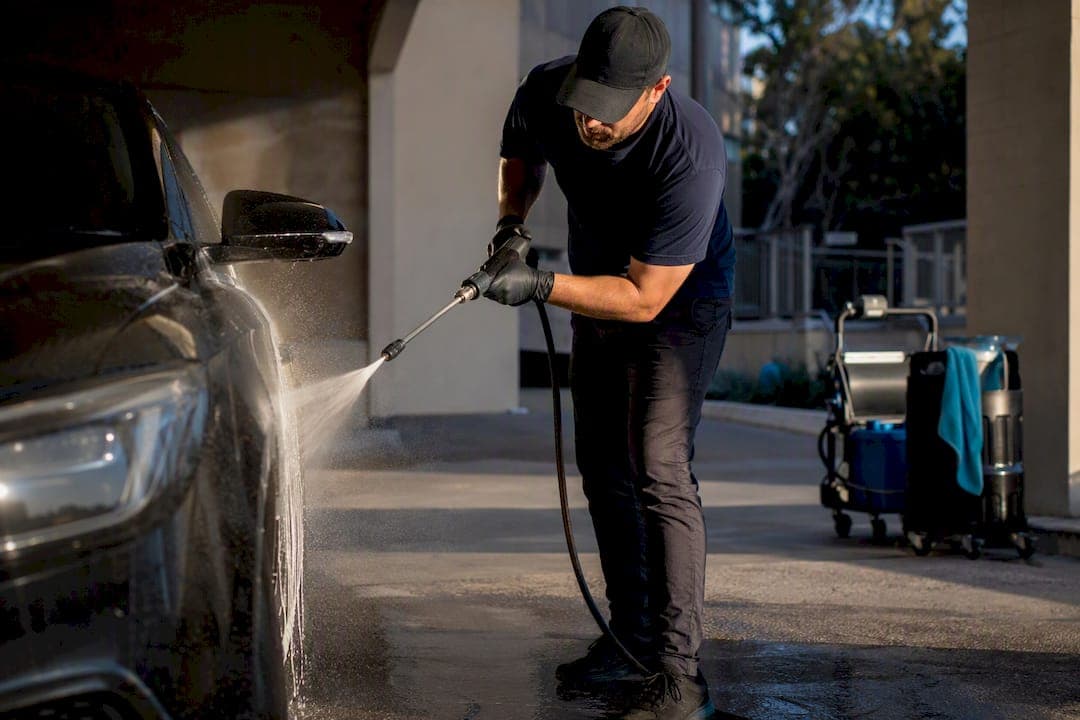
A recurring detailing plan is a scheduled maintenance subscription, usually weekly, bi-weekly, monthly, or quarterly, that keeps your car's paint, interior, and finish protected instead of letting damage build up between occasional deep cleans. It costs far less than repeated restoration work. If you want predictable upkeep without thinking about it, pick a cadence that matches how hard you use your car, and book a mobile provider that comes to you.
TL;DR:
- Matching the detailing schedule to your vehicle’s exposure conditions minimizes paint etching and interior staining before damage becomes visible or costly.
- Most recurring plans cost between $60 and $150 per visit, with monthly subscriptions typically offering better long-term value than occasional full-detail services.
- Scheduling initial deep cleaning and selecting flexible, no-contract membership options enhance long-term affordability and convenience.
- Maintenance visits generally take 30 to 75 minutes, but adding services like paint correction or headliner cleaning extends the appointment time significantly.
- Fully mobile services eliminate the need for water or electric hookups, providing flexible, scheduled care directly at your parking spot.
Table of Contents
- What Are the Different Recurring Detailing Plan Options?
- Why Does a Detailing Maintenance Plan Protect Paint and Interior Value?
- How Much Does a Recurring Detailing Plan Cost?
- How Does Booking and Billing Work for a Detailing Subscription?
- How Do You Pick the Right Frequency for Your Vehicle?
- Who Actually Delivers a Reliable Recurring Plan?
- What Are Typical Contract Terms for a Recurring Plan?
- Recurring Plan or Single-Visit Service: Which Actually Costs Less?
- How Long Does Each Recurring Visit Take?
- Our Take: Treat Detailing Like an Oil Change, Not a Luxury
- If You Want a Recurring Plan Now, Here's How to Start
- Useful Resources for Planning Your Detailing Schedule
- Sources
What Are the Different Recurring Detailing Plan Options?
Cadence should match how the car lives, not how often you feel like washing it. A car parked outside in Florida heat and pollen picks up contamination faster than one sitting in a garage three days a week, and the plan should reflect that reality.
Weekly plans suit ride-share drivers, delivery vehicles, and anyone who lives in the car for work. Constant exposure to passengers, fast food, and highway grime means dirt never gets the chance to settle in.
Bi-weekly plans work for daily commuters with kids or pets, where crumbs and hair accumulate fast enough that monthly service leaves gaps.
Monthly plans fit most daily drivers. This is the cadence most car detailing subscription providers build around, and it lines up with typical wax or sealant reapplication windows.
Quarterly plans are enough for garage-kept, low-mileage, or seasonal vehicles that rarely see rain or road film.
A typical recurring visit often includes exterior hand wash and rinse, wheel and tire cleaning, quick interior vacuum, wipe-down of high-touch surfaces (wheel, console, door handles), glass cleaning inside and out, and light dressing or protection touch-up on trim and tires. It usually does not include full paint correction, deep-set stain removal, or engine bay cleaning, which are offered as add-ons and priced separately because they require additional time.
Why Does a Detailing Maintenance Plan Protect Paint and Interior Value?
Contaminants like bird droppings, tree sap, and road film do most of their damage in the first few weeks they sit on paint. Left alone, they etch into clear coat and accelerate oxidation. A car detailing maintenance plan interrupts that clock before it starts, which is why regular detailing prevents damage that otherwise compounds season after season.
Interiors follow the same pattern. Spilled coffee, sunscreen, or pet accidents set into upholstery fibers within hours, not days. Leather left unconditioned for months starts cracking at the seams, and that damage does not reverse with a single deep clean.
This matters for resale. A car with a documented history of consistent detailing shows less wear, and detailing before a sale tends to influence what buyers are willing to pay. The math is simple: a $2,000 paint correction job is avoidable, a stained headliner replacement is not cheap, and both cost more than a year of maintenance visits combined.
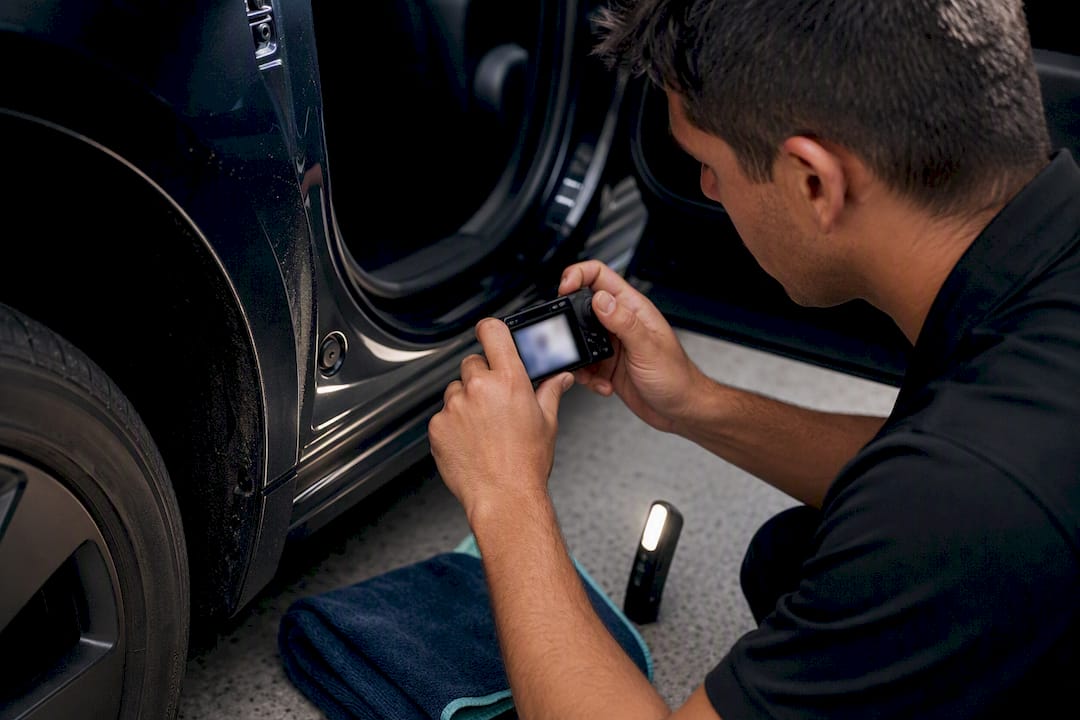
Pro Tip: Ask your detailer to photograph wheel wells and door jambs at each visit. Early rust or trim fading shows up there first, long before it's visible on the hood.
How Much Does a Recurring Detailing Plan Cost?
Per-visit pricing typically runs $60 to $150 depending on cadence and vehicle size, with sedans landing toward the lower end and trucks or SUVs pushing higher because there's simply more surface area to cover. Some markets price monthly express subscriptions closer to $150 to $200 a month, particularly when the plan bundles interior protection with the exterior wash.
The pricing logic detailers use is straightforward: a maintenance visit should run roughly 40 to 55% of a full-detail rate since it takes less time and addresses less buildup than a full reset. That ratio is what keeps monthly plans affordable while still profitable for the provider.
Compare that monthly range to two or three standalone full details a year at $250 to $400 each, and the subscription usually wins on both cost and consistency.
How Does Booking and Billing Work for a Detailing Subscription?
Most providers start every new client with a full detail before switching to a recurring cadence. That initial reset strips out embedded grime and restores the baseline, which is what allows every following visit to run faster and cost less.
- Initial reset visit. Expect this to take roughly twice as long as a normal maintenance visit, since it's correcting months or years of neglect.
- Recurring schedule setup. Most plans lock in a fixed day (say, every second Tuesday) rather than rotating dates, and members typically get priority booking over one-off customers.
- Billing selection. You'll usually choose between monthly autopay, which scales more easily and reduces the friction that causes cancellations, or a prepaid block of visits paid upfront.
- Add-ons as needed. Leather conditioning, headliner cleaning, and paint correction get quoted separately and added to any visit.
Pro Tip: If your schedule is unpredictable, ask about skip policies before signing up. A plan that lets you push a visit by a few days without penalty is worth more than a slightly lower price.
How Do You Pick the Right Frequency for Your Vehicle?
Start with how the car is actually used, not how it looks in your driveway right now.
- Pets or kids in the car regularly: bi-weekly, since hair and crumbs accumulate between monthly visits.
- Daily commuting or ride-share work: weekly to bi-weekly, given constant passenger and road exposure.
- Coastal or salt-belt driving in winter months: monthly at minimum, since salt accelerates corrosion faster than dirt alone.
- Garage-kept, low-mileage, or seasonal cars: quarterly is usually plenty.
Ceramic coatings and paint protection film change this math. Coated cars often stretch to a lower-frequency maintenance schedule because the coating sheds contamination that would otherwise stick to bare clear coat, though the interior still needs its normal attention. If you're putting real miles on a daily driver, monthly is the safest default; step up only if you're seeing visible buildup between visits.
Who Actually Delivers a Reliable Recurring Plan?
A mobile detailing provider running fully mobile service across Boca Raton, Pompano Beach, Coral Springs, Parkland, and Palm Beach County means the recurring visit happens in your driveway or parking spot with no water or electrical hookup required. That's the detail most subscription plans skip over: someone still has to show up reliably, on schedule, without needing your garden hose.
The team runs on eco-conscious methods and trained technicians, which matters more on a recurring plan than a one-off job, since the same standard has to hold up visit after visit. Guidance on detailing frequency and fleet detailing best practices reflects the same cadence logic covered above, built from handling both daily drivers and commercial fleets.
Consistent scheduling, documented before-and-after results, and flexible slots for busy professionals are what turn a one-time wash into a plan you actually keep for years.
What Are Typical Contract Terms for a Recurring Plan?
The strongest detailing membership options in this category avoid locking you into anything resembling a gym contract. Look for a no-contract, cancel-anytime structure, since that's now standard among mobile detailing providers and a fair baseline to expect.
Typical terms cover a few specific things. First, the initial reset fee is usually separate from the recurring rate and non-refundable once the work is done, since it's a real, completed service. Second, most plans specify a minimum notice window to cancel or pause, often 48 to 72 hours before the next scheduled visit, so the provider isn't left with an empty slot. Third, skipped visits typically either roll forward, get refunded, or simply don't get charged, depending on whether you're on autopay or a prepaid block.
Price locks matter too. Some providers guarantee your rate for a set period (often 6 to 12 months) even if list pricing rises, which protects early subscribers. Read the fine print on vehicle changes: if you trade your sedan for a truck mid-plan, expect the per-visit rate to adjust since size drives labor time.
The best test of a fair agreement is simple: can you cancel without a phone call to a retention department, and does pausing for a vacation or a slow month cost you nothing? If the answer to both is yes, the terms are reasonable.
Recurring Plan or Single-Visit Service: Which Actually Costs Less?
A single deep detail every few months feels cheaper in the moment, but it's solving a problem that's already gotten expensive. By the time contamination is visible enough to book a one-off appointment, you're usually paying for correction, not maintenance, and correction costs more per hour than upkeep ever does.
Run the annual math and recurring plans generally win. A monthly plan at $80 to $150 per visit lands between roughly $960 and $1,800 a year. Two or three standalone full details at $250 to $400 each land in a similar range, but without the in-between protection, meaning the car spends most of the year exposed. The subscription buys consistency the single-visit model can't.
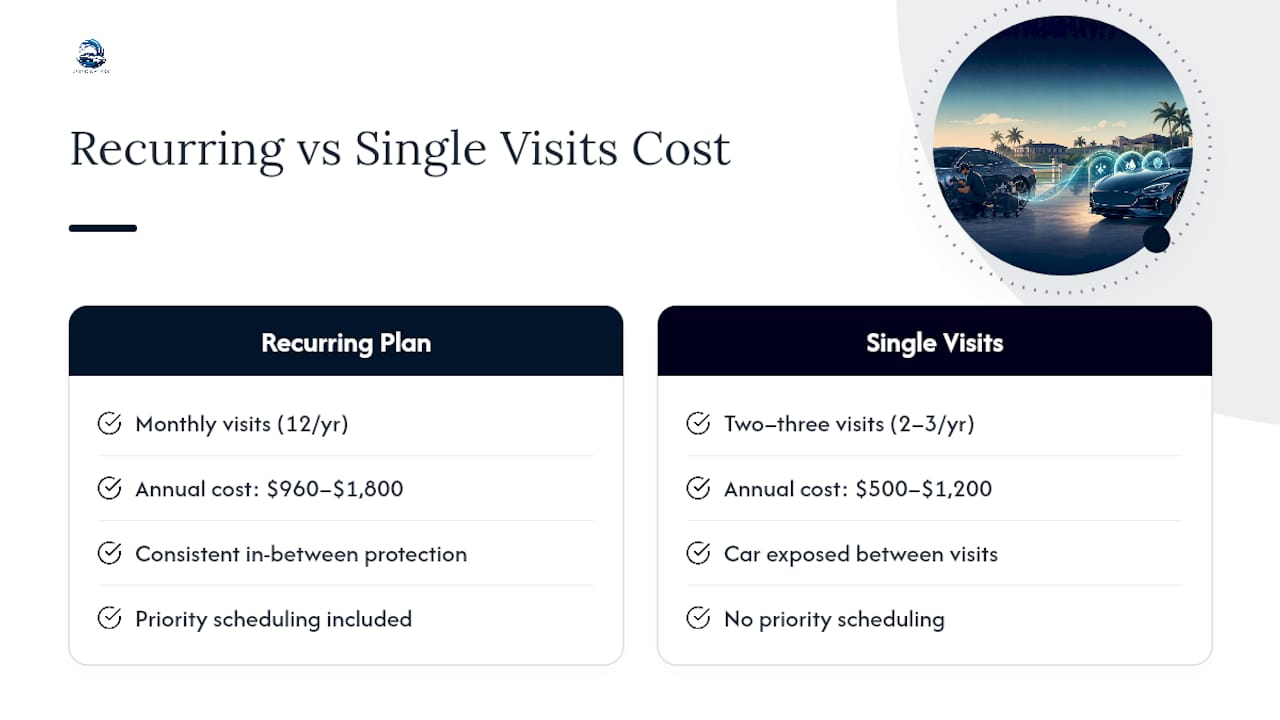
Convenience is the other half of the equation. Single-visit booking means remembering to schedule it, finding an open slot, and starting from whatever condition the car is currently in. A plan with priority scheduling removes that decision entirely. The visit happens on a fixed rhythm whether you thought about it or not, which is the entire point of treating detailing like an oil change instead of a special occasion.
The one case where single visits make more sense is a car you drive rarely, store most of the year, or plan to sell within a month or two. Outside of that, recurring almost always beats sporadic on both cost and upkeep.
How Long Does Each Recurring Visit Take?
A typical maintenance visit usually lasts from about 30 to 60 minutes for smaller vehicles like sedans or coupes, and around 45 to 75 minutes for larger SUVs or trucks due to greater surface area. This duration is notably less than that of a full detail, which often requires about twice as much time because it involves addressing accumulated buildup rather than maintaining a clean baseline. The initial deep cleaning visit is important because it establishes that baseline, allowing later maintenance visits to be quicker and more efficient, as the technician deals with less accumulated dirt.
Add-ons extend the clock. Leather conditioning might add 15 minutes, headliner cleaning another 20 to 30, and paint correction can turn a 45 minute visit into a multi-hour job depending on severity. If you're on a tight schedule and know you'll want an add-on, mention it when booking so the technician can block enough time and you're not left waiting past your window.
For most subscribers, the appeal of a short, predictable visit window is exactly why the plan works. You know roughly when the technician arrives and roughly when they'll be done, which is more than you can say for squeezing in a last-minute wash on a Saturday.
Our Take: Treat Detailing Like an Oil Change, Not a Luxury
Most people still think of detailing as an occasional treat, something you book before a big trip or a resale, rather than routine upkeep. That's backwards, and it's the single biggest reason cars age faster than they should. Paint contamination and interior staining don't wait for a convenient time. They start working the moment they land on the surface.
The conventional advice, "detail your car a few times a year when it looks dirty," fails because visible dirt is already a lagging indicator. By the time you notice it, the damage cycle has usually started. A recurring plan flips that logic: you're not reacting to grime, you're preventing it from ever setting in.
What actually matters is matching cadence to real use, not aspiration. A weekend car doesn't need weekly visits, and a daily commuter can't get away with quarterly ones. Get that match right first, before worrying about add-ons or upgrades. Everything else, coatings, protection dressing, priority scheduling, is a refinement on top of a cadence that already fits how you live.
— Living
If You Want a Recurring Plan Now, Here's How to Start
A mobile detailing provider is the alternative to sitting in a shop waiting room or hauling a hose around your driveway. Every recurring visit happens fully mobile, wherever your car is parked, with no water or electrical hookup needed from you.

Onboarding follows the same pattern covered above: an initial full detail resets the car to a clean baseline, then recurring visits keep it there on whatever cadence fits your driving, weekly, bi-weekly, monthly, or quarterly. Billing is flexible, with autopay available so you're not manually rebooking every cycle, and there may be no long-term contract locking you in. Fleet managers get the same structure through the fleet wash service, scaled to multiple vehicles on one schedule.
If your car is overdue for that first reset, book your detailing appointment and get a cadence set up that matches how you actually drive.
Useful Resources for Planning Your Detailing Schedule
For deeper reading, Living Waters Auto Wash LLC's guides on detailing frequency recommendations and why regular detailing prevents damage expand on cadence and paint protection. For the business side of subscription pricing, DetailerMade's guide to recurring revenue breaks down plan structuring, and Encode's residential maintenance plan model shows how the same subscription logic works across home services.
Sources
- Build Recurring Clients With a Detailing Maintenance Plan | DoorstepHQ
- Car Detailing Subscription Nashville: Monthly Mobile Service That Works
- How to Build Recurring Revenue in Your Detailing Business (Maintenance Plans That Work) | DETAILERMADE