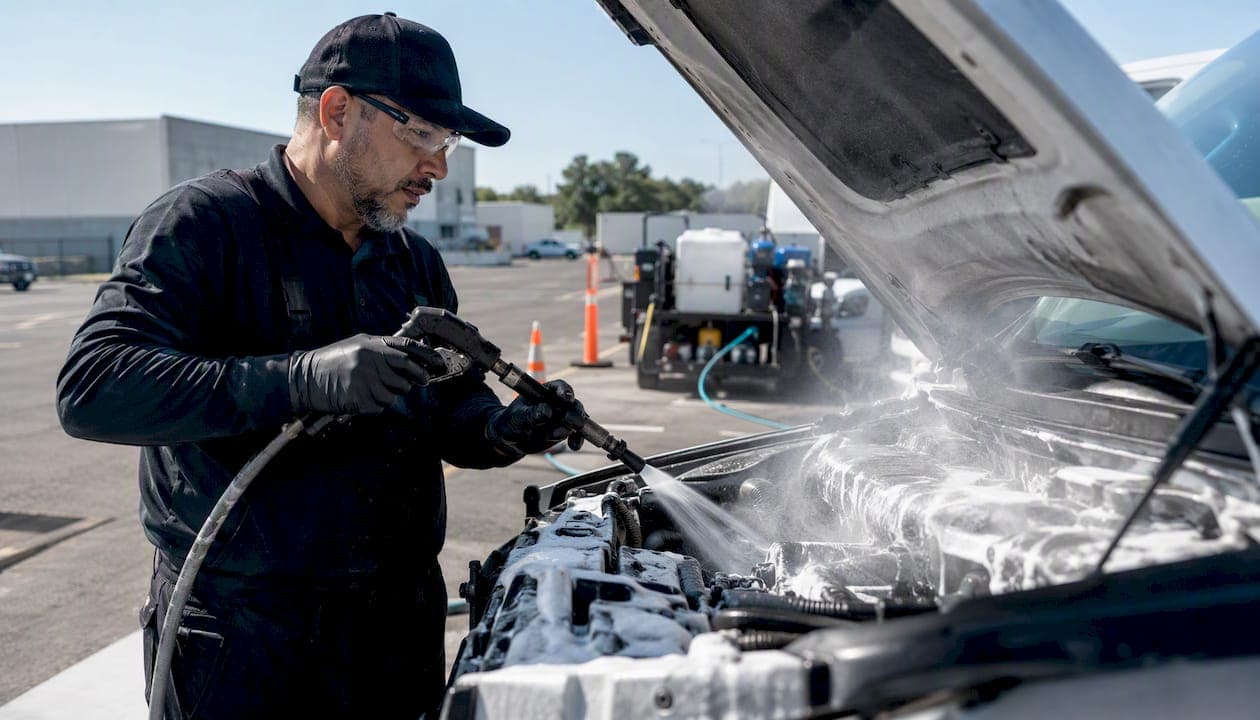
Engine cleaning is a preventive maintenance practice that improves inspectability, reduces deposit-driven performance losses, and lowers operating costs when systematized across a fleet. Cars, the primary mechanical benefit is faster leak detection and easier maintenance access, not dramatic horsepower gains. Three effects matter most for fleet managers:
- Inspectability and maintenance speed: A clean engine bay reveals leaks, cracked boots, and corroded connectors that a grimy one hides, cutting diagnostic teardown time.
- Fuel, EGT, and DPF benefits: Foam engine-wash programs report up to ~2% fuel savings in some fleet contexts. Consistent injector and EGR treatments reduce DPF regeneration frequency measurably.
- Corrosion and electrical protection: Removing road salt, oil film, and grime from wiring harnesses and connectors reduces fault codes and unplanned electrical repairs, especially in winter-exposed or coastal fleets.
The EPA's wastewater guidance and mobile providers like Living Waters Auto Wash LLC add a compliance dimension: how you clean matters as much as whether you clean.
Key Takeaways
Engine cleaning delivers its strongest fleet ROI through internal chemical treatments (injector cleaners, EGR services) combined with scheduled external bay cleaning, tracked against telematics metrics like DPF regen frequency and per-vehicle fuel economy.
| Point | Details |
|---|---|
| Prioritize internal treatments | Injector cleaners and EGR services drive the measurable fuel and DPF regen gains; bay cleaning alone produces minimal direct fuel savings. |
| Use realistic gain ranges | Budget for 1–4% fuel economy improvement depending on baseline deposit level, duty cycle, and program consistency. |
| Schedule by duty cycle | Urban/last-mile fleets need injector treatment every 10,000–15,000 miles; long-haul fleets can extend to 20,000–25,000 miles. |
| Document every cleaning event | Photo records and PM log entries protect OEM warranties and give finance teams the data to validate program ROI. |
| Living Waters Auto Wash LLC | Provides mobile engine-bay detailing and scheduled fleet wash plans with on-site documentation across Palm Beach County, no shop visit required. |
Table of Contents
- How engine cleaning drives real fleet maintenance benefits
- How a clean engine bay changes your maintenance workflow
- Which cleaning methods actually work for fleet engines
- Safety, warranty, and environmental compliance you cannot skip
- When to schedule engine cleaning and how to calculate fleet ROI
- In-house cleaning versus hiring a mobile fleet service
- Step-by-step engine cleaning checklist for fleet teams
- What the research actually says about fuel, EGT, and lifespan gains
- A mobile provider's perspective on what fleets actually experience
- Living Waters Auto Wash LLC keeps your fleet engines clean and compliant
- Sources
How engine cleaning drives real fleet maintenance benefits
The concrete advantages of a systematic engine-cleaning program show up in KPIs fleet managers already track: uptime, fuel cost per mile, maintenance labor hours, and emissions compliance.
Earlier leak detection and faster diagnostics are the most immediate payoff. A technician who can see the engine clearly spends less time chasing a fault code and more time fixing the actual problem. Documented fleet programs show meaningful fuel economy improvements and extended engine life when cleanliness is part of the preventive maintenance (PM) cycle, with one fleet case reporting roughly 4% fuel economy gains sustained over time.
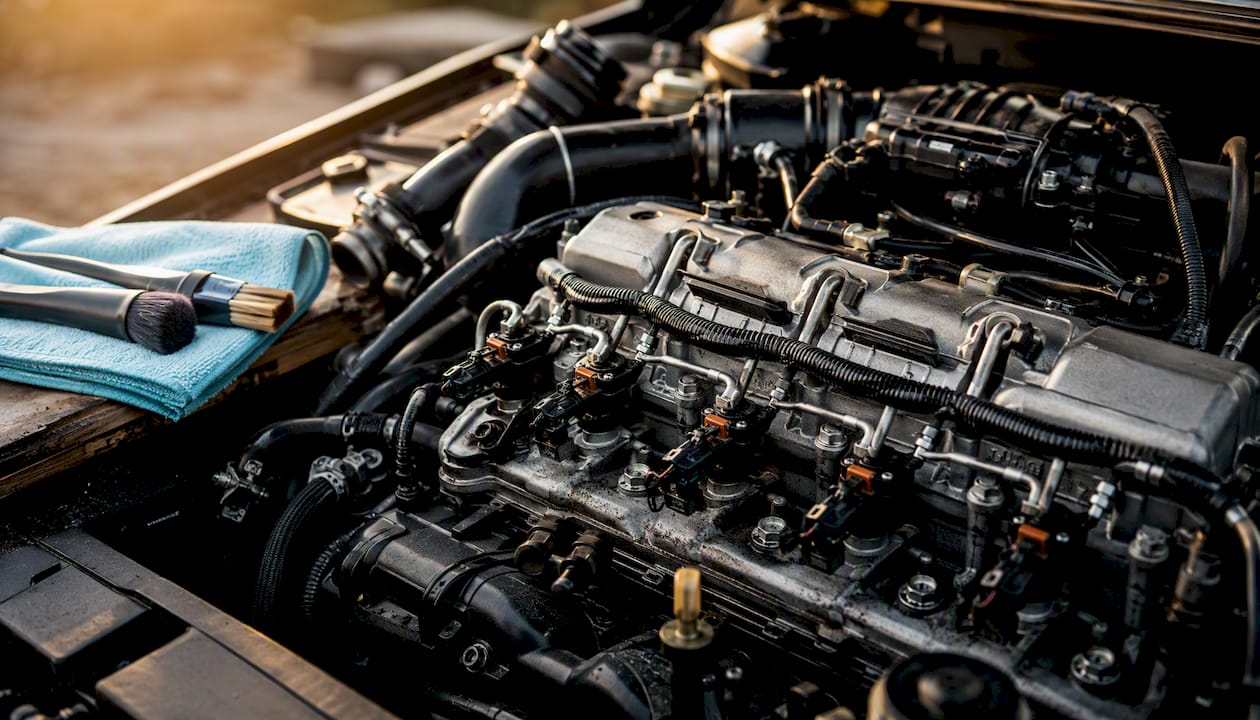
Corrosion and electrical fault reduction matter especially for fleets operating in South Florida's salt-air environment or in northern markets with road-salt exposure. Oil film and brine accelerate corrosion on wiring harnesses, ground straps, and sensor connectors. Removing that contamination on a scheduled basis reduces nuisance fault codes and the labor hours spent diagnosing them.
Component life extension is the longer-term argument. Clean EGR valves, injectors, and turbochargers operate within tighter tolerances and generate less heat-soak damage. Fleets that treat EGR cleaning as a scheduled task rather than a reactive repair tend to see lower downstream DPF and turbo replacement rates.
Resale and residual value round out the case. A fleet vehicle with a documented cleaning and maintenance history commands a higher auction price and passes pre-sale inspections faster.
Pro Tip: For regional and last-mile diesel fleets, the single fastest payback usually comes from reduced DPF regeneration frequency. Tie your injector-cleaner and EGR-cleaning program to telematics-reported regen counts, and you will have a direct cost-per-vehicle ROI number within one PM cycle.
How a clean engine bay changes your maintenance workflow
Inspectability is the word that keeps coming up in fleet maintenance circles, and it earns its place. When a technician opens the hood of a vehicle that has not been cleaned in 80,000 miles, every surface looks the same shade of brown-black. A fresh oil leak, a weeping coolant hose, and a cracked intake boot are all invisible until they become expensive.
A clean engine bay changes that calculus. Leaks show up as fresh wet spots against a clean surface. Cracked rubber components are visible without removing adjacent parts. Corroded connectors stand out rather than blending into general grime. The practical result is shorter diagnostic time per vehicle, which compounds across a fleet of 20, 50, or 200 units.
Maintenance time impact: Fleet operators who integrate engine-bay cleaning into PM report that technicians identify minor leaks and electrical issues earlier, often before they generate fault codes, reducing unplanned shop visits.
The effect on telematics signals is real but indirect. A clean fuel system, specifically clean injectors and a functioning EGR valve, produces more consistent combustion data. Consistent diesel injector-cleaner programs can restore a large portion of lost injector performance in protocol testing and reduce DPF regeneration frequency in fleet trials. Fewer regen events mean cleaner ECU data, fewer false fault codes, and more predictable fuel economy readings.
Manufacturer caution: Before any engine-bay wash, cover or bag the ECM, turbocharger inlet, emission sensors, and exposed electrical connectors. High-pressure water directed at these components can void OEM warranties and cause immediate electrical faults. Document every cleaning event in the PM record.
- Protect ECM and fuse boxes before any liquid application
- Avoid direct pressure-spray at turbo inlets, MAF sensors, and crankcase breathers
- Allow the engine to cool to ambient temperature before applying any chemical degreaser
- Run a post-clean diagnostic scan to confirm no new fault codes were introduced
Which cleaning methods actually work for fleet engines
Not every method fits every fleet application. The choice depends on what you are cleaning (external bay, fuel system, EGR circuit, oil system), how much downtime you can absorb, and what environmental controls you have in place.
External engine-bay cleaning (steam and foam wash) Steam cleaning uses high-temperature vapor to lift grease and oil without large volumes of water, making it a strong choice for enclosed shop environments where wastewater capture is limited. Foam engine-wash programs apply a low-pressure foam that penetrates deposits and can deliver up to ~2% fuel savings in certain fleet settings, along with EGT improvements. Foam wash requires less mechanical agitation and produces less runoff than a pressure-wash approach.
Undercarriage wash Removes road salt, mud, and corrosive buildup from frame rails, brake lines, and suspension components. Critical for fleets operating in northern states or coastal areas. Usually paired with an external bay wash.
Fuel-borne injector cleaners Added directly to the fuel tank, these treatments address deposit buildup on injector tips and combustion chambers over multiple fill cycles. Heavy Duty Journal's fleet guide documents that quality products can restore up to ~87% of lost injector performance in protocol tests. Best used proactively on a scheduled interval rather than as a rescue treatment.
EGR-specific cleaning A targeted chemical or mechanical service that removes carbon deposits from EGR valves, coolers, and intake manifolds. Kenvo's fleet analysis notes that on severely degraded vehicles, EGR cleaning can deliver up to ~20% improvement in fuel economy, with recommended intervals of every 50,000–100,000 km for high-utilization diesel units.
Engine flush (crankcase) A chemical treatment added to the oil system to remove internal deposits before an oil change. Valvoline's guidance is clear: an engine flush is distinct from fuel-system or EGR cleaning and should only be used per OEM recommendation. Misapplication on high-mileage engines with worn seals can cause oil leaks.
Waterless and eco-friendly options Waterless degreasers and biodegradable foam products reduce runoff volume and work well for spot cleaning between scheduled washes. Useful for fleets without on-site wastewater capture infrastructure.
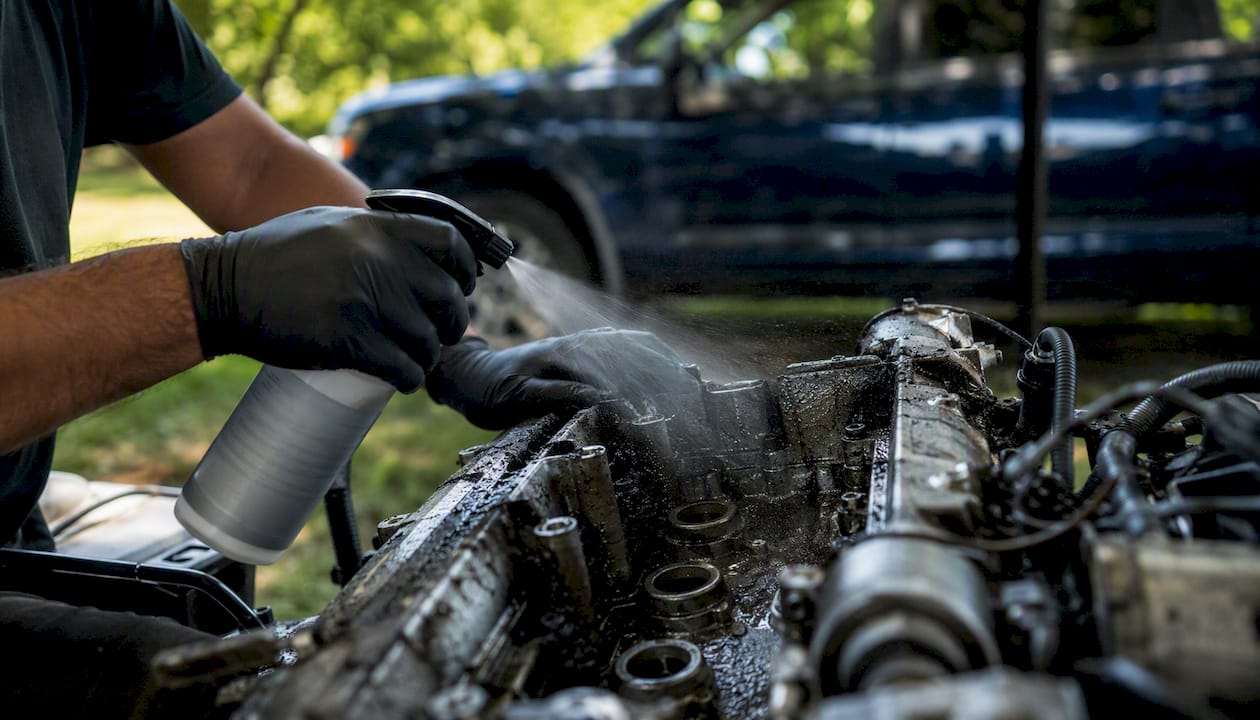
Pro Tip: Foam engine wash and injector-cleaner programs are the two methods with the clearest fleet-level ROI evidence. Run them together on a scheduled PM interval and track DPF regen frequency and fuel economy per vehicle. That data justifies the program cost to finance within one quarter.
| Method | Best use case | Vendor-grade equipment needed? | Environmental controls required? |
|---|---|---|---|
| Foam engine wash | Full bay cleaning, fuel/EGT gains | Yes (foam applicator) | Yes (runoff capture) |
| Steam cleaning | Grease removal, enclosed shops | Yes (steam unit) | Minimal |
| Fuel injector cleaner | Deposit removal, DPF regen reduction | No (tank additive) | No |
| EGR cleaning | Carbon deposit removal, diesel fleets | Often (professional service) | Minimal |
| Engine flush | Crankcase deposit removal | No (oil-change integration) | Standard oil disposal |
| Waterless degreaser | Spot cleaning, low-water environments | No | Minimal |
Safety, warranty, and environmental compliance you cannot skip
Engine cleaning done carelessly creates more problems than it solves. Three categories of risk require explicit controls: technician safety, OEM warranty protection, and environmental compliance.
Regulatory note: The EPA's Clean Water Act prohibits discharging vehicle wash water containing oil, grease, or cleaning chemicals into storm drains. Fleets must capture and dispose of wash water through an approved facility or use a mobile provider equipped to handle runoff on-site.
Safety checklist before any engine-bay cleaning event:
- Disconnect the negative battery terminal before applying any liquid degreaser
- Allow the engine to cool completely (minimum 30 minutes after shutdown)
- Cover the ECM, fuse box, alternator, and all exposed electrical connectors with plastic bags or waterproof tape
- Wear chemical-resistant gloves and eye protection when handling degreasers
- Work in a ventilated area; solvent-based degreasers produce fumes that accumulate in enclosed bays
- Never direct a pressure washer at turbocharger inlets, MAF sensors, or crankcase breather valves
- Remove plastic covers and air-intake components per OEM guidance before washing, then reinstall before starting the engine
Warranty and OEM documentation: Most OEM service manuals specify which components must be protected during engine-bay cleaning and which cleaning agents are approved. Failing to follow those specifications can void powertrain warranties. Log every cleaning event in the vehicle's PM record with the method used, products applied, and technician name. That documentation is your defense if a warranty claim is disputed.
For eco-friendly wash methods and wastewater controls, Living Waters Auto Wash LLC's mobile approach is designed to operate without on-site water hookups, which simplifies runoff management for fleets that lack wastewater capture infrastructure.
When to schedule engine cleaning and how to calculate fleet ROI
Scheduling should follow duty cycle, not a single universal interval. A last-mile delivery van running 200 urban miles per day accumulates deposits far faster than a long-haul truck cruising at highway speeds.
Recommended intervals by duty type:
- Urban/last-mile (stop-and-go, high idle time): External bay cleaning every 15,000–20,000 miles; injector treatment every 10,000–15,000 miles; EGR service every 50,000 miles or annually.
- Regional (mixed highway/urban): External bay cleaning every 25,000–30,000 miles; injector treatment every 15,000 miles; EGR service every 75,000 miles.
- Long-haul (predominantly highway): External bay cleaning every 40,000–50,000 miles; injector treatment every 20,000–25,000 miles; EGR service every 100,000 miles.
- Winter/salt-exposed (any duty cycle): Add an undercarriage and bay wash at the end of every winter season regardless of mileage trigger.
For scheduling guidance tailored to different vehicle types, interval recommendations vary by operating environment and engine type.
Example ROI calculation (10-vehicle urban diesel fleet):
The conservative case barely breaks even, which is why tying the program to measurable telematics data matters. Fleets that track DPF regen frequency per vehicle before and after a cleaning program can validate the optimistic scenario within 60–90 days.
In-house cleaning versus hiring a mobile fleet service
The honest answer is that most fleets under 30 vehicles are better served by a professional mobile provider. The capital cost of a steam unit or foam-wash rig, the training required to use it safely, and the environmental permitting for wastewater disposal add up faster than the labor savings.
In-house cleaning: where it makes sense
- Large fleets (50+ vehicles) with dedicated maintenance facilities and wastewater treatment
- Operations with existing trained technicians who can absorb the additional task
- Fleets where scheduling flexibility and immediate availability outweigh consistency
Downsides of in-house: Inconsistent technique across technicians, no third-party documentation for warranty purposes, and the ongoing cost of consumables and equipment maintenance.
Professional/mobile cleaning: where it wins
- Consistent method and product application across every vehicle
- Built-in environmental compliance (mobile providers handle runoff without requiring fleet infrastructure)
- Photo documentation and service records delivered with each visit
- No capital expenditure on equipment
- Faster turnaround: vehicles are cleaned on-site without driving to a shop
For mobile detailing ROI, the operational advantage compounds when a provider services multiple vehicles in a single visit, reducing fleet downtime to near zero.
Pro Tip: The clearest signal that outsourcing wins: if your fleet operates in a jurisdiction with strict stormwater permits and you do not have a permitted wash pad, a mobile provider with self-contained water recovery is not optional, it is the only compliant path.
Step-by-step engine cleaning checklist for fleet teams
Use this checklist for every engine-bay cleaning event. It covers pre-clean, cleaning, and post-clean verification. For detailed engine bay detailing steps, including component-specific guidance, the process below applies across most commercial vehicle types.
Pre-clean (before any product touches the engine):
- Log the VIN, current odometer, and service record entry before starting.
- Park on a level surface and allow the engine to cool for at least 30 minutes.
- Disconnect the negative battery terminal.
- Don chemical-resistant gloves and eye protection.
- Confirm OEM clearance for the cleaning method you are using.
- Cover the ECM, fuse box, alternator, MAF sensor, and all open electrical connectors with plastic bags or waterproof tape.
- Remove the air intake cover and any loose plastic engine covers per OEM guidance.
Cleaning:
- Apply degreaser or foam to cool surfaces; allow dwell time per product instructions (typically 3–5 minutes).
- Agitate stubborn deposits with a soft-bristle brush; avoid metal brushes near wiring.
- Rinse with low-pressure water or remove foam per method instructions; never use a high-pressure jet near sensors or turbo inlets.
- Reinstall all covers and connectors before reconnecting the battery.
- Reconnect the battery and run the engine for 5 minutes; observe for any new warning lights.
- Run a diagnostic scan and confirm no new fault codes were introduced.
Post-clean verification:
- Capture before-and-after photos and attach them to the vehicle's PM record.
- Log the cleaning method, products used, and technician name in the service record.
- Record baseline fuel economy and DPF regen count from telematics for comparison at next service.
- Schedule the follow-up inspection at the appropriate interval for the vehicle's duty cycle.
Pro Tip: Before-and-after photos are not just good documentation practice. They are your warranty protection if a component fails and the manufacturer questions whether the cleaning event caused damage. A timestamped photo showing covered connectors and a clean bay is worth more than a verbal record.
What the research actually says about fuel, EGT, and lifespan gains
Fleet managers hear a lot of claims about engine cleaning. Here is what the evidence supports, what it does not, and what drives the variance.
Well-supported findings:
- Foam engine-wash programs report up to ~2% fuel savings in some fleet contexts, with EGT improvements noted in aviation and commercial vehicle applications. The gains are real but modest and depend heavily on baseline deposit level and duty cycle.
- Injector-cleaner programs show up to ~87% restoration of lost injector performance in protocol testing. In fleet trials, consistent use reduced DPF regeneration frequency by meaningful margins, which is the metric with the clearest cost tie.
- EGR cleaning on severely degraded diesel vehicles can deliver up to ~20% fuel economy improvement in documented cases. On vehicles that are not yet severely degraded, the gain is smaller but the avoided downstream repair cost (DPF, turbo) is the stronger argument.
- Systematic cleanliness programs in fleet rollouts have produced documented fuel economy improvements and extended engine life, with one case reporting roughly 4% sustained fuel economy gain.
Realistic range to plan around: External bay cleaning alone produces minimal direct fuel savings. The fuel and emissions benefits come from internal treatments: injector cleaners, EGR services, and engine flushes used per OEM guidance. Budget for 1–4% fuel economy improvement depending on baseline deposit level, duty cycle, and consistency of the program.
Commonly overstated claims:
- Engine-bay cleaning does not fix overheating. Cars.com's guidance is direct: overheating is almost always a cooling-system issue, not a grime problem. Cleaning helps you find the leak faster; it does not replace the thermostat.
- A single cleaning event rarely produces lasting fuel savings. The gains come from sustained, scheduled programs, not one-time treatments.
Variance drivers: Fuel quality, engine age, existing deposit level, duty cycle intensity, and whether treatments are applied proactively or reactively all shift outcomes significantly. A fleet running low-sulfur diesel on a consistent injector-cleaner program will see better results than one running variable fuel quality with reactive-only treatments.
A mobile provider's perspective on what fleets actually experience
The most common surprise fleet managers report after their first systematic engine-cleaning program is not the fuel savings. It is the diagnostic time saved. A technician who can see a weeping injector return line or a cracked intercooler boot in 30 seconds rather than 45 minutes of teardown is a real operational gain that does not show up in fuel economy reports but absolutely shows up in labor cost.
The second surprise is how quickly documentation pays off. Fleets that photograph every cleaning event and log it in the PM record have a defensible paper trail when an OEM warranty claim comes up. Without that record, a manufacturer can attribute a component failure to improper maintenance. With it, the burden shifts.
The third thing worth saying plainly: external engine-bay cleaning and internal chemical treatments are not the same service, and they are not interchangeable. Bay cleaning improves inspectability and protects electrical components. Injector and EGR treatments address combustion efficiency and emissions compliance. A complete fleet engine-care program needs both, scheduled separately and tracked independently.
Living Waters Auto Wash LLC keeps your fleet engines clean and compliant
Fleet managers in Boca Raton, Pompano Beach, Coral Springs, Parkland, and Palm Beach County have a specific problem that most shop-based services cannot solve: you need vehicles cleaned on-site, on schedule, without pulling them from service for half a day.

Living Waters Auto Wash LLC brings professional engine-bay detailing, exterior fleet washes, and scheduled fleet maintenance plans directly to your location, with no water or power hookup required. Every service includes photo documentation and a service record you can attach to your PM files, which matters when OEM warranty questions come up. The team handles environmental controls in the field, so you are not managing wastewater compliance on top of everything else.
For fleets that want a pilot program before committing to a full schedule, starting with 10–20 vehicles and tracking DPF regen frequency and fuel economy over one PM cycle gives you the data to justify the program internally. Book your fleet cleaning plan and get a quote for your specific vehicle count and duty cycle.
Sources
- Top six benefits of foam engine wash for your fleet maintenance program - AeroCore
- Diesel Fuel Injector Cleaner: Proven Fleet Manager's Guide - Heavy Duty Journal
- Why every fleet manager should be prioritising diesel EGR system cleaning in 2026 - Kenvo
- The Ultimate Guide to Engine Cleaning: Boost Performance and Extend Your Vehicle's Lifespan - All About Engine
- Cars
- Engine Flush - What Is It and Should You Use It? - Valvoline™ Global