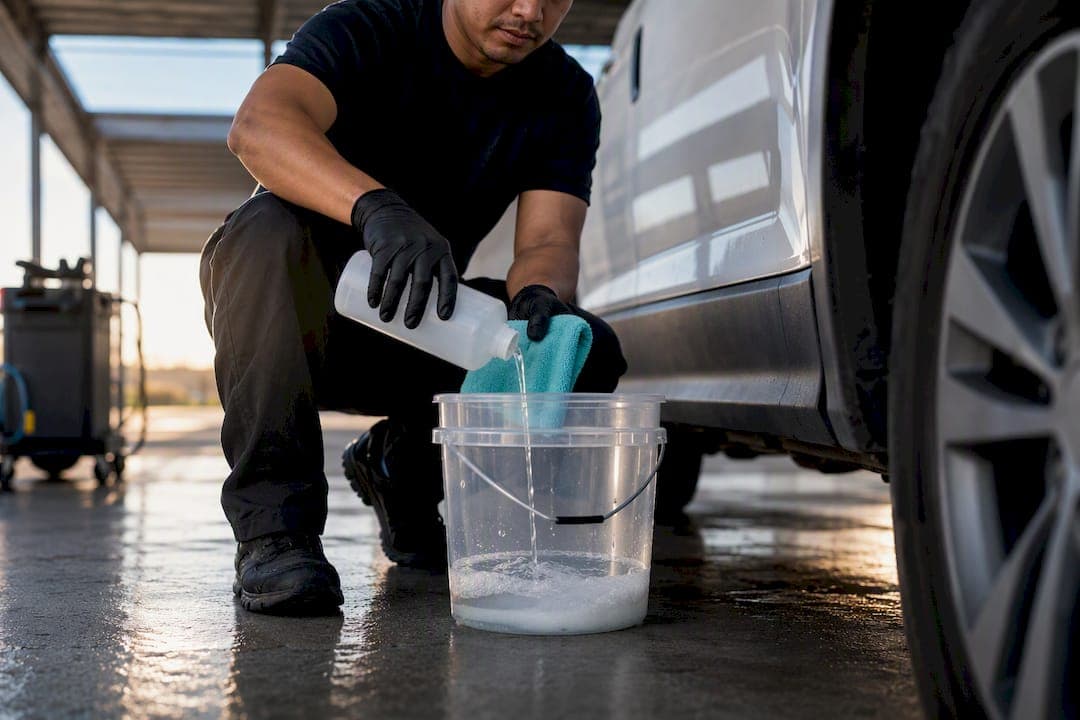
Yes, many biodegradable car detailing products clean as well as conventional ones for light-to-moderate dirt, and the right ones cut real environmental risk. Prioritize certified waterless or detail sprays and plant-based shampoos with USDA BioPreferred backing over anything that just says "green" on the label. Skip vague marketing claims and check the safety data sheet (SDS) before you buy.
TL;DR:
- Certified waterless sprays and plant-based shampoos with USDA BioPreferred labels are the most reliable biodegradable options, but check safety data sheets for full ingredient transparency.
- Biodegradability claims often lack regulation; USDA BioPreferred certifies bio-based content, but does not guarantee aquatic safety or rapid breakdown.
- Different products serve specific purposes: waterless sprays for light dirt, plant-based shampoos for heavy grime, and interior cleaners tailored to materials; using the wrong type wastes product or harms finishes.
- Avoid ingredients like quaternary ammonium compounds, high-VOC solvents, synthetic fragrances, phosphates, and ammonia-based cleaners to reduce environmental impact and health risks.
- Testing DIY methods, choosing products with SDS, biodegradation percentages, and third-party eco-labels, and professional services ensure safer, more effective care.
Table of Contents
- Quick Picks: Biodegradable Car Detailing Products Worth Trying
- What Does "Biodegradable" Actually Mean on a Product Label?
- Which Product Category Do You Actually Need?
- Ingredients to Avoid in Car Cleaning Products
- How to Choose the Right Biodegradable Product
- DIY Alternatives: What Works and What Doesn't
- How Professional Detailers Put These Products to Work
- Why Transparency Beats a Green Label Every Time
- A Mobile, Water-Wise Alternative Worth Booking
- Where to Verify These Claims Yourself
- Sources
Quick Picks: Biodegradable Car Detailing Products Worth Trying
You don't need to guess at this. A handful of products cover most detailing jobs, and each fits a different situation better than the others.
- Bioworx Detail Spray: A USDA Certified Bio-Based spray-and-wipe cleaner built for both interior and exterior touch-ups. It's the one to grab for dusty dashboards, fingerprints on glass, or a quick pass over painted panels between full washes.
- EcoSmart waterless wash: Chemical Guys' EcoSmart waterless car wash uses hyper-surfactants and lubricants to emulsify dirt so a microfiber towel lifts it off without scratching the clear coat. It cleans and leaves a light wax layer in one step, which makes it a solid weekly maintenance option rather than a deep-clean tool.
- Eco Car Care waterless kit: Marketed around water savings of 60 to 90 gallons per wash compared to a hose-and-bucket wash, this kit works well for apartment dwellers or anyone without driveway access to water.
Buying notes matter more than most people think. Concentrates cost less per wash and let you control dilution strength for the job at hand, but they demand a spray bottle, a measuring cap, and a little patience. Ready-to-use bottles cost more per ounce but remove the guesswork, which is why they dominate the quick-detailer category. If you're treating a fleet of vehicles or detail often, a gallon of concentrate usually pays for itself within a few washes. If you detail once a month, ready-to-use is the less wasteful choice, since half-diluted concentrate that sits unused for weeks can lose potency.
What Does "Biodegradable" Actually Mean on a Product Label?
"Biodegradable" is not a regulated claim in the U.S. the way "organic" is for food, so the word alone tells you almost nothing about how fast a cleaner breaks down or how safe it is for waterways. Real biodegradability testing measures how much of a substance converts to carbon dioxide, water, and biomass within a set window, typically 28 days under standardized aerobic conditions.
A few reference points help separate a real claim from marketing filler:
- USDA BioPreferred certifies bio-based content in a product, meaning a defined percentage of the formula comes from renewable plant or animal sources rather than petroleum. The USDA's program overview is the clearest U.S. benchmark to check on a bottle.
- EU Regulation 648/2004 sets biodegradability requirements for surfactants sold in the European Union, and it's a useful comparison point even for U.S. shoppers because it defines specific pass/fail thresholds rather than leaving the term open to interpretation.
- A BioPreferred label confirms bio-based content, not aquatic safety. A product can be plant-derived and still contain a chelant or solvent that's tough on fish gills.
That last point is the one most shoppers miss. A bio-based surfactant can sit next to a synthetic fragrance or a phosphate-based water softener in the same bottle, and the label will still say "eco-friendly" on the front. Read the SDS, not the front label, if you actually want to know what's in the bottle.
Which Product Category Do You Actually Need?
Different jobs call for different formulas, and using the wrong one either wastes product or risks the finish. Here's how the main categories break down.
- Waterless and detail sprays. These work through lubrication rather than rinsing, so light dust, pollen, and fingerprints lift away cleanly, but heavy grime just smears if you skip a generous spritz and a soft, frequently-refolded microfiber towel. Skimping on lubricant is the top cause of swirl marks with this category.
- Plant-based shampoos. For a car that's actually dirty, mud, road salt, tree sap, you need a rinse step, and that means a shampoo diluted per label instructions in a bucket or foam cannon. Runoff from a driveway wash still reaches a storm drain untreated, so this is the category where containment matters most.
- Interior cleaners. Fabric and leather need different chemistry. A fabric-safe cleaner with enzymes handles pet odor and food stains; leather needs a pH-balanced formula that won't strip natural oils or crack the finish over time. Fragrance load and VOC content matter here more than anywhere else in the car, since cabin air recirculates.
- Wheel, tire, and wax products. Wheel cleaners often rely on chelants to bind brake dust, and chelants can resist biodegradation even when the rest of the formula is plant-based. Check pH on any wheel cleaner labeled "acid-free" claims can be misleading, and look for the same scrutiny on wax and sealant ingredient lists as you would a shampoo.
For anything touching clear coat or painted panels, compatibility matters as much as the eco claim. A guide to detailing products safe for paint is worth a read before you experiment with a new wheel cleaner on a car you care about.
Ingredients to Avoid in Car Cleaning Products
Some ingredients show up across both "green" and conventional detailing products, and they deserve a second look regardless of what the front label promises.
- Quaternary ammonium compounds (quats): common in disinfectant wipes and some interior sprays; they resist biodegradation and can irritate skin with repeated contact.
- High-VOC solvents: found in some tire shines and dressings; they evaporate quickly and contribute to cabin air pollution during and after application.
- Strong synthetic fragrances: masking agents rather than cleaning agents, and a documented trigger for fragrance sensitivity, which can cause headaches and nausea in sensitive people.
- Phosphates and persistent chelants: used to soften water and bind minerals; some resist breakdown in wastewater treatment and contribute to algae blooms downstream.
- Ammonia-based glass cleaners: ammonia's aquatic toxicity is well documented, and it's still common in budget glass cleaners.
Cabin air is its own concern. A closed car interior concentrates fumes far more than an open garage does, so ventilate with doors open for a few minutes after using any interior product, and lean toward fragrance-free formulas if anyone in the household has respiratory sensitivity.
Pro Tip: Wash your car at a commercial car wash bay with a wastewater drain, or use a containment mat under your vehicle, instead of hosing suds straight into the street. Most municipal storm drains route directly to local waterways with no treatment in between.
How to Choose the Right Biodegradable Product
A little screening before checkout saves you from buying a bottle that's greener in marketing than in the formula.
Run through this checklist before you buy:
- Does the seller provide an SDS, and does it list actual ingredient categories rather than trade-secret blanks?
- Is there a specific biodegradation claim (a percentage within a defined timeframe) rather than just the word "biodegradable" alone?
- Does it carry USDA BioPreferred certification or a comparable third-party eco-label?
- Does the label specify pH and dilution ratio, or does it just say "spray and wipe"?
- Is the packaging recyclable, and does the brand disclose that plainly?
Before you buy, it's worth asking the seller or your detailer a few direct questions:
- What percentage of this formula is certified bio-based, and under what standard?
- What's the recommended dilution for a full wash versus a touch-up?
- Are there exposure limits or ventilation recommendations on the SDS?
Once you have a new product in hand, test it on a small, inconspicuous panel first, a lower door edge or inside the wheel well works, and wait a few minutes to check for streaking, discoloration, or residue before treating the whole vehicle.
DIY Alternatives: What Works and What Doesn't
Homemade cleaners have real limits, but they cover more ground than most people assume.
- Castile soap wash: Mix roughly one to two tablespoons of liquid castile soap per gallon of water for a gentle, biodegradable wash solution that handles dust and light road film.
- Diluted vinegar for glass: A one-to-one vinegar and water mix cuts through haze on glass, but avoid it on matte or ceramic-coated paint, since the acidity can dull some finishes over repeated use.
- Know the limits: Tar, baked-on brake dust, and biological stains like bird droppings usually need a dedicated solvent or enzyme cleaner. DIY mixes just spread the mess around on those jobs.
Always spot-test a DIY mix first, and crack a window while cleaning the interior to keep vinegar fumes from lingering in the cabin.
How Professional Detailers Put These Products to Work
Living Waters Auto Wash LLC builds its product selection around the same standards covered here: certified bio-based content, clear SDS documentation, and dilution control rather than guesswork. On-site, that means a few habits worth borrowing for your own routine.
- Refolding microfiber towels frequently during a wipe-down keeps grit from scratching the next panel.
- Working from the least dirty section of a vehicle toward the dirtiest limits cross-contamination.
- Containing rinse water on-site instead of letting suds run off into a driveway or storm drain.
These aren't abstract practices. They're detailed in Living Waters Auto Wash LLC's own breakdown of how mobile detailers manage wash water waste and its explainer on what eco-conscious detailing actually means for a given vehicle.
Why Transparency Beats a Green Label Every Time
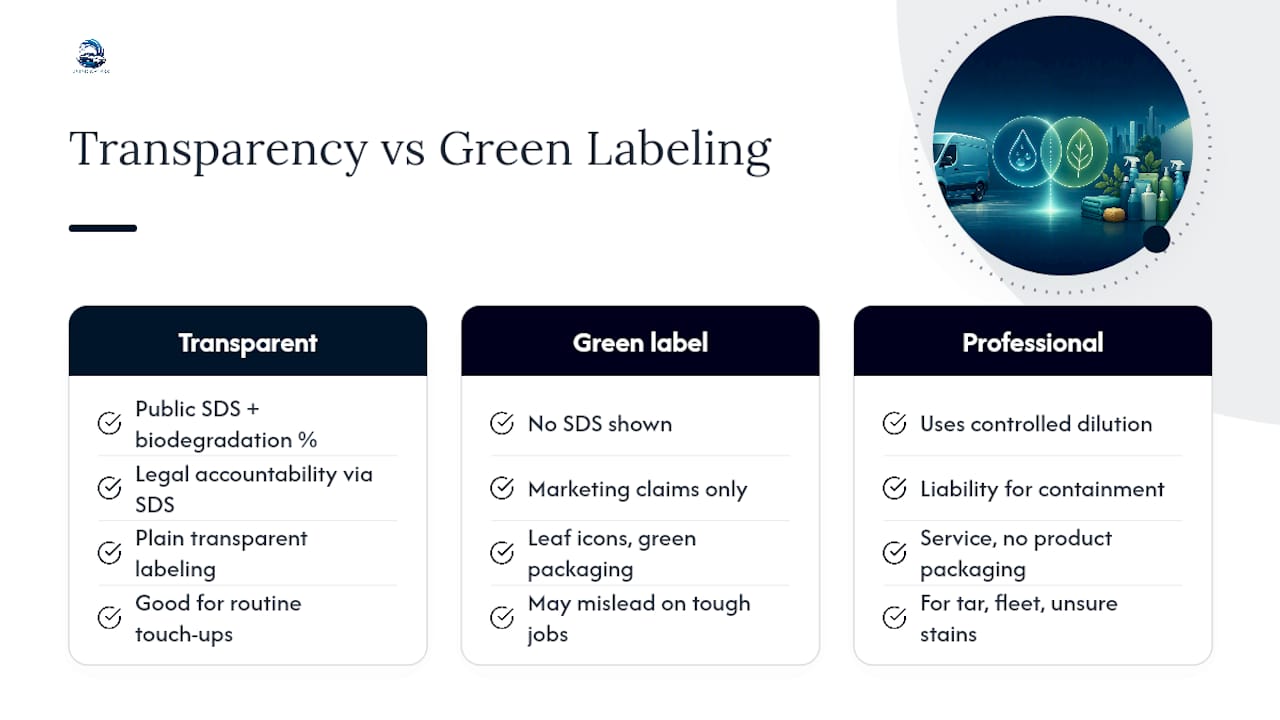
Marketing copy is cheap. An SDS is not, because a company has to stand behind it legally. When you're comparing two bottles that both say "eco-friendly," the one with a public SDS and a specific biodegradation percentage deserves your trust more than the one leaning on leaf icons and green packaging.
For anything beyond routine touch-ups, tar removal, fleet maintenance, or stains you're not sure how to treat safely, hiring a professional who already controls dilution and containment reduces the odds of you accidentally sending something harmful down a storm drain.
— Living
A Mobile, Water-Wise Alternative Worth Booking
Reading labels and testing DIY mixes gets you far, but tar, deep stains, or a full fleet of vehicles call for more than a spray bottle and a Saturday afternoon. Living Waters Auto Wash LLC brings professional detailing straight to your driveway or office lot across Boca Raton, Pompano Beach, Coral Springs, and Parkland, using the same certified, low-runoff product standards covered in this guide, with no hose hookup or electrical outlet required on your end.

That matters most for business owners managing multiple vehicles: instead of researching ingredient lists for a dozen products, you get a trained team already vetting those details for you. If you're maintaining a fleet, take a look at fleet wash services in Palm Beach County and get a quote for recurring, on-site service that keeps every vehicle looking sharp without adding a chemical inventory to manage yourself.
Where to Verify These Claims Yourself
Don't take any brand's word for it, including this one. Check these sources directly before buying:
- USDA BioPreferred Program overview for bio-based certification standards
- EPA resource on ammonia for aquatic toxicity data
- NCBI reference on chemical exposure and health risks from cleaning agents
- Individual product SDS pages, always available on request from a legitimate seller
Sources
- USDA fact sheet: Overview of the BioPreferred Program
- Fragrance sensitivity awareness — UTM Environmental Health & Safety