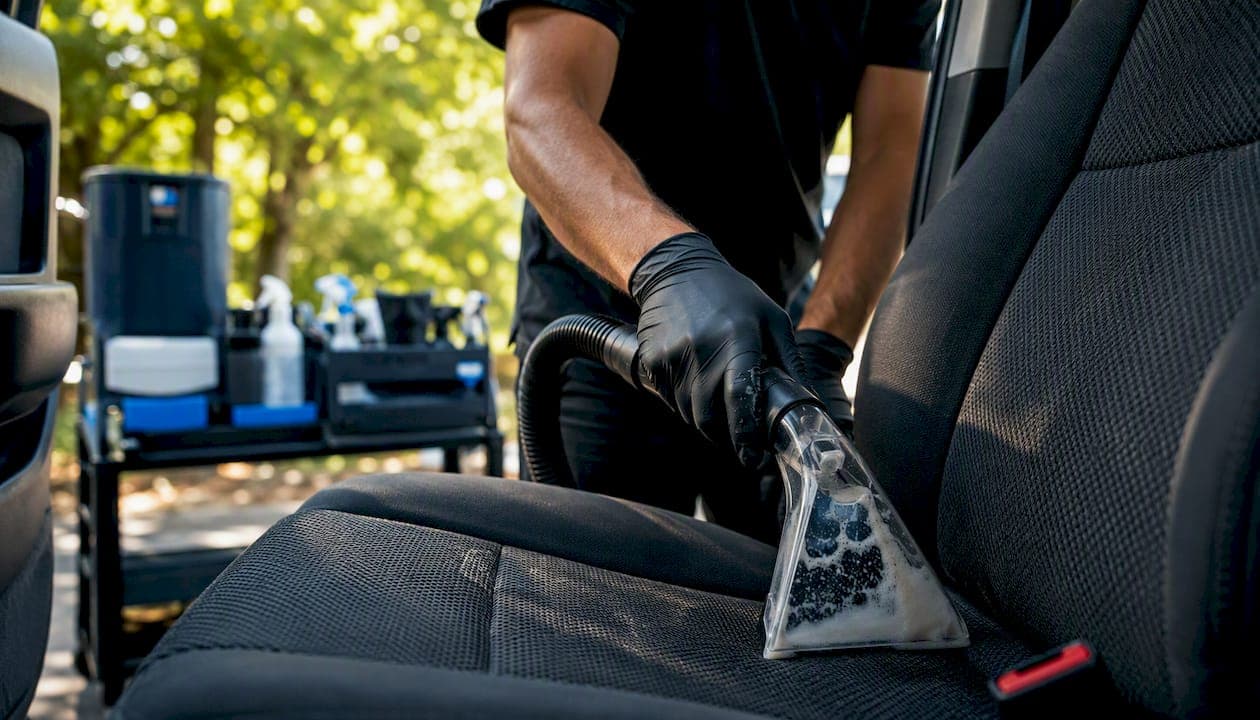
Upholstery care lowers fleet lifecycle costs, reduces vehicle downtime, and protects resale value — and most fleet managers are leaving money on the table by treating it as a cosmetic afterthought. Neglected interiors pull vehicles out of service for avoidable repairs, trigger lease-return penalties, and send a quiet but clear message to passengers and drivers about how the operation is run. The single most effective first step: launch a seat-protection trial on five vehicles this month, document the before state with photos, and measure detailing hours and vehicle availability over 90 days.
- Consistent upholstery maintenance extends seat life and reduces repair frequency
- Protected interiors spend fewer days out of service for cleaning or restoration
- Well-maintained vehicles command stronger resale and trade-in values
- Driver behavior improves in cleaner vehicles, compounding the physical benefit of protection programs
- Passengers and clients notice interior condition immediately, affecting brand perception
A structured seat protection program reduces downtime and long-term interior maintenance costs by preventing damage that would otherwise require out-of-service repairs.
Key Takeaways
Consistent upholstery care reduces fleet lifecycle costs, cuts interior-related downtime, and protects resale value — and a 90-day pilot on five vehicles is the fastest way to quantify the return.
| Point | Details |
|---|---|
| Prevention beats repair | A professional detail and seat covers cost far less than a reupholstery job plus 1–2 days out of service. |
| Compress cleaning intervals for fleets | High-use vehicles need professional extraction every 6 months, not the 12–24 month residential standard. |
| Track interior downtime separately | Flag interior-related work orders for 90 days to reveal the true cost of neglect before building a budget case. |
| Specify materials at procurement | Request abrasion resistance, lightfastness, seam strength, and cleanability ratings before purchasing or retrofitting seats. |
| Living Waters Auto Wash LLC | Offers mobile, on-site fleet detailing with before/after documentation across Boca Raton, Pompano Beach, Coral Springs, Parkland, and Palm Beach County. |
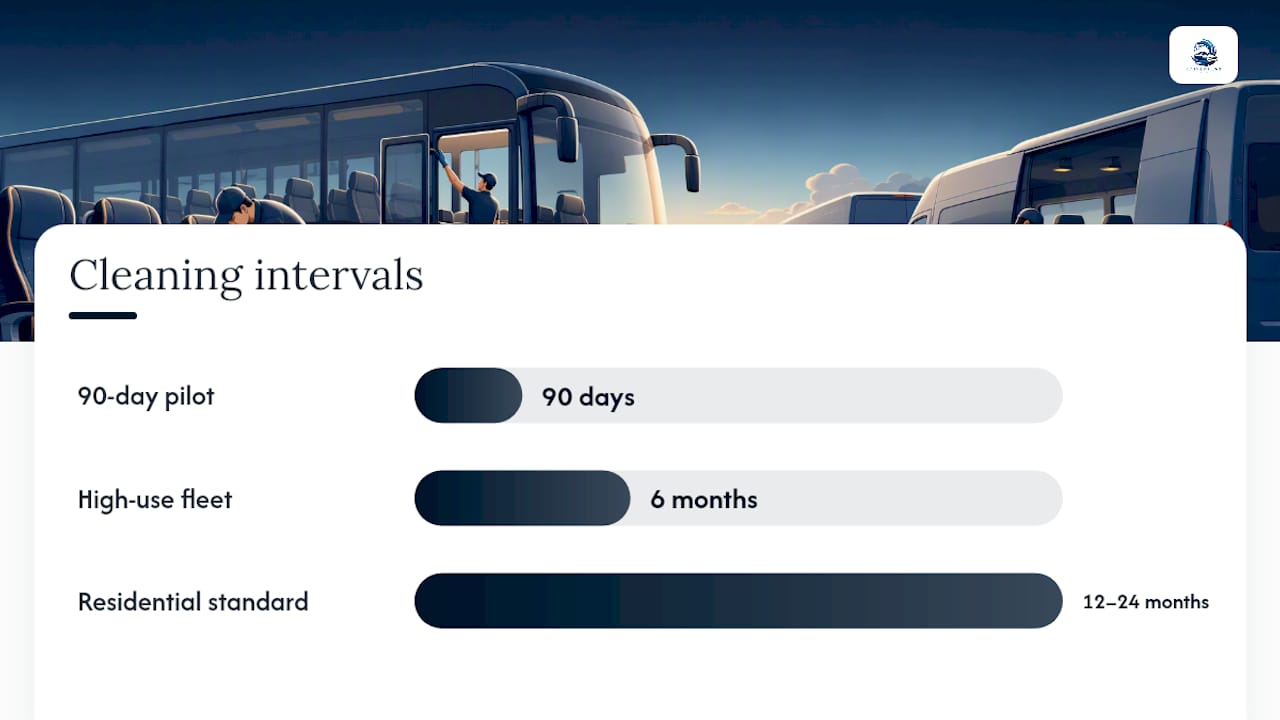
Table of Contents
- 1. Why upholstery care matters in fleets: the financial and operational case
- 2. Common upholstery problems fleet vehicles face
- 3. A fleet-tailored upholstery maintenance schedule
- 4. When DIY cleaning is enough and when to call a professional
- 5. What professional fleet interior restoration actually includes
- 6. How to specify upholstery materials for fleet procurement
- 7. The cost and ROI math for upholstery care
- 8. How to choose a fleet upholstery care or mobile detailing provider
- 9. A mobile fleet detailing pilot: what it looks like in practice
- 10. Environmental and health compliance in fleet upholstery care
- What fleet managers consistently underestimate about upholstery care
- Living Waters Auto Wash LLC brings the pilot to your fleet
- Sources
1. Why upholstery care matters in fleets: the financial and operational case
Fleet managers track fuel, tires, and brake wear to the decimal. Interior upholstery rarely gets the same rigor, yet the costs of ignoring it accumulate in ways that show up across multiple budget lines.
Extended seat life. Seats that are vacuumed, spot-treated, and protected with appropriate covers last significantly longer before needing reupholstery or panel replacement. That matters when you're managing 20 or 200 vehicles.
Fewer out-of-service days. A vehicle pulled for a deep odor remediation or seam repair is unavailable. Routine care prevents the conditions that require those interventions.
Stronger resale and trade-in value. Interior condition is one of the first things a remarketer or dealer inspects. A fleet that returns vehicles with clean, intact upholstery consistently recovers more per unit at end-of-term.
Driver retention and morale. Drivers who work in clean, well-maintained vehicles report higher job satisfaction. Research from ShearComfort's fleet program analysis notes that improving interior condition often changes driver behavior — drivers treat cleaner vehicles with more care, compounding the value of any protection program beyond the physical barrier itself.
Customer and passenger impressions. For rideshare, rental, and corporate transport fleets, the interior is the product. A cracked bolster or persistent odor is a one-star review waiting to happen.
Consider a 15-vehicle rideshare fleet running two shifts daily. Without a protection program, seat bolsters begin showing wear within six months. Reupholstering a single seat runs $300–$600 in labor and materials, plus one to two days out of service. A proactive cleaning and cover program costs a fraction of that per vehicle per year and keeps every unit available.
2. Common upholstery problems fleet vehicles face
Knowing where interiors fail first lets you inspect smarter and catch problems before they become repairs.
Abrasion on seat bolsters. The driver-side bolster takes the most friction — every entry and exit grinds fabric or vinyl against the seat edge. This is the first place material fatigue shows up, and reinforcing or protecting high-friction zones like the driver bolster and door sills can prevent the most common repairs that pull vehicles out of service.
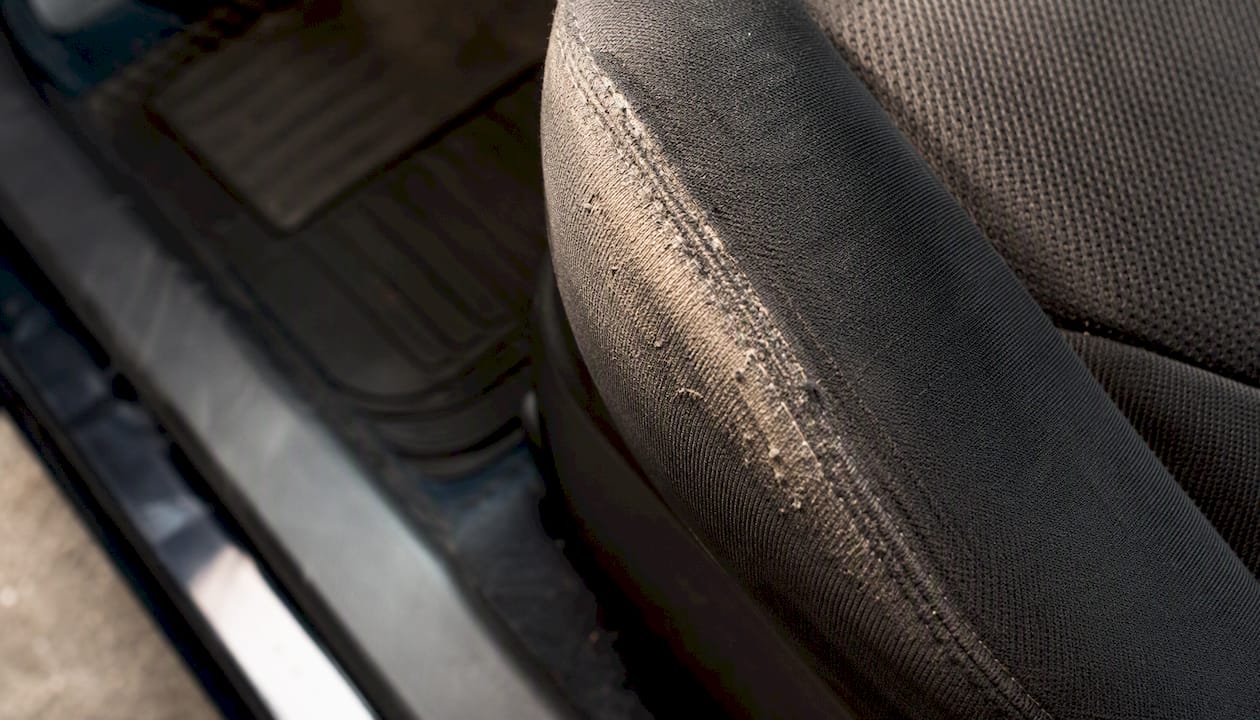
Seam splitting. Stitched seams on high-stress areas (seat base perimeter, headrest attachment points) fail under repeated load. Once a seam opens, the underlying foam is exposed and the damage accelerates.
Set-in stains and odors. Food, beverages, and biological contamination absorb into fabric and foam. Surface wiping masks the problem temporarily; the odor returns within days if the source isn't extracted.
Cracking and peeling vinyl or coated leather. UV exposure and cleaning with the wrong chemistry strip protective coatings. Once the top coat cracks, moisture penetrates and the material delaminates.
Seat-belt and webbing contamination. Grime, oils, and spilled liquids accumulate on webbing. Beyond aesthetics, contaminated webbing can stiffen and affect retractor function.
Embedded grit. Fine particles from work boots, tools, and cargo grind against fabric fibers with every movement, accelerating wear from the inside out.
Pro Tip: Run a quick visual check at every fuel stop or vehicle handoff: look at the driver bolster, the seam line along the seat base, and the seat-belt webbing. Catching a small abrasion or a seam starting to lift takes 30 seconds and prevents a $400 repair.
3. A fleet-tailored upholstery maintenance schedule
Frequency matters as much as method. Routine vacuuming, prompt spot treatment, and periodic professional extraction reduce soil buildup and slow fabric degradation — and high-use surfaces benefit from shorter intervals than residential guidance suggests.
Daily (driver responsibility)
- Remove loose debris, food wrappers, and personal items at shift end
- Blot any fresh spills immediately with a clean cloth; do not rub
- Note visible damage in the vehicle log
Weekly (fleet coordinator or driver)
- Vacuum all seat surfaces, crevices, and floor mats
- Spot-treat visible stains with an approved, material-appropriate cleaner
- Wipe door sills and step areas where grit accumulates
Monthly (maintenance tech or mobile detailer)
- Full interior vacuum including under seats and cargo areas
- Inspect seams, bolsters, and headrests for early wear or splitting
- Wipe down vinyl and hard trim with a conditioner appropriate to the material
- Check seat-belt webbing for contamination or stiffness
- Log condition with photos and flag any items needing professional attention
Annually (professional service)
- Hot-water extraction of all fabric surfaces
- Leather or vinyl conditioning and protective coating application
- Seam inspection and repair of any minor splits before they worsen
- Odor remediation if needed
- Full interior restoration report with before/after photos
For high-use classes (rideshare, delivery, trades), compress the monthly cycle to every three weeks and schedule professional extraction every six months rather than annually. General guidance for residential upholstery suggests a 12–24 month professional cleaning cadence; fleet vehicles running multiple shifts daily need that interval cut significantly.
Pro Tip: Tie upholstery checks to your existing preventive maintenance schedule. When a vehicle comes in for an oil change or tire rotation, the tech takes two minutes to photograph the interior and log seat condition. Zero extra scheduling required.
4. When DIY cleaning is enough and when to call a professional
Not every interior problem needs a specialist. Knowing the line saves time and prevents well-intentioned cleaning from making things worse.
Driver-level tasks that work fine in-house:
- Vacuuming loose debris and grit
- Blotting fresh spills with a clean, dry cloth
- Wiping hard surfaces with manufacturer-approved cleaners
- Removing surface dust from vinyl and plastic trim
Where DIY falls short:
- Set-in stains that have bonded to fabric fibers
- Persistent odors with a biological source (vomit, mildew, pet contamination)
- Structural seam damage or torn stitching
- Cracked or peeling vinyl that needs a bonding agent and color match
- Any concern touching airbag trim panels or seat-belt hardware
Professional upholstery cleaning using hot-water extraction and material-appropriate chemistry removes embedded contamination and set-in stains that DIY surface cleaning cannot address. The difference is extraction versus surface treatment: a DIY wipe pushes contamination deeper into the foam; hot-water extraction pulls it out.
Manufacturer guidance reinforces this. Improper cleaning with excessive wetting or non-recommended chemicals can damage leather finishes, strip protective coatings, and reduce material performance. That risk is higher when untrained staff use whatever cleaner is on hand.
Decision flow — escalate to a professional when:
- A stain has been present for more than 48 hours
- Odor returns within a week of surface cleaning
- A seam has opened or fabric is lifting from the seat base
- Vinyl shows cracking, peeling, or color loss
- Any safety component (seat belt, airbag trim) is involved
Pro Tip: Before sending a vehicle to a professional, take three photos: the full seat, a close-up of the damage, and the seat-belt webbing. Note the contamination type and how long it has been there. That 90-second documentation step helps the technician choose the right chemistry and gives you a before record for ROI tracking.
5. What professional fleet interior restoration actually includes
A professional service does more than clean. Understanding the scope helps you write better SOWs and avoid paying for a surface wipe when you need a full restoration.
Standard components of a professional fleet interior service:
- Material-appropriate cleaning: pH-balanced solutions matched to fabric, vinyl, or leather — not a universal spray
- Hot-water extraction: Removes embedded soil and biological contamination from fabric and foam
- Leather and vinyl conditioning: Restores flexibility and applies a protective barrier against UV and abrasion
- Seam repair: Restitches or bonds open seams before they widen
- Odor remediation: Enzymatic treatment or ozone application targeting the contamination source, not masking it
- Trim restoration: Cleans and conditions plastic, rubber, and hard-surface trim
- Stain treatment: Pre-treatment with targeted chemistry before extraction
- Protective coating application: Fabric guard or vinyl sealant to slow future soiling
For a deeper look at the technical methods involved, the interior deep cleaning guide covers hot-water extraction, steam, and material-specific approaches in detail.
Time-to-service expectations:
- Express interior detail (surface clean, vacuum, wipe): 45–90 minutes per vehicle
- Full professional restoration (extraction, seam repair, odor treatment): 3–6 hours per vehicle
- Mobile on-site service eliminates transport time, which is often the largest downtime variable
A vehicle that goes out for a full restoration and comes back the same day with documented before/after photos is a different operational outcome than one that sits at a shop for two days. Mobile service, when available, cuts that downtime gap entirely — and the photo record becomes your proof of ROI at budget review time.
Professional fleet interior repair preserves brand perception, prevents amateur repairs that worsen damage, and is more cost-effective than premature replacement in many commercial contexts.
6. How to specify upholstery materials for fleet procurement
Choosing the right materials at purchase time is the highest-leverage decision in fleet interior management. A seat that is easy to clean, resistant to abrasion, and built with strong seams costs less to maintain over three years than a premium-looking surface that degrades quickly.
Fleet upholstery should be evaluated for abrasion resistance, seam strength, cleanability, and lightfastness; testing in-vehicle and standardizing selections across model-year ranges reduces repair frequency and simplifies replacement.
Spec terms to request from suppliers:
- Abrasion resistance: Ask for double-rub or Martindale cycle ratings; higher numbers mean longer wear life
- Lightfastness: Resistance to UV fading, rated on a 1–8 scale (Blue Wool scale); fleet vehicles need at least a 5 for sun-exposed surfaces
- Seam strength: Tensile and seam-burst ratings; request minimum thresholds for high-stress zones
- Cleanability: Confirm compatibility with common fleet cleaning agents and the ability to withstand repeated extraction
- Flammability: Verify compliance with FMVSS 302 for any aftermarket materials installed in US-registered vehicles
Protection strategies:
- Custom-fit seat covers in waterproof, abrasion-resistant materials (CORDURA®-style fabrics are a proven choice for trade and delivery fleets)
- Waterproof floor liners with raised edges to contain spills and debris
- Cargo barriers and load liners to prevent tools and packages from contacting seat backs
- Confirm airbag-clearance compliance before installing any aftermarket cover
Procurement checklist:
- Test candidate materials in actual fleet vehicles for 60–90 days before committing
- Standardize cover types across similar vehicle classes to simplify reorder and replacement
- Require replaceable covers rather than fixed upholstery where possible
- Include manufacturer cleaning guidance in vendor SOWs to avoid chemistry conflicts
Pro Tip: For trade and high-impact fleets, waterproof, abrasion-resistant seat covers with quick-change designs are more cost-effective over a multi-year lifecycle than repeated minor repairs. Budget the cover cost as a maintenance line item, not a capital expense.
For van-specific interior constraints and protection strategies, the van fleet interior detailing guide covers cargo area protection and driver compartment specifics.
7. The cost and ROI math for upholstery care
The business case for upholstery care comes down to three numbers: the cost of prevention, the cost of repair, and the cost of a vehicle sitting idle.
Simple cost comparison:
- Professional mobile interior detail: $80–$150 per vehicle
- Seat cover set (quality aftermarket, fleet-grade): $100–$250 per vehicle
- Seat reupholstery for a single seat by a professional shop typically incurs considerable cost plus out-of-service days.
- Full interior restoration after neglect: $500–$1,200 plus 2–4 days out of service
A vehicle generating $200 per day in revenue that sits idle for two days for an avoidable interior repair costs $400 in lost revenue on top of the repair bill. A $150 detail and a $200 cover set would have prevented both.
Resale and lease-return impact. Dealers and remarketing companies assess interior condition at turn-in. Vehicles with intact, clean upholstery consistently recover more per unit. Lease-return penalties for interior damage can run $300–$800 per vehicle depending on the contract.
Pro Tip: Pull 90 days of maintenance records and flag every work order that included an interior-related removal from service. Add up the labor, parts, and lost-revenue days. That number is your baseline. A protection program that cuts it by half pays for itself in the first quarter.
Mobile detailing for fleets reduces downtime and operational friction by bringing service to the vehicles rather than pulling them from the yard.
8. How to choose a fleet upholstery care or mobile detailing provider
The wrong vendor can damage materials, miss safety components, or disappear after one visit. A short vetting process protects both the vehicles and the budget.
Vendor selection checklist:
- Confirmed fleet experience (ask for references from fleets of similar size and vehicle type)
- Mobile capability that eliminates transport time and yard disruption
- Material-appropriate chemistry matched to your vehicle mix (fabric, vinyl, leather)
- Proof of insurance and liability coverage for on-site work
- Defined turnaround SLAs with penalties for missed windows
- Before/after photo documentation as a standard deliverable
- Written scope of work with specific services listed, not generic "detail package" language
Questions to ask every candidate:
- What warranty do you offer on seam repairs and stain treatments?
- Which cleaning agents do you use, and can you provide safety data sheets?
- How do you handle airbag-adjacent trim and seat-belt webbing?
- What is your process when a vehicle has biological contamination?
- Can you provide a sample SOW from a comparable fleet account?
Red flags:
- One-size-fits-all chemistry applied to all material types
- No photo documentation offered or provided
- Vague SLAs ("we'll get to it when we can")
- No fleet references or unwillingness to provide them
- Missing liability insurance documentation
Pro Tip: Ask for a paid pilot on three to five vehicles before signing any recurring contract. A vendor confident in their work will agree. One who hesitates is telling you something.
For a broader operational framework, the fleet vehicle detailing best practices guide covers SOP development and vendor management in detail.
9. A mobile fleet detailing pilot: what it looks like in practice
A 10-vehicle pilot run over 60–90 days gives you enough data to build a business case and enough operational experience to write a real SOP.
Baseline problem this type of pilot typically addresses: Vehicles cycling through two daily shifts accumulate stains, odors, and seat wear faster than a quarterly shop visit can address. Drivers report discomfort; passengers notice. Interior-related removals from service happen reactively, with no tracking.
Actions taken in a structured pilot:
- Install fleet-grade seat covers on all pilot vehicles before the pilot begins
- Schedule mobile on-site interior details at 30-day intervals
- Photograph each vehicle interior at start, day 30, and day 60
- Log every interior-related maintenance event during the pilot period
Outcomes a well-run pilot typically produces:
- Fewer reactive interior repairs during the pilot window
- Measurable reduction in detailing hours per vehicle
- Driver feedback showing improved satisfaction with vehicle condition
- A documented before/after record that supports budget justification
Tracking one KPI makes the pilot defensible: vehicle availability percentage. If pilot vehicles spend fewer days out of service for interior-related work than the control group, the program pays for itself. Before/after photos turn that number into a story the CFO can see.
Documenting before/after photos and tracking vehicle availability during a pilot makes it significantly easier to convert upholstery care into a recurring budget line.
Recommended rollout steps for a 10-vehicle pilot:
- Select vehicles from the highest-use class in your fleet
- Photograph all interiors before day one
- Install seat covers and floor liners on all pilot vehicles
- Schedule mobile detailing at 30-day intervals
- Log all interior-related service events separately from mechanical work
- Review vehicle availability data at day 60 and day 90
- Present findings with photos and cost comparison to justify program expansion
10. Environmental and health compliance in fleet upholstery care
Cleaning chemistry is the area where fleet operations most often create unintentional compliance exposure.
VOC and chemical regulations. Many conventional upholstery cleaners contain volatile organic compounds (VOCs) that are regulated under EPA guidelines and, in some states, under stricter California Air Resources Board (CARB) standards. Fleets operating in California or states that follow CARB rules need to confirm that any cleaning product used on-site meets those VOC limits. Using non-compliant products in enclosed fleet yards or garages creates both air quality and worker safety exposure.
Wastewater and runoff. Wet extraction and steam cleaning generate wastewater that may contain detergents, biological material, and heavy metals from road grime. Discharging that water into storm drains violates Clean Water Act provisions in most jurisdictions. Mobile detailers operating with water-reclamation systems or waterless methods reduce this risk significantly.
Worker health and PPE. Technicians handling enzymatic odor treatments, solvent-based stain removers, or ozone generators need appropriate PPE. Fleet SOPs should require that any vendor provide Safety Data Sheets (SDS) for all chemistry used on-site, and that workers handling biological contamination (vomit, blood, bodily fluids) follow OSHA bloodborne pathogen protocols.
Seat-belt and safety-component integrity. Avoid bleach or non-recommended chemicals on seat-belt webbing and safety-adjacent trim. Chemical degradation of webbing fibers is not visible to the naked eye but can reduce tensile strength. Any vehicle where seat-belt webbing has been exposed to harsh chemistry should be inspected before returning to service.
Eco-conscious practices. Waterless or low-water detailing methods reduce runoff risk and align with sustainability reporting requirements that many corporate fleets now face. For fleet managers building ESG documentation, choosing a provider that uses biodegradable chemistry and water-reclamation equipment simplifies compliance reporting. For guidance on how detailers sanitize car interiors using material-appropriate and health-conscious methods, the technical breakdown covers both the chemistry and the safety protocols in detail.
What fleet managers consistently underestimate about upholstery care
The conventional wisdom treats interior maintenance as a cosmetic line item — something you do before a vehicle goes to auction, not something you manage proactively. That framing is wrong, and it costs fleets real money.
The operational cost that almost never gets tracked is interior-related downtime. When a vehicle comes off the road for a seam repair or an odor remediation, that event rarely gets coded as "interior maintenance" in the fleet management system. It shows up as miscellaneous labor, or it gets absorbed into a scheduled PM visit without a separate line. The result: fleet managers have no idea how much interior neglect is actually costing them, because the data is scattered across work orders with no common tag.
The fix is simple and takes one afternoon. Pull 90 days of work orders, flag every event that touched the interior, and add up the labor hours and out-of-service days. Most fleet managers who do this exercise find the number is two to three times what they expected.
The second blind spot is driver behavior. A protection program is not just a physical barrier. Drivers who work in clean, well-maintained vehicles take better care of those vehicles. That behavioral effect compounds over a 36-month lease cycle in ways that a simple cost-per-cover calculation will never capture.
The practical recommendation: start with five vehicles, run a 90-day pilot, and measure two things — detailing hours per vehicle and vehicle availability percentage. If the numbers move in the right direction, you have a business case. If they don't, you've spent very little to find out. Either way, you're managing the line item instead of guessing at it.
Living Waters Auto Wash LLC brings the pilot to your fleet
Fleet managers in Boca Raton, Pompano Beach, Coral Springs, Parkland, and Palm Beach County can run a 5-vehicle upholstery care pilot without pulling a single vehicle from the yard. Living Waters Auto Wash LLC operates entirely on-site, with no customer-provided water or power required, which means zero transport downtime and no scheduling conflicts with your existing PM cycle.
The pilot structure is straightforward: before photos on day one, a full interior detail on each vehicle, seat cover installation if needed, and a written summary with after photos at completion. Recurring 30-day maintenance plans keep the program running without additional scheduling effort. The team handles fabric, vinyl, and leather with material-appropriate chemistry, and every service includes documentation you can use directly in a budget justification.
Book a fleet pilot with Living Waters Auto Wash LLC and get your first five vehicles detailed on-site, with before/after photos included.
Sources
- Fleet Manager’s 2026 Guide: Reducing Vehicle Maintenance Costs with Seat Protection Programs - ShearComfort
- Planning Durable, Easy-Clean Interiors for Commercial Vehicle Fleets – The Pinnacle List
- Hyundai owners manual (2026) — upholstery and care guidance
- Upholstery care — Crypton
- Upholstery Cleaning: Complete Car Interior & Seat Guide - Reaper Customs
- Why Fleet Interior Repairs Should Always Be Handled by Professionals | Fibrenew International
- How often should you have your upholstery professionally cleaned? | Zep
- How to effectively clean every surface inside your vehicle — Toyota car tips