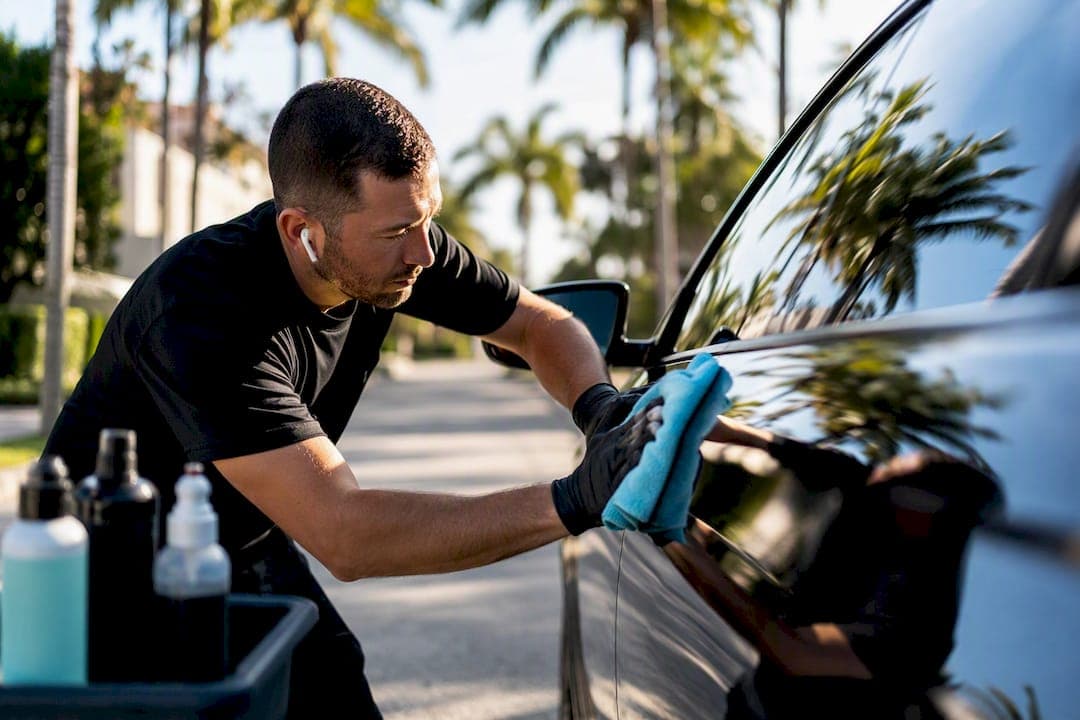
Most vehicle owners need a full professional detail every 3 to 6 months, with quick maintenance washes filling the gaps in between. That interval matters because it's roughly how long it takes bonded contaminants (tree sap, road grime, rail dust) to start eating into clear coat and how long stains and odors need to set into upholstery before they become permanent. Your exact bracket depends on how you drive and where you park.
- Daily commuter or salted-winter driver: several times per year
- Garage-kept weekend car: about once or twice a year
- Work truck or fleet vehicle: every few months
Key Takeaways
Detailing frequency matters because it determines whether contaminants get removed before they damage paint and interior surfaces, or after.
| Point | Details |
|---|---|
| Baseline interval | Most drivers need a full detail every 3 to 6 months, with washes in between. |
| Match schedule to risk factors | Mileage, climate, parking, and pets/kids all push your interval shorter or longer. |
| Watch for warning signs | Rough paint, lost water beading, and set-in odors mean it's already overdue. |
| Detail and wash aren't the same | Only a full detail decontaminates, polishes, and protects beneath the surface. |
| Living Waters Auto Wash | Offers mobile, on-site recurring plans in Boca Raton, Pompano Beach, Coral Springs, and Parkland so owners keep the schedule without extra errands. |
Table of Contents
- Why Detailing Frequency Matters for Your Car's Long-Term Health
- What Factors Determine How Often You Should Detail Your Car?
- Recommended Detailing Schedules by Driver Type
- What Are the Warning Signs Your Car Needs a Detail Now?
- Is a Car Wash the Same as a Professional Detail?
- How Do You Build a Detailing Schedule You'll Actually Keep?
- Living Waters Auto Wash Makes the Schedule Easy to Keep
- Frequently Asked Questions
- Sources
Why Detailing Frequency Matters for Your Car's Long-Term Health
A garden hose and soap remove dust and loose dirt. They don't touch the contaminants that bond to your paint at a molecular level, brake dust, industrial fallout, insect residue, which sit there oxidizing the clear coat until it turns dull and chalky. That's the real reason regular detailing prevents damage that a wash alone can't stop.
The interior tells its own story. Spilled coffee, pet dander, and everyday grime don't just sit on the surface. They work into fabric fibers and foam padding, and once an odor sets in, it's far harder to pull out than to prevent.
- Removes bonded contaminants before they etch or oxidize paint
- Clears allergens and odors from upholstery and carpet before they set
- Preserves the finish and interior condition that buyers pay more for at resale
Pro Tip: A $150 to $250 detail every few months is cheap insurance. Skip it for two years and you're often looking at paint correction or a full interior shampoo that costs multiples of what routine care would have.
What Factors Determine How Often You Should Detail Your Car?
Frequency isn't one-size-fits-all. Five variables push your ideal interval up or down from the 3 to 6 month baseline, and they stack.
- Daily mileage and commuting: more time on the road means more exposure to grime, bugs, and UV, which shortens the interval.
- Local climate: road salt in winter accelerates corrosion and chloride buildup, while intense sun and heat break down paint sealant and dashboard plastics faster, something the NHTSA's summer driving guidance touches on when it comes to vehicle upkeep in hot months.
- Parking and storage: a car left on the street collects pollen, sap, and bird droppings that a garaged car simply doesn't encounter.
- Vehicle use: kids, pets, and work gear turn the interior into a harder cleaning job than a car used strictly for solo commuting.
- Paint protection level: ceramic coatings and quality exterior protection packages stretch the interval, but they don't eliminate the need for periodic care.
Run a quick scenario: a daily commuter who also fights a salted winter often needs quarterly details, not the standard twice-a-year baseline, because two risk factors are compounding at once. A weekend car in a climate-controlled garage might comfortably stretch to once a year.
Score your own situation with a short checklist: high mileage, harsh climate, street parking, pets or kids, and no protective coating. Each "yes" is a reason to move toward the shorter end of the range.
Recommended Detailing Schedules by Driver Type
Once you know your risk factors, matching them to a real profile makes the schedule concrete instead of theoretical.
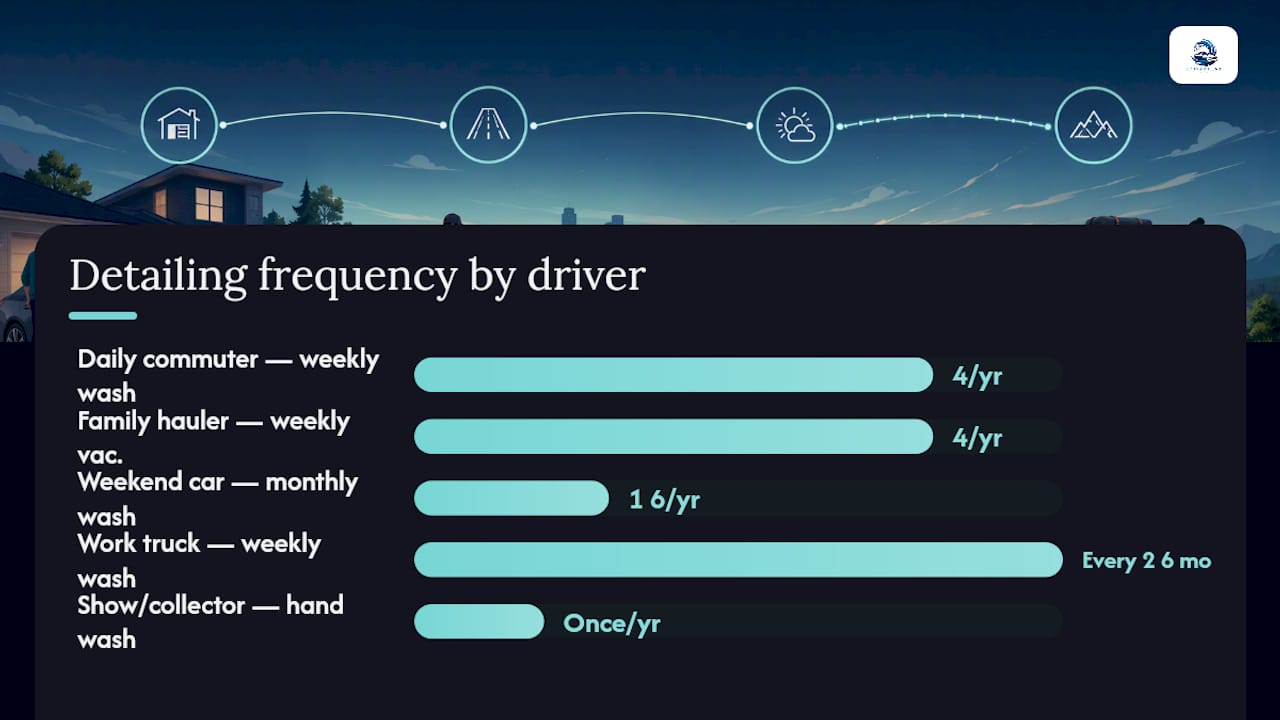
| Driver profile | Full detail frequency | Between-detail care |
|---|---|---|
| Daily commuter | 4 times a year | Weekly wash, biweekly interior wipe-down |
| Family hauler (kids/pets) | 4 times a year | Weekly wash, weekly interior vacuum |
| Weekend or garage-kept car | 1 to 2 times a year | Monthly wash, seasonal wax check |
| Work truck or fleet vehicle | Every 2 to 3 months | Weekly wash, spot-cleaning as needed |
| Show or collector car | Once a year, post-season | Cover use, hand wash only |
Fleet operators tend toward the aggressive end of that range because uptime and appearance both suffer when detailing gets skipped, and a recurring plan solves the scheduling problem better than booking each visit separately.
What Are the Warning Signs Your Car Needs a Detail Now?
If any of these show up, don't wait for the calendar to catch up.
- Paint feels rough or gritty after a fresh wash
- Water no longer beads and sheets off the hood
- Visible tar spots, tree sap, or a chalky, oxidized look to the clear coat
- Odors that linger no matter how many air fresheners you try
- Stains that won't lift, or a sticky, grimy feel on the dash and door panels
Two or three of these at once mean it's time to book a professional detail rather than reach for a home remedy. Aggressive DIY correction on oxidized paint often does more damage than the neglect that caused it, so a documented checklist of what a real detail addresses is worth reviewing before you improvise.
Is a Car Wash the Same as a Professional Detail?
No, and the gap between them is exactly why frequency matters so much. A wash lifts surface dirt. A professional detail goes deeper, decontaminating, polishing, and protecting the finish while pulling embedded dirt out of carpet and upholstery.
A typical professional detail includes clay bar decontamination, machine polish, a sealant or coating application, full interior extraction, and trim conditioning. Between visits, keep up a simple routine: wash weekly or biweekly, wipe down interior surfaces monthly, and handle spot problems like bird droppings or sap the same day they land. Coated cars still need occasional protection top-ups, coatings slow degradation, they don't stop it.
How Do You Build a Detailing Schedule You'll Actually Keep?
- Pick your baseline interval from the driver profile that matches your situation.
- Add maintenance washes on a weekly or biweekly cadence between full details.
- Set seasonal checkpoints, before summer heat and after winter salt exposure.
- Book recurring appointments instead of relying on memory.
Budget it like a subscription: a detail every quarter at roughly $150 to $250 breaks down to $50 to $85 a month, cheaper than most people assume once it's spread out.
Pro Tip: A recurring mobile plan removes the single biggest reason schedules fail: forgetting to book. Set it once and the appointments happen automatically.
A Mobile Detailer's View on Why These Intervals Work
We've seen customers skip a winter cycle and come back in spring with etched clear coat from sitting road salt, damage a single visit could have prevented. That pattern repeats enough that we build our own guidance around it. Pro Tip: On-site mobile appointments mean nothing gets missed because you couldn't find time to drive somewhere. Living Waters Auto Wash serves Boca Raton, Pompano Beach, Coral Springs, and Parkland with that exact model.
Why We Stand Behind This Schedule
We see the long-term value in scheduled, recurring detailing over reactive, one-off cleanups. If you take one thing from this: pick your baseline interval today and put the next appointment on the calendar before you close this tab.
Living Waters Auto Wash Makes the Schedule Easy to Keep
Living Waters Auto Wash LLC is the alternative to shop-based detailing for owners who keep missing appointments because driving somewhere and waiting around doesn't fit their week. Our mobile team comes to your driveway or office parking lot with everything needed on board, no water or power hookup required, so the friction that kills most detailing schedules simply disappears.

Recurring plans handle the booking automatically, which matters more than most people expect: the schedule only works if you actually stick to it. Whether you're a daily commuter due for a quarterly refresh or a fleet manager coordinating multiple vehicles, book mobile detailing in Boca Raton and get on a cadence that protects your paint and interior without adding another errand to your week.
Frequently Asked Questions
How often should you detail a car that's driven daily? Plan on multiple full details each year, roughly every few months, with weekly washes and biweekly interior wipe-downs between visits.
Does a ceramic coating reduce how often I need to detail? It stretches the interval and makes maintenance easier, but it doesn't remove the need for periodic professional care, since coatings slow contamination rather than block it entirely.
What's the difference between detailing frequency for winter versus summer? Winter driving in salted regions calls for more frequent attention to the undercarriage and paint due to chloride exposure, while summer heat and UV push interior and sealant maintenance to the front.
Can I just wash my car more often instead of detailing it? No. Washing removes surface dirt, but it can't strip bonded contaminants or restore oxidized paint, which is why a periodic professional detail stays necessary even for owners who wash weekly.
How do I know if my car is overdue for a detail? Rough paint texture after washing, water that no longer beads, lingering odors, and stubborn stains are the clearest signs it's time to book one.
Sources
- Evaluating chloride trends due to road-salt use and other sources — USGS
- Summer driving tips — NHTSA